

Rust on a new floating fish feed pellet making machine starts in the factory test run. Wet material passes through the conditioner, barrel, screw and die, and water stays in thread roots and clearances. Container sweat and salt air then act on bare alloy steel. A thin film that wipes off is transport rust; pitting or a seized fit is damage.
floating fish food production machine rust on arrival is one of the first things a buyer photographs and sends to the supplier. The question behind the photograph is the same each time: is this a new machine, and is this rust a problem?
A machine that passed a wet test run and spent weeks in a container can arrive with an orange film on the screw. Water stays where a cloth cannot reach, and the container produces condensate on machined steel. Both causes are ordinary.
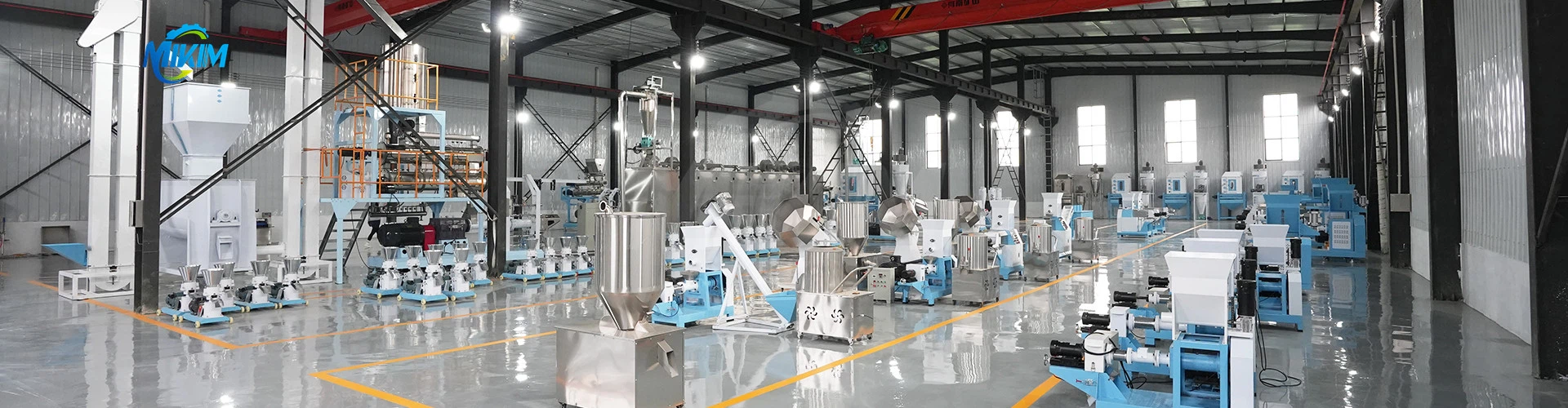
40-150 kg/h dry type dog feed pellet extruder line test in our factory
- Surface rust alone does not show that a machine was used before.
- Rust appears first on the screw, sleeve and bore, which are bare alloy steel under thin oil.
- A thin film that wipes off is transport rust; pitting or a seized screw is a claim.
- Paint patches, wrench marks, bore wear and polished flight tips separate a used machine from a tested one.
- The factory keeps the evidence: test-run video, cleaning photographs, packing photographs and serial number.
The Factory Test Run Passes Wet Material Through the Conditioner, Barrel, Screw and Die
The test run is the last check before packing, and it cannot be made dry. Output rate, pellet formation, expansion degree, main motor current and barrel zone temperatures are read while material moves through the floating fish feed making machine. A dry run proves the motor and leaves all five unverified.
Material reaches the barrel already wet. The conditioner adds water and steam to the meal, and some processes add water at the barrel. Wet material then passes the feeder, conditioner, barrel, screw, sleeve, die head, cutter and discharge outlet.
Cleaning starts as soon as the run ends, and it has a limit. Operators empty the barrel at low speed, pull the die, wash the feed contact parts, blow them down and wipe them. Material comes off. Water stays in thread roots, the screw and sleeve clearance, the barrel wall, the die holes and the cutter hood.
Those are the places rust appears first, and this is why the test run is not shortened to keep the floating fish food pellet maker machine dry. Skipping it leaves output, pellet quality and current draw unknown until commissioning.
A wet-type twin-screw test run for a client follows the same path to the die, and the barrel is emptied at the end. Before a packing date is agreed, ask for the test-run video with the discharge end in frame, the cleaning photographs, the packing photographs and the serial number plate. Send the request through the contact page.

The Screw and Barrel Show Rust First Because Their Working Surfaces Are Bare Alloy Steel
The screw and sleeve are wear-resistant alloy steel, and their working surfaces are bare metal. Nothing is coated on a flight face or a barrel bore, because the clearance between those parts builds the pressure, and a wearing coating would change it.
Thick grease would change it as well, because the screw and the sleeve are a fitted pair. Grease in thread roots is also hard to remove from parts that must be clean before they touch feed. A thin food-grade rust preventive oil is the compromise.
Water stays where the geometry holds it. Thread roots, the flanks of the flights and the mesh zone between screw and sleeve collect condensate, and a cloth does not reach into them.
The voyage works against that film. The container crosses a day and night temperature range, the air inside cools past its dew point at night, and moisture condenses on the coldest surfaces, which are the machined steel parts. This is container sweat, and container rain when the condensate falls back onto the cargo.
Sea air carries salt, and salt on damp steel accelerates corrosion. Weeks of vibration thin the oil film, and wood packaging releases moisture into the container.
Stainless covers, painted frames and sealed cabinet faces show little, because those surfaces are alloyed or covered. On a machine tested before shipment, the bore leaves the factory smooth.

A Thin Orange Film That Wipes Off Is Transport Rust, and Pitting or a Seized Fit Is Damage
Floating fish food pellet making machine rust on arrival falls into two cases. The two separate with a cloth. Wipe the surface and look at the metal underneath.
A thin, even yellow or orange film that comes off on the cloth and leaves smooth metal is flash rust from transport. No metal has left the part.
A pit is a small crater where metal has been removed, and it stays visible after the wipe. Pitting, flaking and rust sitting in a depression belong to the same group.
A screw that will not turn inside its sleeve, or a shaft that resists the barring tool, is a fit problem. Water inside the cabinet, terminal box, bearing seat or gearbox belongs to a third group, because those areas are sealed or greased.
Pitting and a seized fit are claim items, and both are photographed before cleaning.
If the film wipes off and leaves no pit, clean and start. If the cloth catches on a pit, stop and send photographs with the serial number. Send the unboxing photographs here.
A Used or Rebuilt floating fish food extruder machine Shows Paint Patches, Wrench Marks, Bore Wear and Polished Flight Tips
A used machine and a tested new floating fish feed machine can both arrive with rust, and the rust looks similar. The marks around the rust are different.
A test run lasts hours, while wear on a flight tip or in a bore needs production hours.
A repainted machine often shows local patches, a colour difference between panels, or a masked edge where paint stops short. Wrench marks and repeated assembly marks do not come from one test run.
Two records settle the rest. Compare the nameplate and serial number with the documents and the test-run video, then compare component date codes with the build date.
The Factory Limits Rust With Draining, Drying, Food-Grade Oil, VCI Film and Desiccant Before Packing
The work after a test run follows a fixed sequence, and each step removes water the next cannot reach.
- Empty the barrel at low speed until no material comes out of the die.
- Pull the die head and clean the die holes and the cutter.
- Wash the feed contact parts, then blow them down and wipe them dry.
- Apply food-grade rust preventive oil to the screw, bore and die head, with thin grease on fitted surfaces.
- Empty and dry the hopper, the conditioner and the discharge outlet.
- Put desiccant in the cabinet and the control box, then seal the doors.
- Wrap the machine in rust preventive film, use VCI film on long routes, and add desiccant in the case.
- Keep the test-run video, the cleaning photographs, the packing photographs and the serial number photograph.
These steps keep rust within an acceptable range for a sea voyage. They do not make bare steel immune to moisture, and packing described as complete protection is a claim the material cannot support.
Step eight makes the packing checkable. What makes a fish feed machine trustworthy is a record of this kind, taken before the case is closed.
Rust on Arrival: Photograph, Classify and Clean Before Start-Up
Floating fish feed processing machine rust on arrival is handled in this order, because cleaning too early removes the evidence.
- Photograph the case outside before opening, including damage to boards and film.
- Open the case and photograph the floating fish feed pellet maker machine, screw, bore and die head as they are.
- Classify the rust against the table above.
- Clean with kerosene, diesel or a dedicated cleaner and a soft cloth, copper brush or scouring pad.
- Dry at once and apply a thin film of food-grade rust preventive oil.
- Check the gearbox oil level, the bearing seats and the cabinet interior for water traces.
- Bar the shaft by hand through one full turn, then jog the motor without load.
- Send the before and after photographs, the cleaning time, the exceptions and the serial number.
Do not use sandpaper or a wire wheel in step four. Sandpaper removes metal from a surface whose clearance sets the barrel pressure, and the grains travel into the die and the feed. A wire wheel polishes the surface and covers the pits that decide whether the part is serviceable.
Step seven decides start-up. A shaft that turns by hand through a full revolution, with no tight spot, allows an unloaded jog.
Where a screw or a sleeve is already stuck, how rusted and stuck parts are freed sets out the procedure, and it starts with penetrating oil and time.
Put the Rust Rules in the Contract Before the Order Is Confirmed
For fish feed extruder rust on arrival, four items belong in writing, and they decide how a claim is handled later.
Ask for the test-run video with the discharge end in frame, the cleaning and packing photographs, and the serial number before the order is confirmed.
Write the split into the contract or the order note. Surface flash rust from transport is common, and the supplier provides cleaning guidance. Pitting, a seized screw and water inside a sealed area are the supplier's responsibility.
Agree an inspection window in working days after arrival, and report exceptions in writing inside that window.
Ask for the name or composition of the food-grade oil, so the buyer knows what to remove and what to re-apply.
The floating fish feed extruder range shows the machines these terms apply to. Questions about fish feed extruder rust on arrival, inspection photographs and contract terms go through the contact page.
New floating fish feed extruder machine Rust on Arrival: Common Questions
Is rust on a new floating fish feed pellet extruder machine a sign that the machine is refurbished?
Not by itself. Rust on arrival can come from a wet test run and weeks at sea, on a machine that was new when packed. Judge by the marks: paint patches, wrench marks on hex heads, a step in the bore, polished flight tips, and the serial number against the test-run video.
Can I start production with light surface rust on the screw?
A thin film that wipes off and leaves no pit does not stop start-up. Clean it, dry it, apply a thin oil film. Do not start with rust on the screw fit or pits in the bore, because the oxide is abrasive.
Why not apply a thick layer of grease before shipping?
The screw and the sleeve are a fitted pair, and thick grease changes the assembly clearance and the first run. Grease packed into thread roots is also hard to remove from parts that must be clean before production. VCI film and desiccant protect without changing the fit.
Do I need to wash off the food-grade rust preventive oil before first use?
Ask for the oil name or composition before shipping, so you know what you remove. Clean the feed contact surfaces with a food-safe cleaner, then dry them before the first batch. If the machine will sit idle, apply a thin oil film.
Does a rusted screw need to be replaced?
If the rust wipes off and leaves no pit, no. Clean it, dry it, oil it, then check that the shaft turns freely by hand. If metal is missing under the rust, or the screw is stuck in the sleeve, the supplier assesses it before the run.
How soon after arrival should I open the case and inspect?
Within the inspection window written in the order, before the case is moved into storage. Photograph the case exterior and any damage first, then the machine, screw, barrel and die. Report exceptions in writing inside the window, because rust found later is hard to attribute.
Can container sweat be eliminated completely?
No. A sealed container passes through a large day and night temperature range for weeks, and moisture condenses on the coldest surfaces, which are usually machined steel. Desiccant, a vapour barrier, VCI film, dry wood packaging and a thin oil film reduce it. The supplier controls the condition at packing, and the evidence of it.