
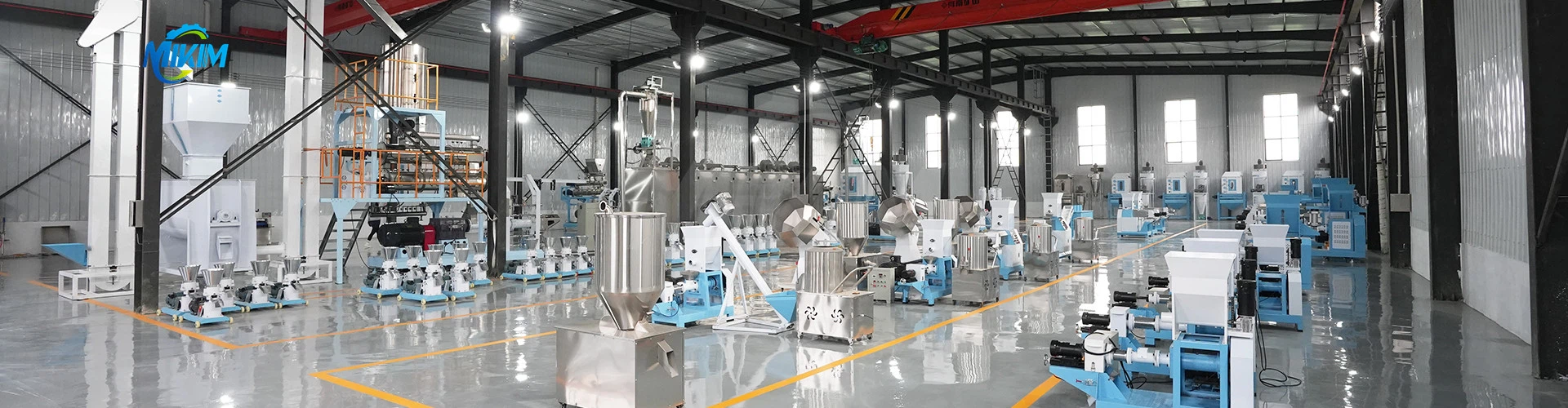
1. Cleaning cycle. Should the machine be cleaned every time it produces a feed variety, or at a specified time? Generally, feed processing companies clean each feed variety, but feed pellet machine manufacturers recommend that it is best to fold the machine and clean it once a month, and do a careful cleaning, so that the service life of the feed pellet machine can be appropriately extended.

| Model | Power | Capacity (kg/h) | Dimension(mm) | Weight |
| MK-120 | 3KW | 80-100 | 750*310*620 | 100 kg |
| MK-150 | 4KW | 150-200 | 770*340*680 | 115 kg |
| MK-210 | 7.5KW | 220-300 | 1000*430*950 | 210 kg |
| MK-260 | 15KW | 400-500 | 1200*500*1030 | 370 kg |
| MK-300 | 22KW | 600-700 | 1320*530*1070 | 480 kg |
| MK-360 | 22KW | 800-1000 | 1600*670*1450 | 800 kg |
| MK-400 | 30 KW | 1200-1500 | 1600*800*1700 | 1000 kg |
2. What cleaning raw materials to choose. If it is processing compound materials, corn should be the best cleaning raw material, which can not only make the equipment cleaner, but also be returned to the corresponding feed according to the actual processing situation for secondary circulation; if it is processing concentrated materials, it is best to use soybean dregs as the cleaning raw material; it is not recommended to use bran raw materials for equipment cleaning, because the cleaning is not clean. If it must be used, it is recommended to choose finer bran cleaning, add some grease to the bran cleaning, and add it to the feed mixer for recycling after cleaning, or directly use bran raw materials and coarse stone powder in a ratio of 2:1 for cleaning.
3. Processing and cleaning raw materials. The raw materials that have been cleaned and cleaned by feed machinery and equipment are best mixed into finished feed products containing the same ingredients or added to a certain type of product in batches.