
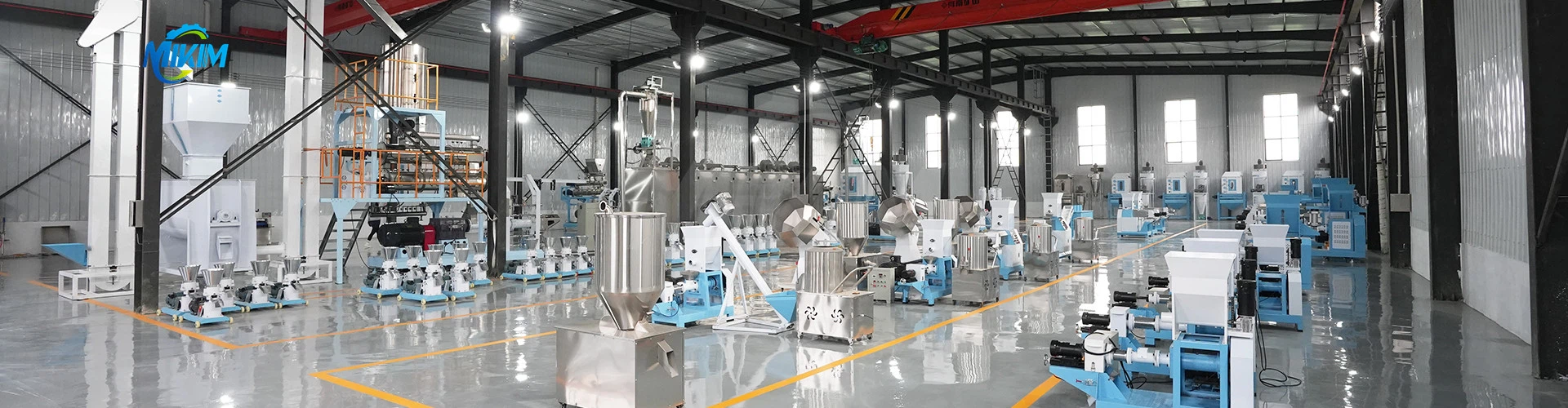
As the name implies, feed pellet machine mainly presses feed raw materials into granules by pressing. Its core lies in the coordinated work of the pressing wheel and the mold. The pressing wheel rotates under the drive of the main shaft, pushing the material into the mold hole. Through the special shape of the mold and the pressing action of the pressing wheel, the material generates shear force and forms particles. This processing method does not require the addition of water, the pellets are deeply matured inside, the surface is smooth, the hardness is high, and they can be stored for a long time. The feed pellet machine has a simple structure, convenient operation, high production efficiency, and can meet the needs of large-scale feed processing.

| Model | 40 | 60 | 70 | 80 |
| Power | 5.5KW | 15KW | 18.5KW | 22KW |
| Yield | 120-150 | 180-220 | 240-300 | 400-500 |
| Weight | 350KG | 450KG | 500KG | 580KG |
| Size(mm) | 1500*1100*1100 | 1600*1300*1250 | 1600*1300*1250 | 1800*1400*1350 |
The working principle of the feed extruder is completely different. It mainly uses extrusion, heating and shearing to make the material instantly mature under high temperature and high pressure, and then suddenly reduces the pressure and temperature to expand the volume of the material rapidly to form a puffed product. This processing method can gelatinize the starch in the feed, denature the protein, and improve the digestibility and nutritional value of the feed. The structure of the feed extruder is relatively complex, including the feeding system, extrusion chamber, cooling system, cutting system, etc., which can realize continuous production.
From the product form, the feed produced by the feed pellet machine is densely granulated, which not only tastes good, but also is easy to store and transport. The feed produced by the feed extruder is porous and loose, which is easier for animals to digest and absorb.
In general, feed pellet machines and feed extruders each have their own unique working principles and structural characteristics, and the feed forms and uses produced are also different. When choosing which equipment to use, it is necessary to comprehensively consider factors such as the type of feed, the type of animal, and the scale of production.