
content
Key Check Point 1: Matching Your Own Production Capacity Needs with Equipment Capacity
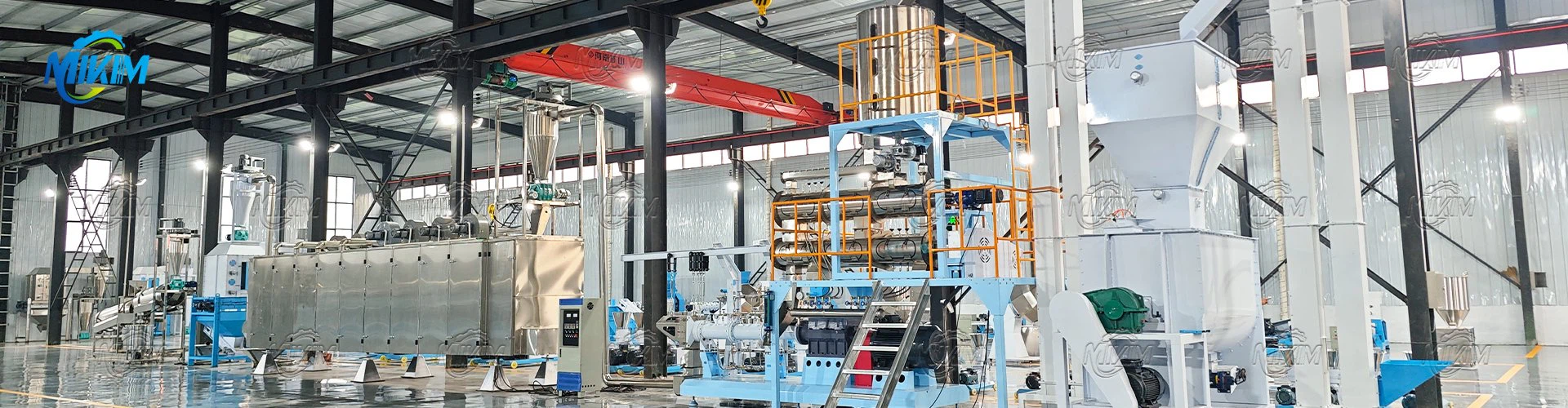
Before selecting a machine, accurately calculate your daily and hourly production needs. Then, check the rated capacity of the pellet mill (including extruders) to ensure that the equipment capacity is slightly higher than your needs (leaving a 10%-20% margin) to avoid insufficient capacity or waste. Small workshops and family farms (daily production below 500kg) should choose a pellet mill with a capacity of 100-200kg per hour, paired with a corresponding mini floating fish feed machine (screw diameter 65-75mm). The rated capacity must meet the standard with a fluctuation of ≤±5%. Medium-sized feed mills (daily production 1-3 tons) should choose a pellet mill with a capacity of 300-500kg per hour, paired with a medium-sized extruder (screw diameter 85-95mm). Large-scale aquaculture bases (daily production above 5 tons) should choose a pellet mill with a capacity of over 1 ton per hour, paired with a large extruder (screw diameter over 100mm), ensuring precise capacity matching.

Key Check Point 2: Consistency of Extruder and Pelletizer Capacity Linkage
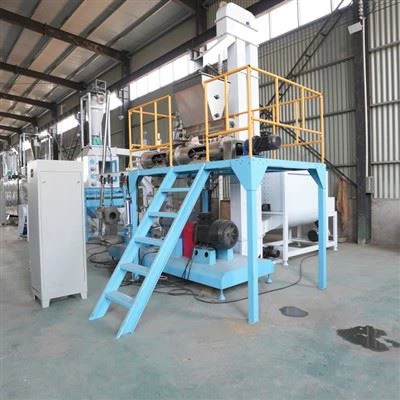
Before selection, it is crucial to check whether the capacity of the fish food production machine and the pelletizer are synchronized. This avoids situations where either the extruder's capacity is higher than the pelletizer's or vice versa. If the extruder's capacity is higher, it will lead to material accumulation, over-expansion, and increased raw material loss. If the pelletizer's capacity is higher, it will result in insufficient extrusion, substandard pellet quality, and wasted energy due to idling. High-quality pelletizers and dry pet food making machines utilize an integrated linkage design, with synchronized capacity parameters. The feed rate, extrusion parameters, and pelletizing speed can be synchronously adjusted via a PLC control system. Before selection, on-site testing of the linkage performance is necessary to ensure stable operation and consistent capacity.

Key Check Point 3: Capacity Adjustment Flexibility and Future Expansion Adaptability
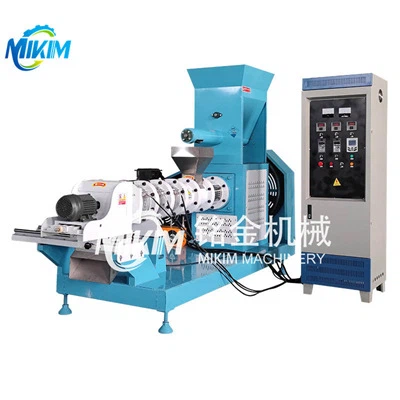
Considering future production scale expansion or product specification adjustments, the capacity adjustment flexibility of the equipment must be checked before selection. The floating fish feed pellet making machine should support stepless speed regulation, and the pellet mill's feed rate should be flexibly adjustable. The capacity adjustment range should cover current needs and expansion needs for the next 1-2 years to avoid increased costs due to insufficient capacity requiring re-purchase of equipment later. Simultaneously, check whether the extruder's die and screw are replaceable. Different die sizes can adapt to fish feed production with different particle sizes, and replaceable screws can adapt to different raw material formulations, improving equipment versatility, meeting long-term production needs, and conforming to the EEAT algorithm's requirements for professionalism and practicality.
about Us
Customer visit

Certificate of Honor

FAQ
1. What is the price of the dog food manufacturing equipment?
The price ranges from approximately $1,500-$55,000
2. Do you provide maintenance services for your customers?
Yes, we offer comprehensive after-sales maintenance services to our customers.
If you would like to learn more about MIKIM machinery, please contact us. We offer one-stop service and welcome your inquiries!!!