
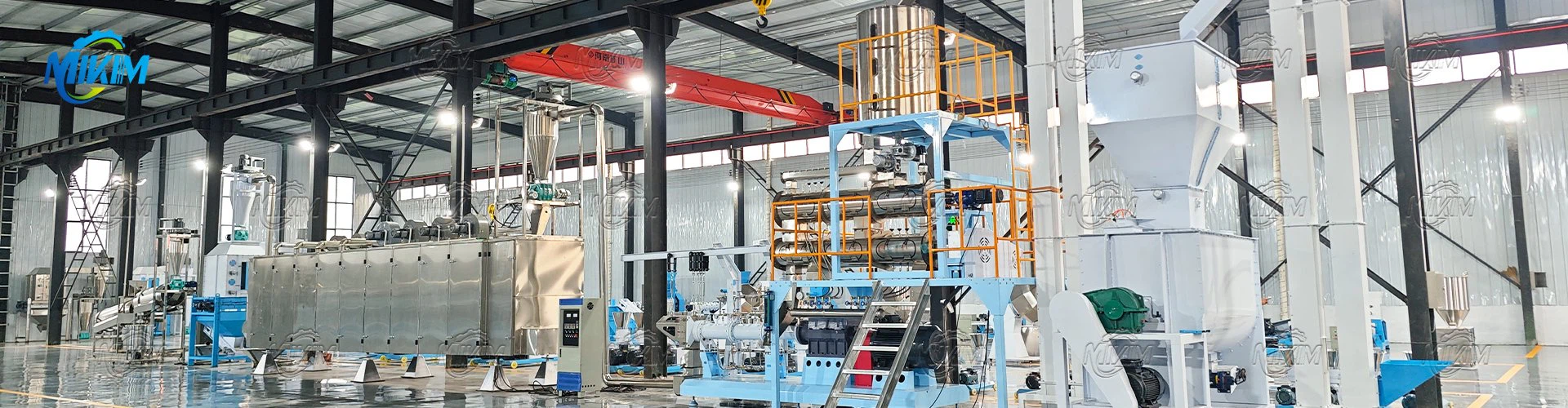
The Wet pet food manufacturing process technology focuses on "preserving the freshness of raw materials and locking in freshness with high moisture content." It eliminates the need for pet pellet extrusion equipment; the core equipment consists of a cooking pot, homogenizer, and filling machine.
content
The complete process of a pet food manufacturing machine is as follows: The first step is raw material pretreatment. Unlike the dry process, meat raw materials in the wet process do not need to be ground; they only need to be cut into small pieces of 1-2cm. Grain raw materials are ground to about 80 mesh to ensure a fine texture after cooking.
The second step is mixing and stirring. Meat, grain powder, vegetables, oils, and other raw materials are poured into a mixing tank, and a large amount of purified water is added to bring the total moisture content of the raw materials to 60%-70%. The mixture is stirred until it forms a uniform paste.
The third step is high-temperature cooking and sterilization. The mixed raw materials are sent to a high-temperature, high-pressure cooking pot and cooked at 121℃ and 0.15MPa pressure for 20-30 minutes to thoroughly kill harmful bacteria such as Salmonella, while also fully cooking the raw materials and improving palatability.
The fourth step is homogenization and emulsification. The cooked raw materials enter a homogenizer, where high pressure refines fat globules and protein particles to the micron level, resulting in a uniform and delicate texture and preventing stratification.
The fifth step is filling and sealing. While still hot, the homogenized raw materials are filled into cans or flexible packaging, quickly expelling air and sealing the packaging to prevent secondary contamination.
The sixth step is secondary sterilization and cooling. The sealed packaging is placed in an autoclave for another high-temperature sterilization, followed by cooling to room temperature, completing the production of wet pet food.
Compared to the dry process, the wet process does not require a small pet feed extruder machine because of the different moisture content and cooking methods: the wet process achieves cooking through a large amount of water replenishment and prolonged high-temperature cooking, eliminating the need for frictional heat generation in an extruder; furthermore, high-moisture raw materials cannot form stable pellets in an extruder, which can clog the equipment. The finished products from the two processes differ significantly: wet-process products have a high moisture content and a soft, chewy texture, suitable for senior dogs and puppies; dry-process products are crisp and have a long shelf life, suitable for daily feeding. Understanding the manufacturing processes behind both is essential for better comprehending the quality differences between various pet foods.
Related equipment



about Us
Customer visit

Certificate of Honor

FAQ
1. What is the price of the small fish feed pellet extruder?
The price ranges from approximately $1,500-$55,000
2. Do you provide maintenance services for your customers?
Yes, we offer comprehensive after-sales maintenance services to our customers.
If you would like to learn more about MIKIM machinery, please contact us. We offer one-stop service and welcome your inquiries!!!