
content
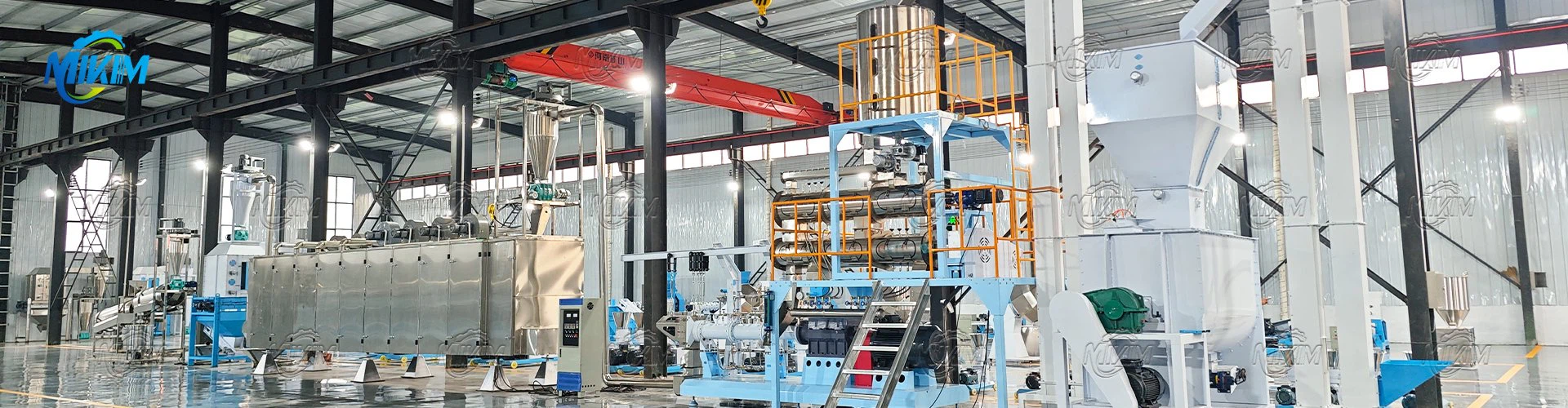
The key to nutrient retention in dry processing lies in the precise parameter control of pet pellet extrusion equipment.
Many manufacturers mistakenly believe that "higher temperature equals more thorough cooking," blindly raising the extruder temperature to over 180℃, resulting in the loss of more than half of vitamin E and B vitamins. In reality, high-quality pet food equipment features multi-zone temperature control, preserving nutrients through segmented temperature control: 80-100℃ in the feeding section, allowing the raw material to gradually heat up and avoiding instantaneous high temperatures that destroy nutrients; 120-140℃ in the extrusion section, ensuring starch gelatinization and protein denaturation; and 110-120℃ in the discharge section, reducing the loss of heat-sensitive nutrients during discharge.
Simultaneously, controlling the screw speed to match the feeding rate ensures the raw material's residence time in the dry dog food making machine is controlled at 10-15 seconds, achieving a balance between "thorough cooking" and "nutrient retention," increasing the retention rate of heat-sensitive vitamins to over 70%.
Furthermore, the post-coating function of small automatic dog food machines in dry processing is crucial for compensating for nutrient loss. For heat-sensitive ingredients such as probiotics and certain vitamins, they can be evenly sprayed onto the surface of the extruded granules after cooling using a post-coating device, completely avoiding damage from the high temperatures of extrusion.
Nutrition retention in wet processing requires precise control of cooking time and temperature. Cooking temperatures exceeding 125℃ and times exceeding 30 minutes can lead to excessive protein denaturation and mineral loss. A "segmented cooking" method is recommended: first cook at 110℃ for 15 minutes, then increase the temperature to 121℃ for 10 minutes, ensuring sterilization while minimizing nutrient loss. Simultaneously, heat-sensitive nutrients should be added before filling to shorten their high-temperature exposure time.
Whether using dry or wet processing, the core of nutrient retention is "precise control of temperature and time." In dry processing, parameter optimization and post-processing functions of the dog food making machine are key to improving nutrient retention rates; wet processing requires optimizing the cooking process. Although the approaches differ, the ultimate goal is the same: to produce high-quality pet food with balanced nutrition.
Related equipment


about Us
Customer visit

Certificate of Honor

FAQ
1. What is the price of the pet food pellet machine?
The price ranges from approximately $1,500-$55,000
2. Do you provide maintenance services for your customers?
Yes, we offer comprehensive after-sales maintenance services to our customers.
If you would like to learn more about MIKIM machinery, please contact us. We offer one-stop service and welcome your inquiries!!!