What Is a Simple Fish Feed Line Test?
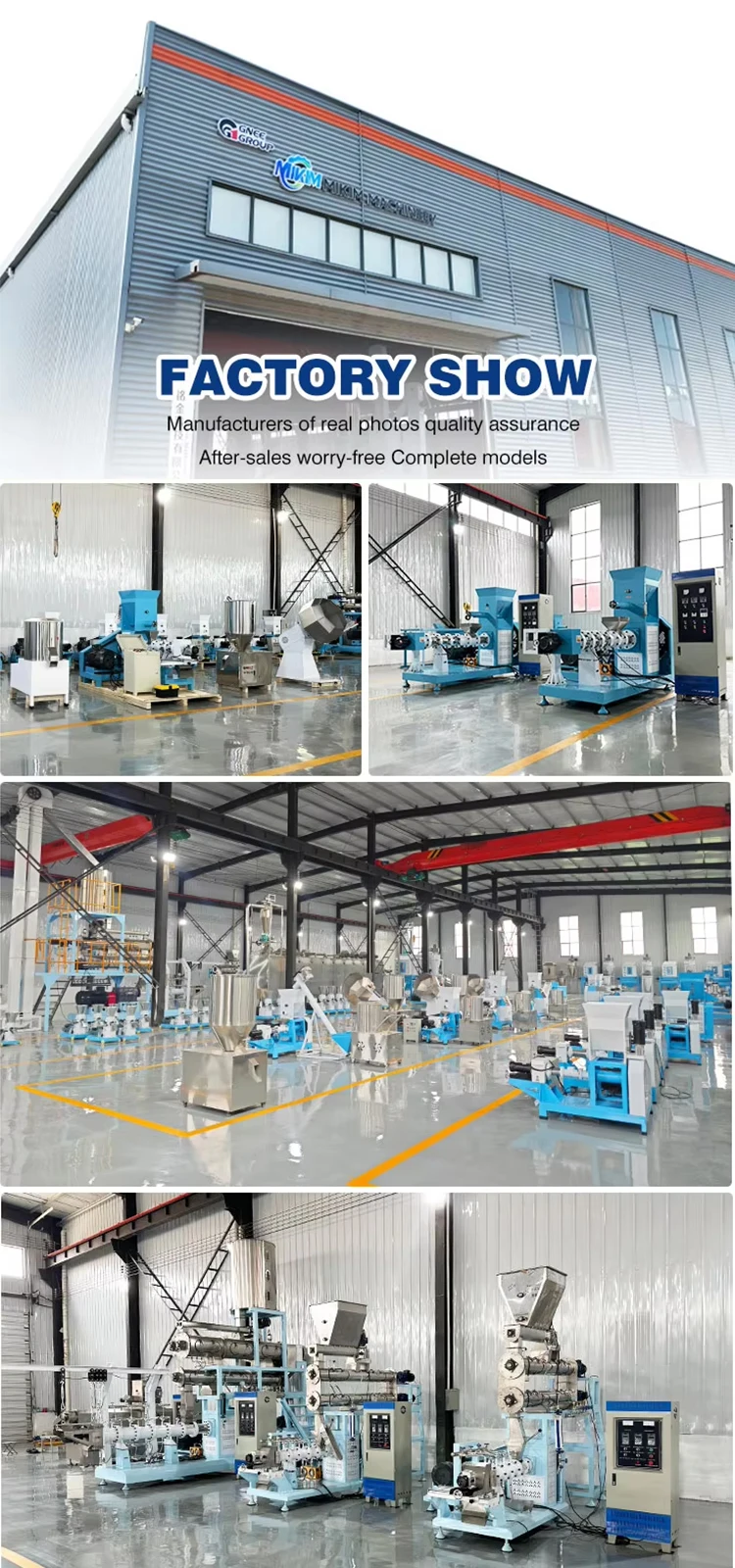
A simple fish feed line test is the process of running a small or medium fish feed production line under real working conditions before delivery or installation. The purpose of the test is to verify whether the machine can produce qualified fish feed pellets with stable capacity, proper pellet shape, and good floating or sinking performance.
For many aquaculture customers, testing is one of the most important steps before purchasing a fish feed production line because it helps reduce production risks and confirms that the equipment matches actual farming requirements.
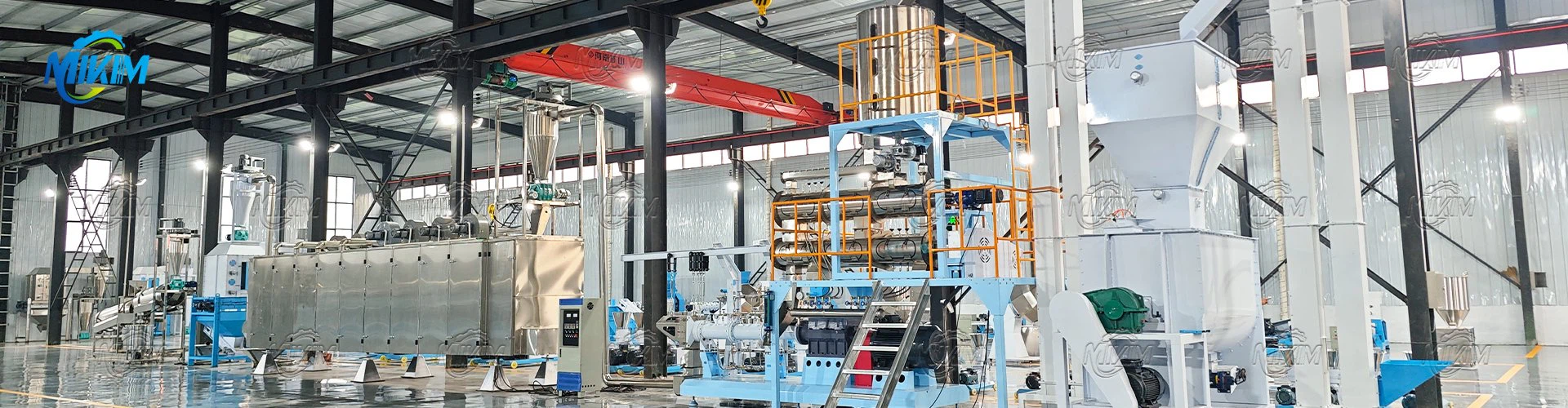
What Equipment Is Usually Included in a Simple floating fish food making production line?
A basic fish feed production line normally includes:
| Equipment | Main Function |
|---|---|
| Crusher | Grinding corn, soybean meal, and other materials |
| Mixer | Mixing feed ingredients evenly |
| Screw Conveyor | Feeding materials automatically |
| Fish Feed Extruder | Producing feed pellets |
| Dryer | Reducing pellet moisture |
| Cooling Machine | Cooling finished pellets |
For startup farms or small feed factories, this simple configuration is often enough for daily fish feed production.
What Customers Check During the floating fish food production line Test
1. Pellet Floating Effect
Floating performance is one of the first things customers inspect.
During the test, pellets are placed into water to check:
Floating time
Pellet stability
Water resistance
Expansion condition
Good floating pellets should remain on the water surface for a long time without quickly breaking apart.
2. Feed Pellet Size Uniformity
Customers also check whether the pellet size is consistent.
Uniform pellets help:
Improve fish feeding efficiency
Reduce feed waste
Increase feed market value
Common pellet sizes include:
1mm–2mm for fish fry
2mm–4mm for medium fish
4mm–6mm for adult fish
3. Machine Running Stability
A stable production line should operate continuously without:
Material blockage
Unstable feeding
Excessive vibration
Abnormal noise
During testing, customers usually observe the machine for at least 30–60 minutes under full-load operation.
Raw Materials Used During Testing
A standard fish feed line test often uses common raw materials such as:
Corn powder
Soybean meal
Wheat bran
Fish meal
Rice bran
Vitamin premix
The moisture content normally stays around 20%–25% before extrusion to ensure better pellet puffing performance.
Why Testing Before Shipment Is Important
Reduce Installation Risk
Testing confirms the machine is operating correctly before shipment.
Verify Real Production Capacity
Customers can check whether the actual output matches the required production target.
Improve Customer Confidence
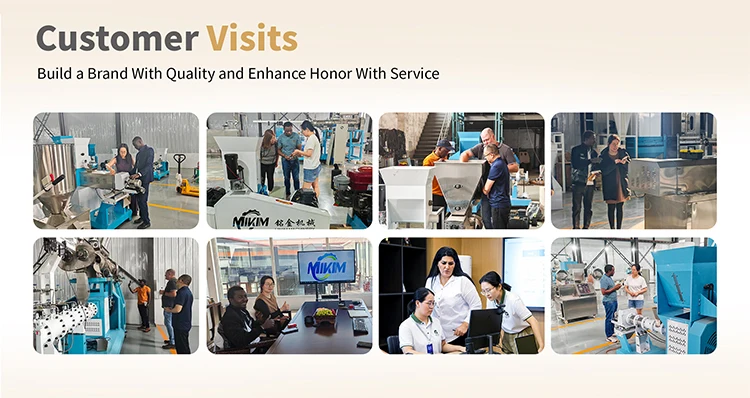
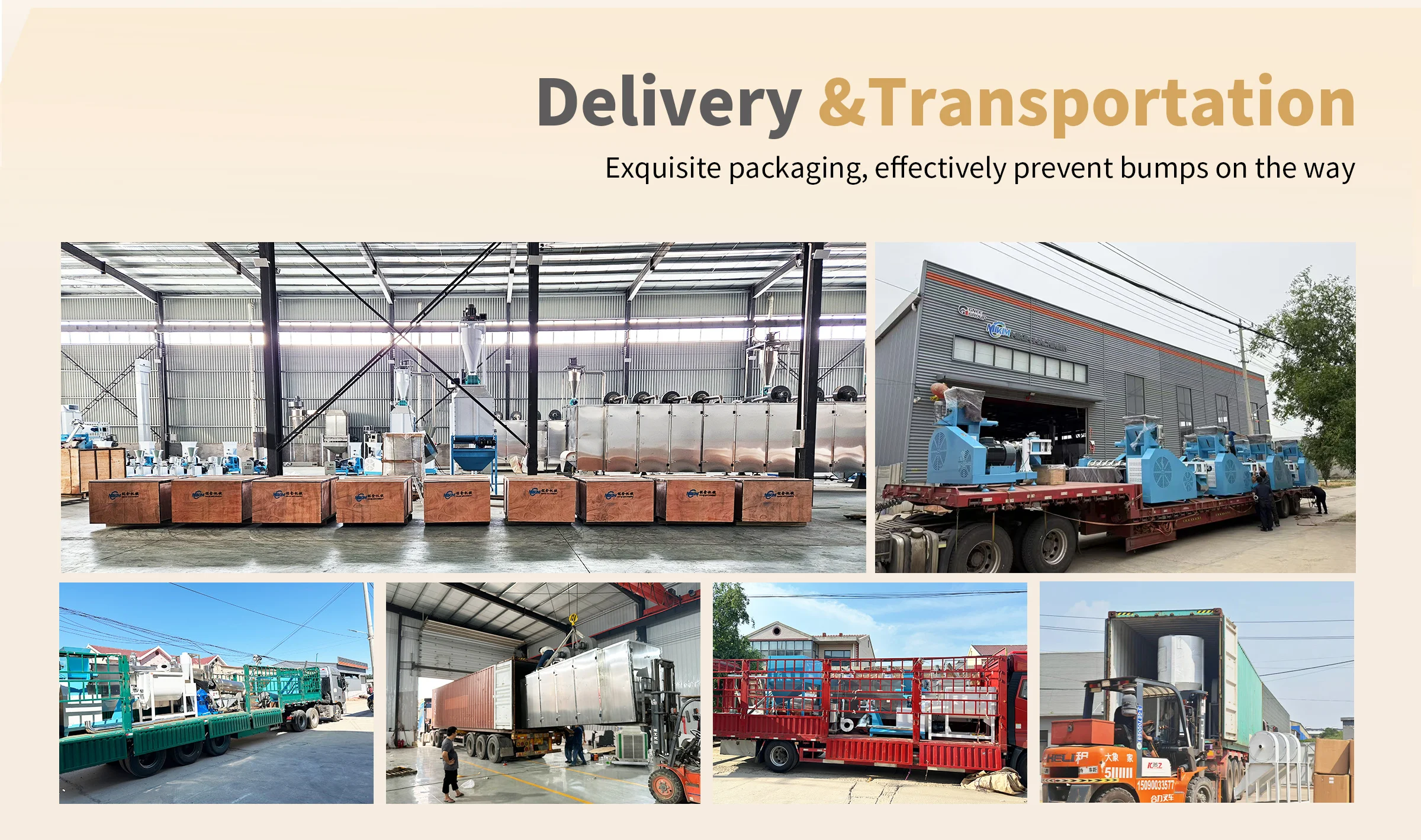
Real testing videos and on-site demonstrations help customers understand machine quality more clearly than product pictures alone.
Who Is the Simple floating fish meal making production line Suitable For?
This type of production line is commonly used by:
Small aquaculture farms
Startup fish feed businesses
Rural feed processing workshops
Medium fish farming projects
The simple structure makes operation and maintenance easier for new users.
Key Advantages of a floating fish food pellet making production line
Compact Structure
Requires less factory space.
Lower Investment Cost
Suitable for customers with limited startup budgets.
Easy Operation
Operators can quickly learn daily production procedures.
Flexible Feed Production
Can produce floating or sinking fish feed by adjusting formulas and machine settings.
Important Questions Before Buying
What Capacity Do You Need?
Customers should estimate:
Daily feed demand
Fish farming scale
Future business expansion plans
What Fish Species Will Be Fed?
Different fish species require different pellet sizes and nutrition formulas.
Examples:
Tilapia
Catfish
Carp
Shrimp
Aquarium fish
Do You Need Floating or Sinking Feed?
Different extrusion settings affect pellet density and buoyancy.
Understanding the target feed type helps select the correct machine configuration.
Final Suggestion
Before purchasing a fish feed pellet making production line, customers should always request:
Real machine testing
Pellet sample inspection
Production video
Technical parameter confirmation
After-sales support details
A successful simple fish feed line test can help avoid many production problems later and improve long-term feed manufacturing efficiency.
Company Profile