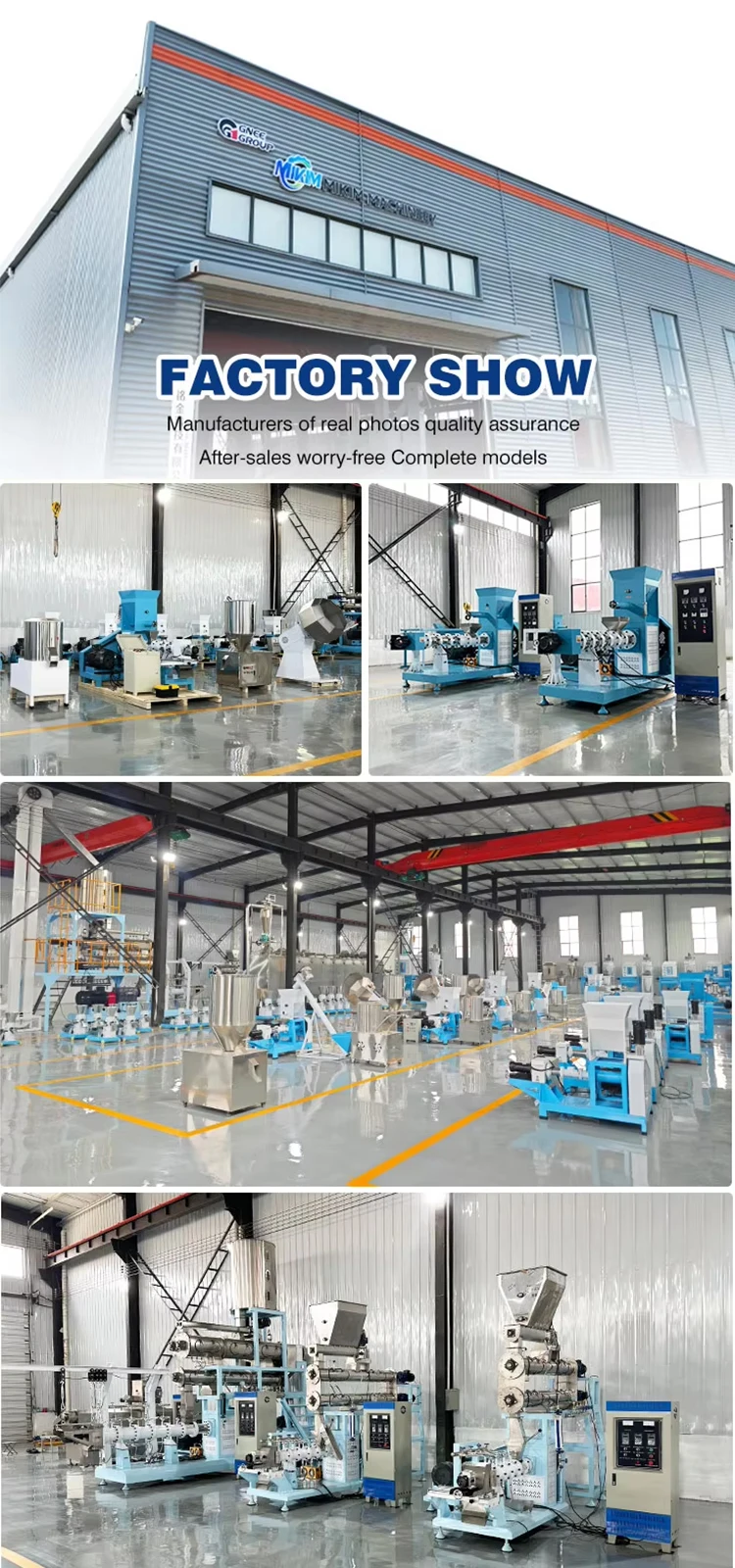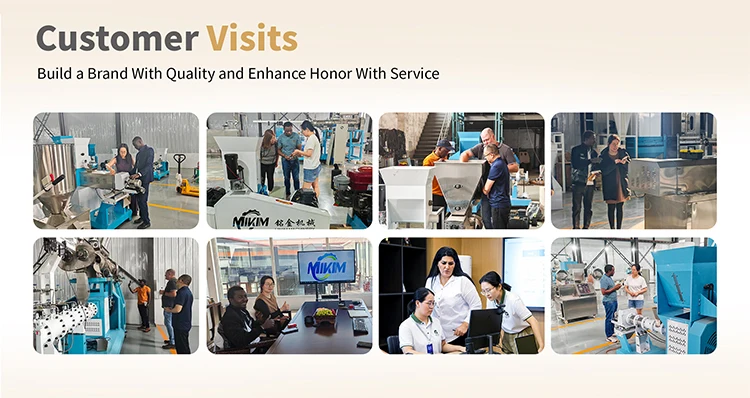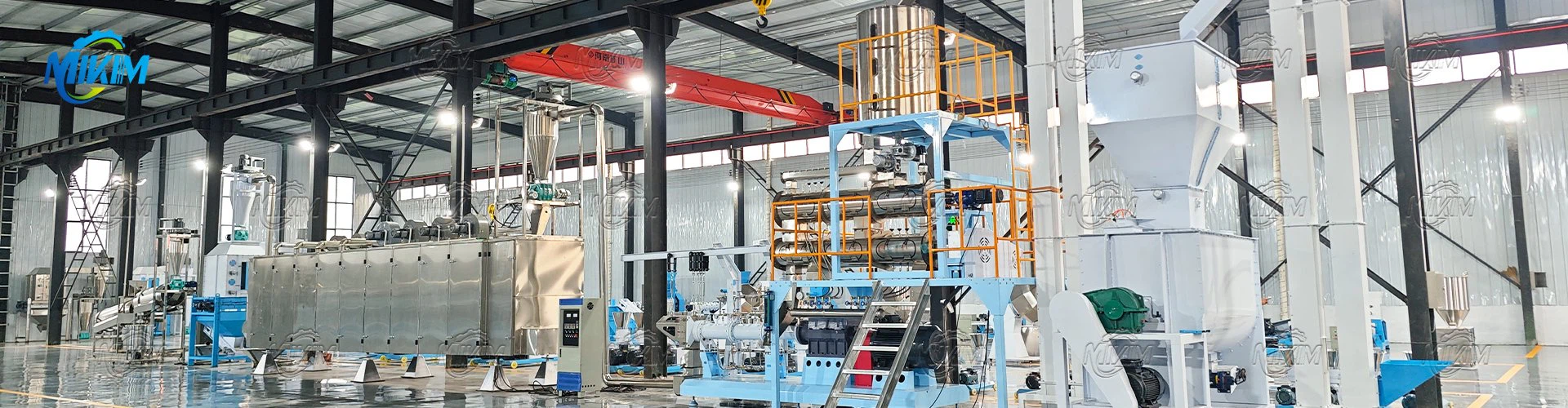
Why Customers Test a 500kg/h Floating Fish Feed Pellet Machine Before Shipment
For fish feed producers, the biggest concern is simple:
Can the machine produce stable floating pellets continuously under real working conditions?
That is why many customers arrange a factory test before delivery. A 500kg/h floating fish feed pellet mill test helps verify:
- Capacity stability
- Pellet size accuracy
- Moisture control
- Machine running condition
- Final feed appearance
This testing process reduces installation risks after arrival and helps customers confirm whether the machine matches their farm or feed business requirements.
What Materials Were Used During the Customer Test?
During this factory test, the machine processed common floating fish feed raw materials, including:
Corn powder
Soybean meal
Wheat bran
Fish meal
Vitamin premix
Rice bran
The raw material moisture was controlled at approximately 20%–25% before extrusion to ensure proper puffing and floating performance.
Suitable Fish Species
The 500kg/h floating fish food extruder machine is commonly used for:
Tilapia feed
Catfish feed
Carp feed
Shrimp feed
Aquarium fish feed
Pellet diameter can usually be adjusted between 1mm and 6mm by changing the mold.
What Customers Usually Check During the Machine Test
1. Floating Rate of Feed Pellets
Customers pay close attention to whether the pellets can float on water for a long time without quickly sinking or breaking.
A qualified floating fish feed pellet should have:
Uniform expansion
Smooth surface
Stable floating time
Good water resistance
2. Actual Production Capacity
Many buyers worry about whether "500kg/h" is real production output or only a theoretical value.
During the test, the machine runs continuously with real raw materials to confirm:
Feeding speed
Extrusion stability
Output per hour
Energy consumption
This helps customers estimate future operating costs and production planning.
3. Pellet Shape and Cutting Effect
The cutter system directly affects pellet uniformity.
During testing, customers normally inspect:
Pellet length consistency
Cutting smoothness
Powder percentage
Final feed appearance
Good pellets look uniform, clean, and have fewer broken particles. This is important for both fish feeding performance and feed sales value.
Main Equipment Included in the 500kg/h fish food pellet production line
A standard 500kg/h floating fish feed production setup usually includes:
| Equipment | Function |
|---|---|
| Crusher | Grinding raw materials |
| Mixer | Uniform ingredient mixing |
| Screw Conveyor | Automatic feeding |
| Floating Fish Feed Extruder | Pellet puffing and shaping |
| Dryer | Reducing pellet moisture |
| Flavoring Machine | Oil and seasoning spraying |
| Cooling Machine | Lowering pellet temperature |
Customers can choose a compact configuration or a full automatic production line depending on factory size and budget.
Why the 500kg/h Model Is Popular
The 500kg/h floating fish feed processing machine is widely selected because it balances:
Medium investment cost
Stable commercial output
Lower labor requirement
Flexible pellet size production
Easy operation and maintenance
It is suitable for:
Small fish feed factories
Aquaculture farms
Startup feed businesses
Local aquatic feed suppliers
Key Technical Advantages Observed During Testing
Stable Extrusion System
The screw extrusion structure provides continuous pressure and stable puffing performance.
Adjustable Pellet Size
Different molds can produce feed pellets for fry fish, medium fish, and adult fish.
High Floating Performance
Proper temperature and pressure control improve feed buoyancy and digestion.
Continuous Production
The machine can operate continuously for long working hours with stable output.
Customer Concerns Before Purchasing
Is 500kg/h Suitable for My Business?
This model is suitable for users planning:
Daily production of 3–5 tons
Medium-scale fish farming
Commercial floating feed sales
Expansion from manual feed processing
Can the Formula Be Customized?
Yes. The machine supports different feed formulas according to:
Fish species
Protein requirements
Local raw material availability
Market feed standards
Is Installation Difficult?
Most manufacturers provide:
Installation guidance
Operation manuals
Video support
Formula suggestions
Spare parts service
Some suppliers also support overseas engineer installation services.
Final Suggestion Before Buying
Before ordering a floating fish feed pellet maker machine, customers should confirm:
Required pellet size
Fish species
Expected daily output
Local voltage
Raw material conditions
Factory space layout
A real factory test is one of the most effective ways to verify machine quality before shipment and avoid future production problems.
Company Profile