Introduction
Starting a cattle feed manufacturing business is one of the fastest-growing opportunities in the global livestock industry. With increasing demand for beef and dairy products, farmers and entrepreneurs are shifting toward self-produced pellet feed to reduce cost and improve nutrition control.
A cattle feed pellet production plant transforms raw agricultural materials into high-density, balanced feed pellets suitable for cattle, dairy cows, sheep, and other livestock.
This guide explains the complete business setup process, including equipment selection, production workflow, cost structure, and troubleshooting based on real feed mill experience.
What Is a Cattle Feed Complete Production Line?
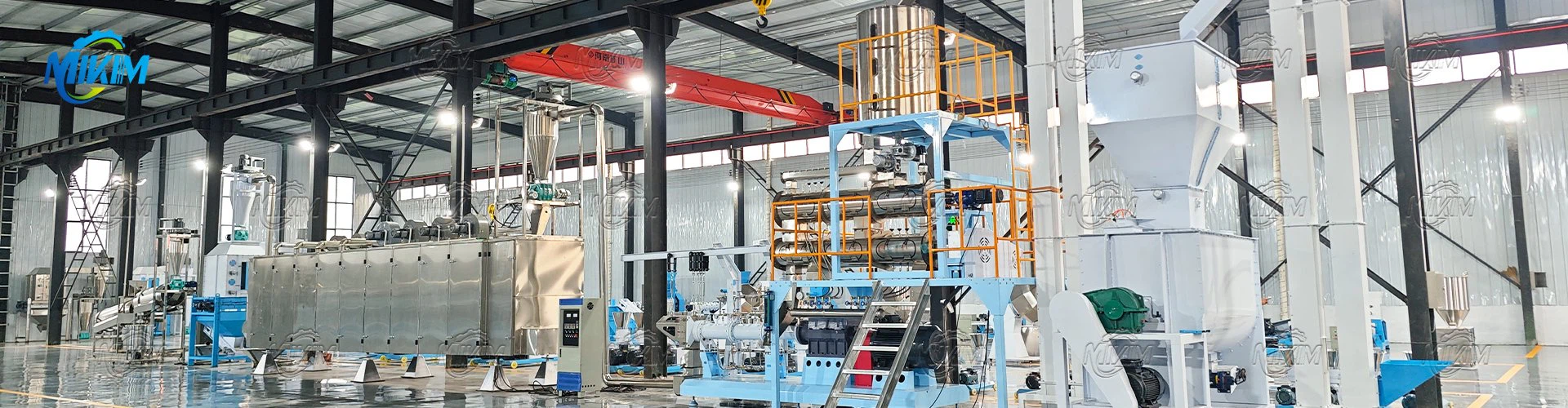
A Cattle Feed Complete Production Line is a system that processes raw grains and protein materials into uniform pellets using crushing, mixing, pelletizing, cooling, and packaging equipment.
It is widely used for:
- Dairy cattle farms
- Beef cattle feedlots
- Sheep and goat farms
- Commercial feed factories
- Agricultural cooperatives
Compared with traditional loose feed, pellet feed improves feed efficiency and reduces waste.
Why Cattle Feed Manufacturing Is a Profitable Business?
Growing Market Demand
Global meat and dairy consumption is increasing, especially in developing countries.
Cost Control Advantage
Farmers can reduce feed cost by using local raw materials.
High Feed Efficiency
Pellet feed improves digestion and weight gain performance.
Scalable Business Model
Production can start small and expand into industrial scale.
Raw Materials Used in Cattle Feed Production
Common raw materials include:
- Corn / maize
- Wheat bran
- Soybean meal
- Cottonseed meal
- Rice bran
- Alfalfa / grass powder
- Molasses
- Mineral premix
- Salt and calcium powder

Complete Cattle Feed Pellet Production Process
Step 1: Raw Material Crushing
Raw grains and fiber materials are crushed into fine powder.
Key requirement:
40–60 mesh particle size for stable pellet forming
Step 2: Mixing Process
All ingredients are mixed evenly in a feed mixer.
Important points:
- Add vitamins and minerals evenly
- Ensure uniform distribution
- Avoid ingredient separation
Step 3: Pelletizing
The mixed powder enters the feed pellet machine, where:
Heat + pressure compress materials
Die shapes pellets
- Protein gelatinization improves digestibility
Pellet size for cattle:
5mm standard size


Step 4: Cooling Process
Fresh pellets are hot and soft.
Cooling system:
Reduces moisture
Hardens pellets
Improves storage stability
Step 5: Screening Process
Separates:
Broken pellets
Powder residue
Qualified finished feed
Step 6: Packaging System
Final feed is packed into bags for storage or sale.

Key Equipment in a Poultry Feed Pellet Production Line
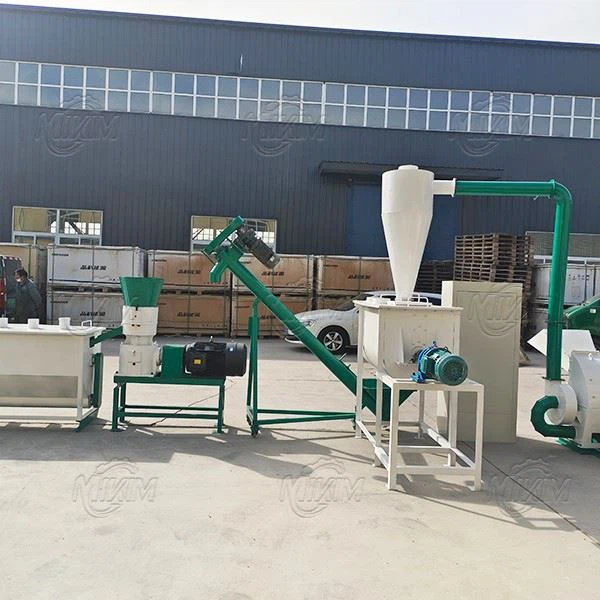
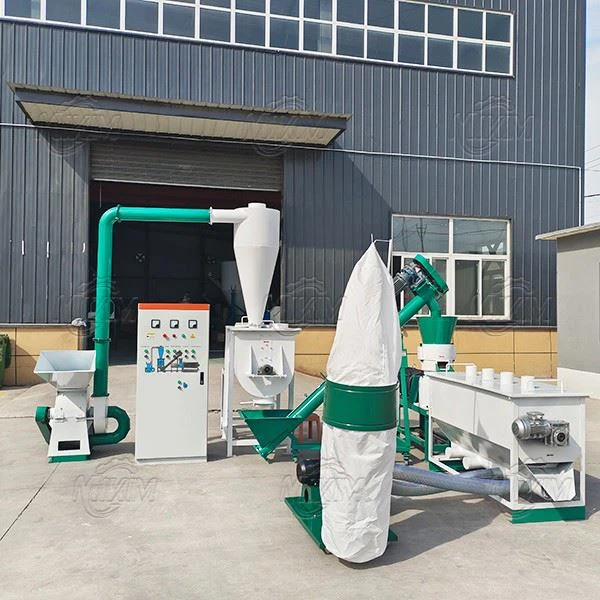
A complete production line includes:
- Crusher machine
- Feed mixer
- Feed pellet machine
- Cooler
- Screening machine
- Packing machine
- Conveyor system (optional)
How to Start a Cattle Feed Manufacturing Business (Step-by-Step)?
Step 1: Market Research
Identify:
Local cattle population
Feed price competition
Raw material availability
Step 2: Choose Production Capacity
| Business Type | Capacity |
|---|---|
| Small farm use | 500–1000kg/h |
| Medium factory | 1–3 ton/h |
| Large industrial plant | 5–10 ton/h |
Step 3: Select Equipment Configuration
Key factors:
Pellet machine type (flat die or ring die)
Automation level
Power supply (electric or diesel)
Space availability
Step 4: Factory Layout Design
A proper layout improves efficiency:
Raw material storage area
Production line area
Finished product warehouse
Step 5: Installation and Training
Professional suppliers usually provide:
Installation guidance
Operation training
Formula support
Spare parts supply
Step 6: Start Production and Sales
Main customers:
Cattle farms
Dairy farms
Feed distributors
Agricultural cooperatives
Common Problems in Cattle Feed Production
Q1: Why are cattle feed pellets breaking easily after production?
Cause:
Low binder (starch) content
Improper moisture level
Solution:
Increase corn or starch ratio
Adjust moisture to 12–15%
Q2: Why is pellet output unstable during production?
Cause:
Uneven feeding
Worn roller or die
Solution:
Improve feeding consistency
Replace worn die or rollers
Q3: Why does the pellet machine overload or stop suddenly?
Cause:
Raw material too wet or too coarse
Motor overload
Solution:
Improve grinding fineness
Reduce feeding speed
Q4: Why are pellets not forming properly?
Cause:
Incorrect die size
Low compression ratio
Solution:
Replace suitable die
Adjust formula ratio
Q5: Why is the feed producing too much powder?
Cause:
Poor mixing
Low conditioning time
Solution:
Improve mixer performance
Ensure uniform ingredient blending
Conclusion
Starting a cattle feed manufacturing business is a scalable and profitable opportunity in the livestock industry. A properly designed animal feed pellet production plant ensures stable output, balanced nutrition, and long-term business growth.
With the right equipment selection, raw material strategy, and production control, entrepreneurs can build a sustainable feed production business that serves both local farms and commercial distributors.
FAQ
Q1: Why does the cattle feed pellet machine produce uneven pellet size?
Usually caused by unstable feeding speed or worn die holes. Adjust feeding system and check die condition.
Q2: Why do pellets become soft after cooling?
This is caused by high moisture content or insufficient cooling time. Reduce moisture before pelletizing.
Q3: Why does the machine consume too much power during operation?
Often due to overloading or raw material too coarse. Improve grinding and reduce feeding load.
Q4: Why is there too much dust in finished cattle feed pellets?
Caused by poor compression or low binder ratio. Increase starch content and check die compression ratio.
Q5: Why does the pellet machine frequently block during production?
Usually due to wet raw materials or uneven mixing. Adjust moisture and improve mixing uniformity.
Company Profile