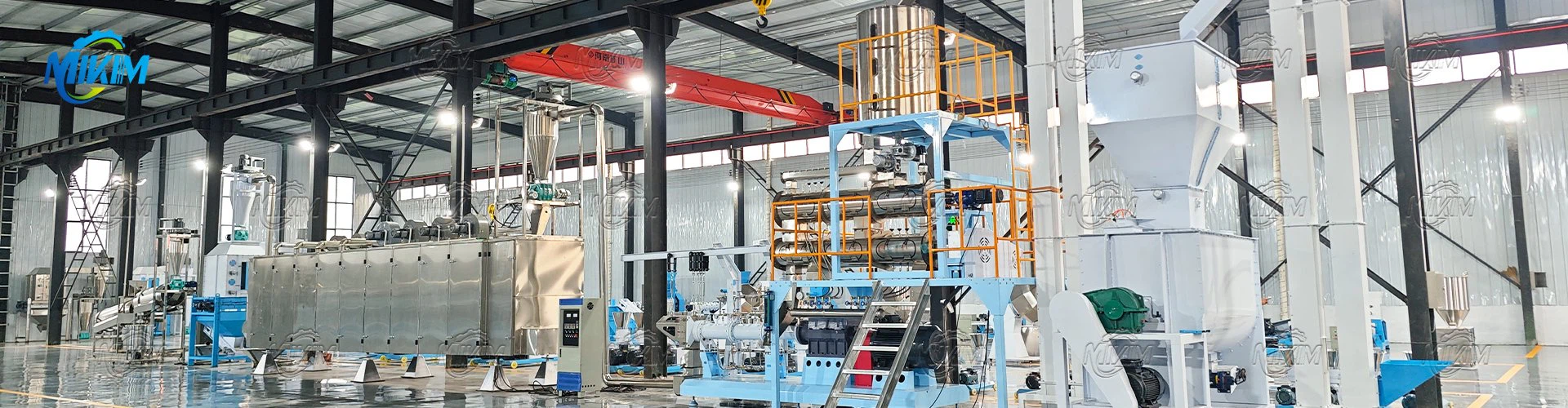
The screw is one of the most critical wear parts in a cat food making machine (also used for dry pet food extrusion). It directly affects pellet forming, extrusion pressure, and final product quality.
Over time, the screw may become worn, deformed, or blocked due to continuous high-pressure operation. When this happens, replacing the screw is necessary to restore production efficiency and maintain consistent cat food pellet quality.
Why Screw Replacement Is Important?
The screw is responsible for pushing raw materials through the barrel and creating pressure for extrusion.
Common signs of screw wear include:
- Reduced pellet output
- Poor pellet shape or uneven size
- Low expansion rate (pellets sink easily)
- Machine vibration or abnormal noise
- Increased motor load
If ignored, worn screws can damage the barrel and increase repair costs.
Safety Precautions Before Removing the Screw
Before starting:
- Turn off power completely
- Disconnect electrical supply
- Wait until machine fully cools
- Wear protective gloves
Ensure machine is stable on the ground
⚠️ Never attempt screw removal while the machine is hot or running.
Tools Required
Prepare the following tools:
- Wrenches and spanners
- Screw puller or extraction tool
- Lubricating oil
- Rubber hammer
- Cleaning brush
- Replacement screw (correct model size)
Using correct tools ensures safe and damage-free disassembly.
Step-by-Step Guide to Remove Screw
Step 1: Remove Feeding and Cutting Parts
Start by disassembling:
- Feeding hopper
- Cutter assembly
- Die plate (if needed)
This provides access to the extrusion chamber.
Step 2: Loosen Machine Housing Bolts
Carefully loosen the bolts around:
- Barrel cover
- Front housing section
Do not fully remove all bolts at once. Maintain stability during disassembly.
Step 3: Apply Lubrication to Screw Area
If the screw is stuck:
- Apply lubricating oil into the barrel
- Wait 10–15 minutes
- This helps loosen material buildup
This step is especially important for machines used with high-protein or oily cat food formulas.
Step 4: Extract the Screw
Use a screw puller or manual extraction method:
- Rotate screw slowly in reverse direction
- Pull gently outward
Use rubber hammer if needed (light tapping only)
⚠️ Avoid using excessive force to prevent barrel damage.
Step 5: Clean the Barrel Interior
After removal:
Clean leftover feed residues
Remove oil deposits
Inspect inner barrel surface for wear or scratches
A clean barrel ensures better performance for the new screw.
Step-by-Step Guide to Installing a New Screw in a cat feed extruder machine
Step 1: Check Compatibility
Before installation, confirm:
- Screw model matches machine type
- Diameter and length are correct
- Material hardness meets production needs
Incorrect screw models can cause extrusion failure.
Step 2: Apply Lubrication
Lightly apply lubricating oil to:
Screw surface
Barrel inner wall
This reduces friction during startup.
Step 3: Insert Screw Carefully
Align screw with barrel center
Push slowly into the chamber
Rotate gently while inserting
Avoid forcing misaligned installation.
Step 4: Reinstall Die and Cutting System
After screw installation:
Install die plate
Reassemble cutter system
Tighten all bolts evenly
Ensure no gaps or loose parts remain.
Step 5: Test Run Without Materials
Run machine empty for 3–5 minutes:
Check for:
Smooth rotation
No abnormal noise
Stable vibration level
If abnormal sound occurs, stop immediately and recheck installation.
Step 6: Start Feeding Materials Gradually
Begin with small feeding volume
Increase gradually
Observe pellet formation
This helps new screw settle into operation smoothly.
Common Problems After Screw Replacement
Q1: Why is the machine making noise after installing a new screw?
Cause:
Incorrect alignment
Loose bolts
Solution:
Recheck screw positioning
Tighten all connection parts evenly
Q2: Why is pellet output low after screw replacement?
Cause:
Screw not fully seated
Die mismatch
Solution:
Reinstall screw correctly
Check die compatibility
Q3: Why is the cat feed pellet machine vibrating after new screw installation?
Cause:
Unbalanced screw installation
Uneven tightening
Solution:
Rebalance assembly
Tighten bolts symmetrically
Q4: Why are cat food pellets not expanding properly?
Cause:
New screw not stabilized
Incorrect moisture level
Solution:
Run machine for short break-in period
Adjust moisture to 20–25%
Q5: Why does the screw get stuck during installation?
Cause:
Residual feed inside barrel
Lack of lubrication
Solution:
Clean barrel thoroughly
Apply lubrication before insertion
Maintenance Tips After Screw Replacement
To extend screw lifespan:
- Clean machine after each production cycle
- Avoid overloading feeding system
- Use properly ground raw materials
- Maintain correct moisture levels
- Inspect screw wear every 2–3 months
Conclusion
Removing and replacing a screw in a cat food extruder machine is a technical but manageable process when done correctly. Following proper safety steps, correct alignment methods, and gradual startup procedures ensures stable machine performance and high-quality pet food production.
For pet food manufacturers, regular screw inspection and timely replacement are key to maintaining efficient and profitable production.
FAQ
Q1: Why is the screw stuck and cannot be removed from the barrel?
Usually caused by hardened feed residue inside the chamber. Apply lubrication and heat waiting time before extraction.
Q2: Why does the machine vibrate after screw replacement?
This is often due to incorrect screw alignment or uneven bolt tightening.
Q3: Why is extrusion output unstable after installing a new screw?
The screw may not be fully seated or requires a short break-in period.
Q4: Why is there metal noise after screw installation?
Possible friction between screw and barrel due to misalignment or lack of lubrication.
Q5: Why are cat food pellets not forming properly after screw change?
This is usually caused by incorrect moisture content or incompatible die and screw combination.
Company Profile