
content
Key Points for Troubleshooting: Quickly Determine if Blockage is Due to Hard Impurities
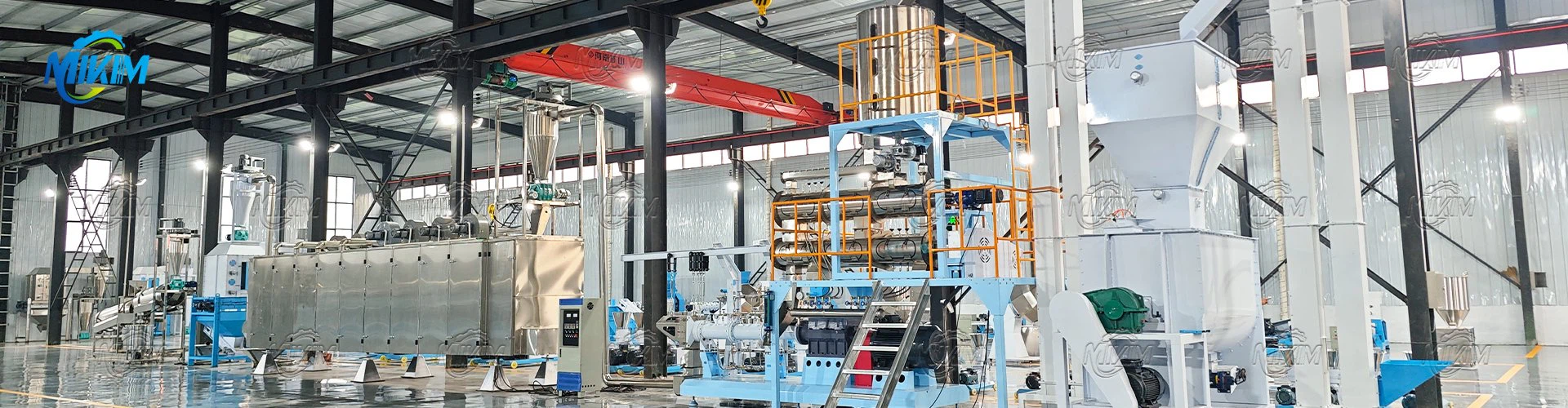
Before clearing blockages, it's crucial to determine the type of blockage to avoid damaging the equipment through blind operation. Focus on the floating fish food maker machine's operating status and output performance. First, observe the extruder's operating parameters. If production suddenly stops, the barrel pressure surges (exceeding 7MPa, normal range 4-6MPa), and the extruder's noise and vibration increase, it's highly likely that hard impurities are clogging the nozzle. Second, after stopping and cooling the machine, before disassembling the nozzle, observe the floating fish food making machine's output end. If hard impurities are exposed, this confirms the blockage. Third, after disassembling the nozzle, use a flashlight to illuminate the nozzle orifice to check for metal fragments, stones, or other hard impurities. Also, observe the orifice for deformation or scratches to preliminarily assess the degree of blockage and equipment damage.


Unblocking Techniques: Safe and Efficient, Avoid Nozzle Damage
The core principle for clearing blockages caused by hard impurities is "gentle disassembly and precise removal." Avoid using brute force to prevent damage to the nozzle and floating fish meal processing machine components. First, for hard impurities stuck at the nozzle orifice inlet, use special tweezers (non-slip, scratch-resistant) to gently grasp the impurity and slowly remove it. Avoid excessive force during removal to prevent the impurity from falling into the extruder barrel and accelerating screw wear. Second, for small, hard impurities stuck inside the orifice, gently insert a thin steel wire (wrapped in soft cloth) matching the orifice size into the orifice and slowly agitate it to push the impurity towards the orifice inlet. Then remove it with tweezers. Do not forcibly poke or poke with the wire to avoid scratching the inner wall of the orifice. Third, if the impurity is stuck inside the orifice and cannot be removed, place the nozzle in a low-temperature (80-100℃) oven for 10-15 minutes to expand the orifice using the principle of thermal expansion and contraction. Then attempt to remove the impurity. After removal, clean any remaining material from the orifice with a fine brush.

Prevention and Control Measures: Source Avoidance to Reduce the Probability of Clogging in Automatic Fish Feed Making Machines
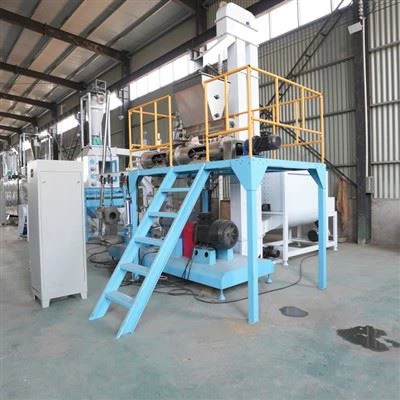
First, strictly control the quality of raw materials. Establish a raw material screening mechanism and use double-layer screening equipment to remove hard impurities such as metal fragments and stones from the raw materials. At the same time, break up raw material clumps to ensure that the raw material particles are uniform (particle size ≤2mm). Second, strengthen the inspection of the fish food extruder machine's feed inlet. Assign dedicated personnel to monitor the feeding situation in real time, and promptly clean up any impurities to prevent them from entering the equipment. Third, regularly check the condition of the nozzles. If the nozzle orifice diameter is deformed or scratched, grind and calibrate it in time. If the problem is serious, replace it with a dedicated nozzle. At the same time, regularly clean the extruder barrel and screw to remove residual impurities and prevent impurities from clogging the nozzles.
about Us
Customer visit

Certificate of Honor

FAQ
1. What is the price of the small electric fish feed extruder machine?
The price ranges from approximately $1,500-$55,000
2. Do you provide maintenance services for your customers?
Yes, we offer comprehensive after-sales maintenance services to our customers.
If you would like to learn more about MIKIM machinery, please contact us. We offer one-stop service and welcome your inquiries!!!