
content
Unclogging Step 1: Safe Shutdown and Cooling, Preparatory Work
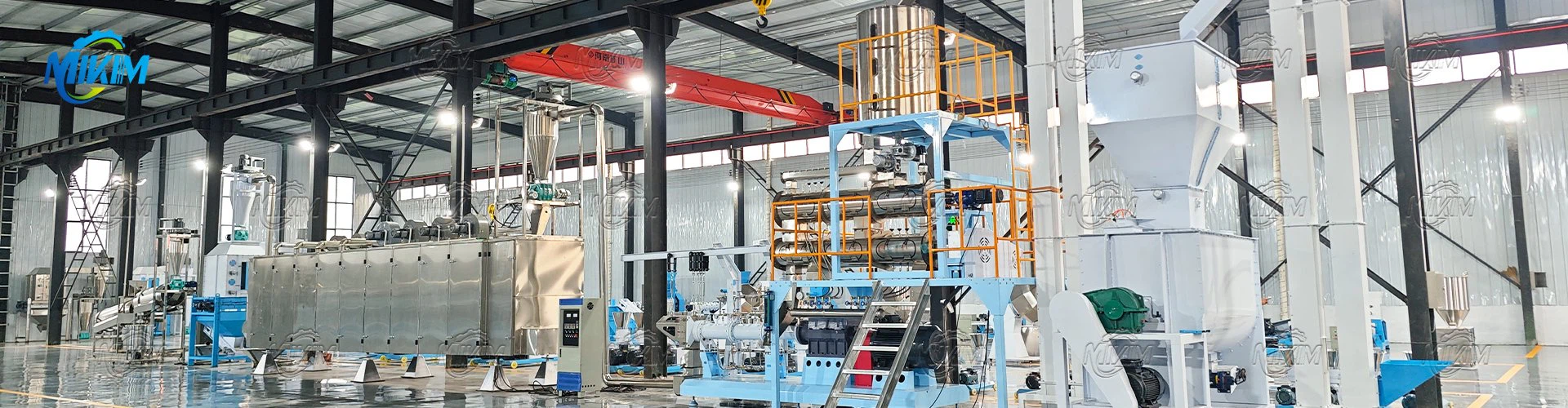
Before unclogging the nozzles of a fish feed production machine, strictly adhere to safe operating procedures to prevent accidental equipment startup or burns from high temperatures. First, immediately stop the extruder's feed, turn off the power switch, unplug the power cord, and hang a "Unclogging in Progress, Do Not Start" warning sign to prevent accidental operation. Second, allow the floating fish food pellet manufacturing machine to cool naturally to below 50℃, especially the nozzle area, to avoid burns from disassembly and unclogging at high temperatures. Also, prevent cold water from contacting the high-temperature nozzle, which could cause component deformation. Third, disassemble the nozzle. Gently unscrew the nozzle fixing bolts with a wrench and remove the nozzle from the extruder's discharge end. Place it on a clean work surface, simultaneously cleaning up any loose, dried material around the nozzle to prevent secondary blockage.


Unclogging Step 2: High-Temperature Soaking and Softening, Precise Cleaning of Dried Material
The core issue with dried material blockage in floating fish food manufacturing extruder machines is that the material hardens and adheres to the inner wall of the nozzle orifice. It needs to be softened by high-temperature soaking before cleaning to avoid damaging the nozzle if forcibly unclogging it. Step 1: Prepare a basin of warm water (40-50℃), add a small amount of food-grade neutral detergent (do not use strong acids or alkalis to avoid corroding the nozzle orifice), stir well, and then soak the nozzle in the warm water for 30-60 minutes to fully soften the dried material (if the blockage is severe, the soaking time can be extended to 1 hour; during this time, gently shake the warm water to accelerate the softening process). Step 2: After soaking, use a special fine-bristled brush (matched to the nozzle orifice diameter to avoid damaging it) to gently unclog the orifice, removing the softened dried material piece by piece. For small residues within the orifice, use a toothpick (wrapped in a soft cloth to avoid scratching the orifice) for precise cleaning to ensure the orifice remains clear.

Step 3: Cleaning, Testing, Resetting, and Adjustment to Ensure Normal Operation
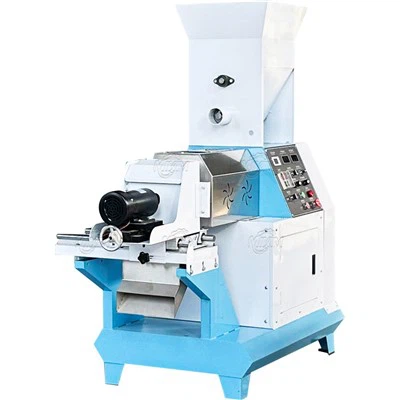
After unclogging, it is necessary to clean, test, and reset the floating fish feed extruder machine to avoid incomplete unclogging and potential problems. First, rinse the nozzle repeatedly with warm water to ensure no material or cleaning agent residue remains. Then, thoroughly dry the nozzle surface and the inside of the orifice with a dry cloth to prevent moisture residue from causing material to stick together during the next production run. Second, check the nozzle orifice diameter by measuring it with calipers to confirm there is no deformation or scratches, and the orifice diameter error is ≤±0.2mm (meeting industry standards). Third, reinstall the nozzle onto the discharge end of the floating fish food maker machine, tighten the fixing bolts to ensure a good seal, and then start the machine for a no-load test. Observe whether the extruder pressure and speed are normal and whether the discharge is smooth. Only put it into production after confirming there are no blockages.
about Us
Customer visit

Certificate of Honor

FAQ
1. What is the price of the floating fish meal processing machine?
The price ranges from approximately $1,500-$55,000
2. Do you provide maintenance services for your customers?
Yes, we offer comprehensive after-sales maintenance services to our customers.
If you would like to learn more about MIKIM machinery, please contact us. We offer one-stop service and welcome your inquiries!!!