
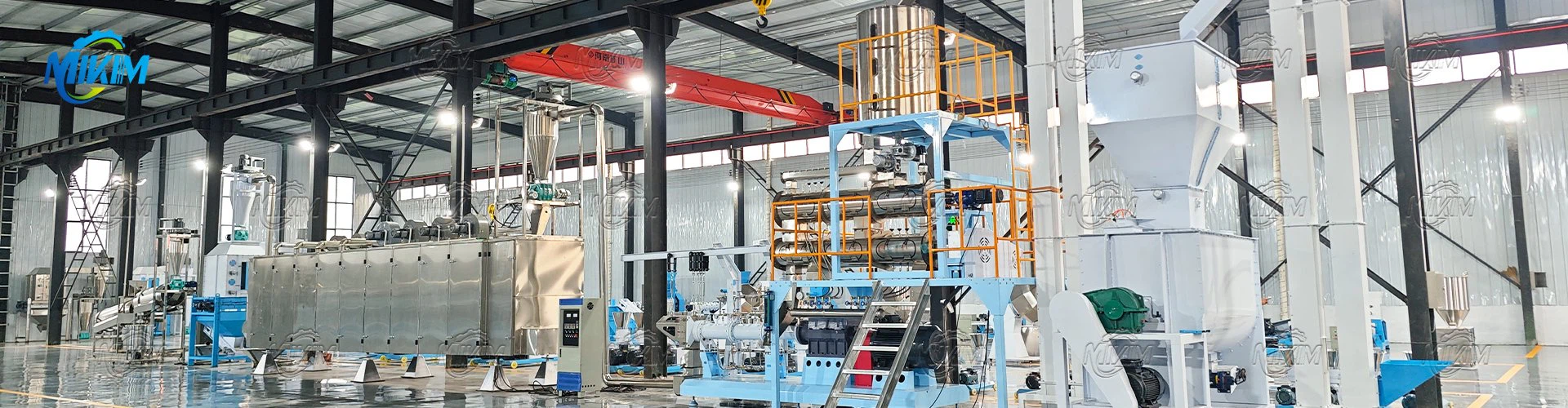
The key to feed processing machinery is to crush feed and various roughages. The purpose of crushing feed is to improve the feed area and adjust the particle size distribution. Increasing the area, enhancing freshness, and easily contacting digestive enzymes at the edge of digestion and absorption is conducive to improving the absorption rate and enhancing the digestion and absorption of feed nutrients. On the one hand, adjusting the particle size distribution reduces the kinetic energy of livestock biting, and on the other hand, it is more convenient for transportation, storage, mixing and granulation, with higher efficiency and quality.
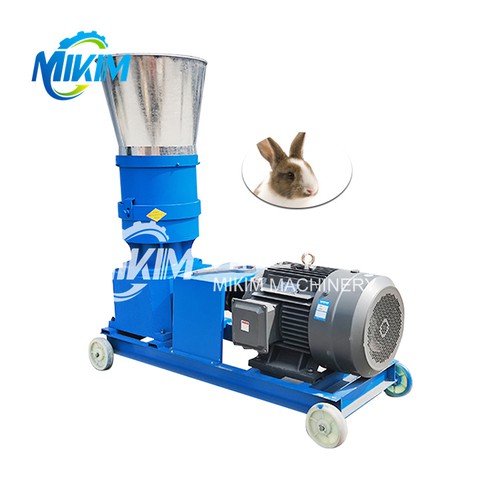
| Model | Capacity | Power | Dimensions |
| MK-250 | 100-200kg/h | 15kw | 1120*440*1060mm |
| MK-300 | 200-300kg/h | 22kw | 1280*560*1220mm |
| MK-350 | 300-400kg/h | 30kw | 1300*600*1250mm |
| MK-400 | 400-600kg/h | 37kw | 1390*650*1290mm |
| MK450 | 600-800kg/h | 45kw | 1620*700*1600mm |
In the case of selecting feed processing machinery, according to the selection of production capacity, the general instructions for use and the factory nameplate carry a clear production capacity, but understand the rated production capacity, which refers to the production capacity under special circumstances; the selected production capacity should be slightly larger, otherwise it will increase hammer damage, duct ventilation, reduce production capacity, and endanger the continuous production and supply of feed.
Then choose according to the crushing raw materials; at the same time, considering the feeding method of feed processing machinery, there are three ways to output the crushed finished products according to the feeding equipment: self-weight feeding, negative pressure suction and mechanical transportation. The small and medium-sized stand-alone version mainly adopts the self-weight cutting method to simplify the structure. Most small and medium-sized crushers contain negative pressure suction equipment, which has the advantage of removing moisture from the finished product, reducing the environmental humidity in the finished product, facilitating storage, improving the crushing efficiency by 10%~15%, and reducing the dust level on the site of the crushing room.