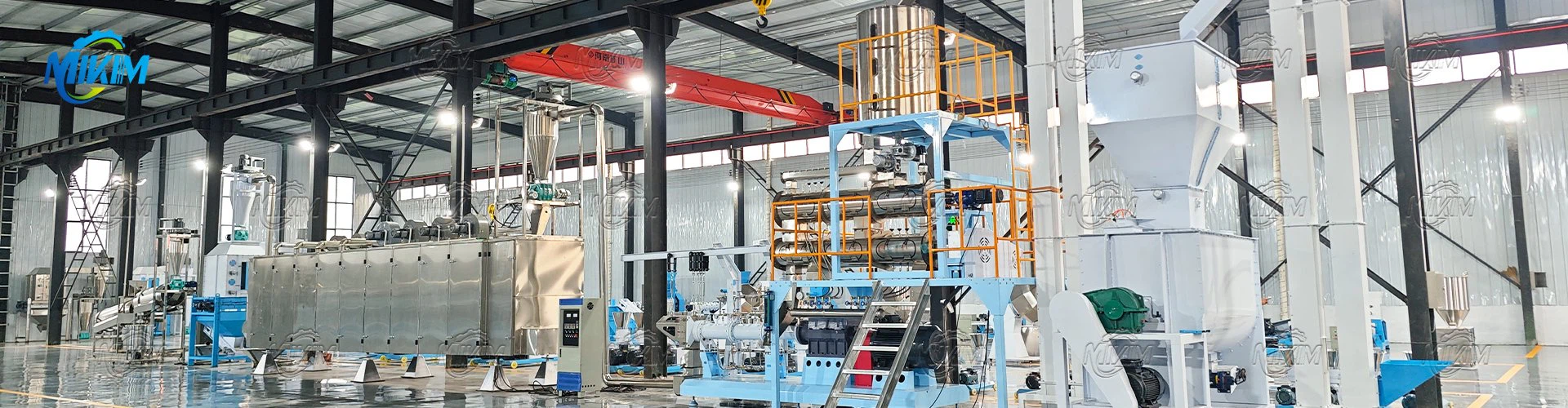
What Is the 350 kg/h diesel floating fish feed processing machine Test?
The 350 kg/h diesel floating fish feed pellet maker machine test is a factory testing process where a diesel-powered fish feed extruder operates under real production conditions to verify extrusion stability, floating pellet quality, diesel engine performance, and continuous feed production capacity before delivery or commercial use.
Why Testing Is Important for a diesel floating fish feed pellet making machine?
For buyers in rural aquaculture areas, especially where electricity supply is unstable, diesel-powered fish feed machines must prove they can operate reliably under load conditions.
Customers usually want to confirm:
- whether the diesel engine can maintain stable power output
- if the machine can continuously produce floating pellets
- whether the actual output can reach 350 kg/h
- if the extrusion process remains stable during long operation periods
- whether floating pellets maintain quality in water
Why 350 kg/h Capacity Matters
This capacity level is important because it fits medium-scale aquaculture production.
In real operation terms:
around 2.8 tons of feed output during an 8-hour working day
suitable for medium fish farms and regional feed supply
supports stable daily floating feed production
What the Test Process Includes
1. Diesel Engine Start-Up Test
Before production begins, technicians inspect:
engine ignition stability
fuel combustion condition
transmission system response
2. Raw Material Feeding Test
Real fish feed ingredients are used during testing.
Typical materials include:
corn flour
soybean meal
fish meal
wheat bran
Technicians observe:
feeding smoothness
hopper material flow
absence of blockage
3. Extrusion Stability Testing
Inside the extrusion chamber:
materials are compressed under pressure
friction heat develops gradually
pellets expand during discharge
Observed during testing:
continuous extrusion flow
pressure stability
smooth pellet output without interruption
4. Pellet Forming and Cutting Test
Fresh pellets are inspected for:
pellet diameter consistency
surface smoothness
cutting precision
structural uniformity
5. Floating Performance Water Test
Pellets are placed into water immediately after production.
Technicians evaluate:
floating duration
pellet stability in water
resistance to fast disintegration
6. Continuous Running Test
The machine operates continuously under working load conditions.
Technicians monitor:
diesel engine temperature
vibration level
extrusion continuity
output consistency close to 350 kg/h
Why Diesel Fish Feed Machines Are Popular
Diesel-powered systems are widely used because they:
work without dependence on electrical grids
support production in remote fish farming areas
provide mobility for rural aquaculture operations
reduce operational interruptions caused by power instability
Key Technical Advantages Verified During Testing
Stable Diesel Power System
Supports continuous production in remote environments.
Consistent Floating Pellet Production
Maintains floating pellet quality during long operation periods.
Medium-Scale Production Capacity
Suitable for commercial fish farming operations.
Flexible Pellet Size Adjustment
Supports different fish growth stages and feed requirements.
Real Factory Test Data
| Item | Result |
|---|---|
| Machine Type | Diesel Floating Fish Feed Pellet Extruder |
| Capacity | 350 kg/h |
| Pellet Size | 1–8mm adjustable |
| Floating Rate | ≥95% |
| Raw Materials | Corn, soybean meal, fish meal |
| Operation Type | Continuous diesel-powered production |
| Application | Tilapia & freshwater fish feed |
Common Problems Checked During Testing
Problem: unstable extrusion output
Possible cause:
inconsistent feeding speed
unstable engine power delivery
Problem: pellets sink too quickly
Possible cause:
insufficient material expansion
improper moisture ratio
Problem: extrusion blockage
Possible cause:
oversized raw material particles
poor formula mixing consistency
Suitable Applications
This machine is suitable for:
medium-scale fish farms
rural aquaculture businesses
floating fish feed production workshops
regional aquaculture feed supply projects
off-grid fish farming operations
FAQ
Why is testing important for diesel fish feed machines?
Testing verifies diesel engine stability, extrusion performance, and floating pellet quality.
Can the machine really produce 350 kg/h?
Yes. Factory testing verifies production output under load conditions.
Does the machine require electricity?
The extrusion system is powered by a diesel engine, making it suitable for off-grid use.
Are floating pellets tested in water?
Yes. Floating performance is verified during testing.
Company Profile