
content
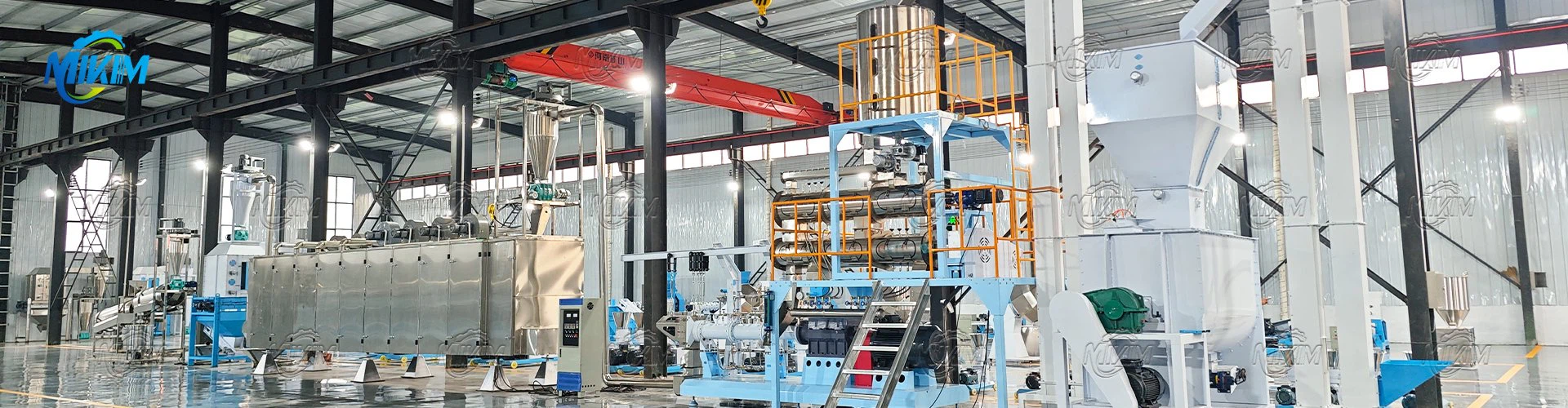
Dry processing is the mainstream production method for commercial dry pet food. Its core characteristics are "no additional watering, high-temperature cooking + extrusion molding," and the dry dog food making machine is the core equipment in this process.
The complete process can be divided into five steps: The first step is raw material pretreatment, in which raw materials such as corn, soybean meal, and meat meal are screened and crushed to 80-120 mesh, and the moisture content is controlled at 10%-15% to avoid blockage or uneven cooking in the subsequent extrusion stage; the second step is precise mixing, in which the crushed raw materials are thoroughly mixed with premixed ingredients such as vitamins and minerals according to the formula to ensure uniform nutrition;
the third step is extrusion and cooking, which is the soul of the dry process. After the raw materials enter the small pet feed extruder machine, the strong friction between the screw and the extrusion chamber generates a high temperature of 120-160℃ and a high pressure of 3-8MPa, which achieves starch gelatinization (gelatinization rate of more than 85%), protein denaturation, and kills more than 99% of harmful bacteria.
Then, it is extruded into porous granules through the die head; the fourth step is drying and cooling. The moisture content of the extruded granules is about 20%-25%. They are dried with hot air at 80-100℃ to a moisture content of ≤12% and then cooled to room temperature; the fifth step is screening and packaging. After removing unqualified granules, they are sealed and packaged to complete the production of dry pet food.
The wet-process pet food production process centers on "high moisture content, steam sterilization, and sealed canning," eliminating the need for pet pellet extrusion equipment. Its core steps are: raw material pretreatment (meat cutting, grain grinding) → mixing (adding a large amount of water to achieve a raw material moisture content of 60%-70%) → steam sterilization (steaming at 121℃ under high pressure for 20-30 minutes to thoroughly kill bacteria) → homogenization and emulsification (making the raw material texture fine and uniform) → filling and sealing (filling into cans or flexible packaging while hot, removing air) → secondary sterilization and cooling (ensuring shelf life). The final product has a moisture content ≥60%, a soft and chewy texture, and is suitable for pets with weak digestive systems.
The core differences between the two processes lie in moisture control, core equipment, and finished product characteristics: the dry process relies on small fish feed pellet extruders to achieve integrated "cooking + shaping," resulting in a finished product with low moisture content, a long shelf life (6-12 months), and easy storage and feeding; the wet process does not require an extruder, using high-temperature cooking for sterilization, resulting in a finished product with high moisture content and good taste, but a shorter shelf life (6-12 months, requiring refrigeration) and higher transportation and storage costs. The application of dog food extruders gives the dry process the advantages of high efficiency and low cost, making it the preferred choice for commercial dry pet food production, while the wet process is more suitable for high-end customized pet food production.
Related equipment


about Us
Customer visit

Certificate of Honor

FAQ
1. What is the price of the fish feed production equipment?
The price ranges from approximately $1,500-$55,000
2. Do you provide maintenance services for your customers?
Yes, we offer comprehensive after-sales maintenance services to our customers.
If you would like to learn more about MIKIM machinery, please contact us. We offer one-stop service and welcome your inquiries!!!