
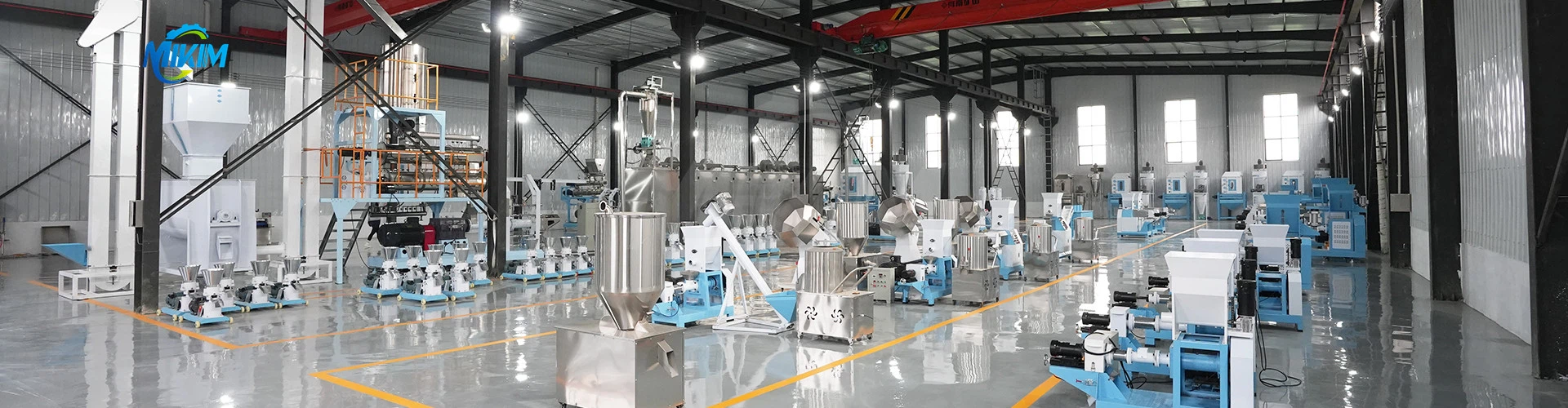
First of all, livestock and poultry feed production line helps to improve the production efficiency of livestock and poultry breeding. Traditional breeding methods often adopt manual feeding, while the use of feed machines to produce reasonable feed can help livestock and poultry obtain more comprehensive and high-quality nutrition. This comprehensive feed can improve the immunity and health level of livestock and poultry, reduce unexpected situations during breeding, reduce mortality and losses, increase the weight and number of livestock and poultry, and improve breeding efficiency.
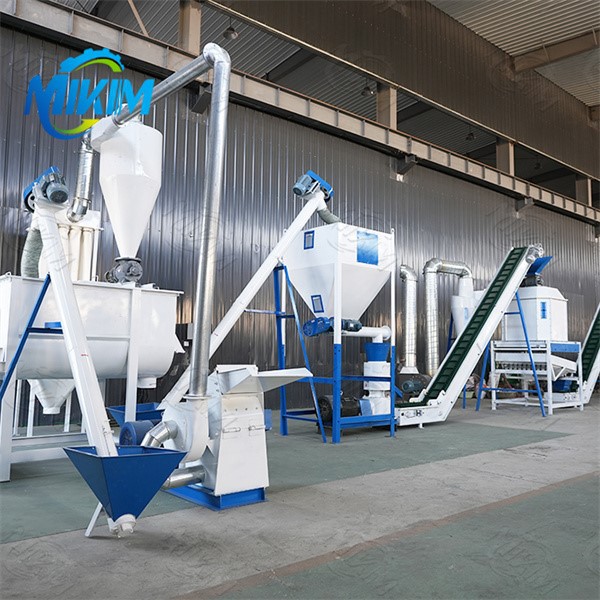
| Model | Capacity | Power | Dimension | Weight |
| 125 | 80-100kg/h | 3kw | 110*35*70 cm | 95 kg |
| 150 | 120-150kg/h | 4kw | 115*35*80cm | 100 kg |
| 210 | 200-300kg/h | 7.5kw | 115*45*95cm | 300 kg |
| 260 | 500-600kg/h | 15kw | 138*46*100cm | 350 kg |
| 300 | 700-800kg/h | 22kw | 130*53*105cm | 600 kg |
| 360 | 900-1000kg/h | 22kw | 160*67*150cm | 800 kg |
| 400 | 1200-1500kg/h | 30kw | 160*68*145cm | 1200 kg |
Secondly, the feed production line can effectively provide various nutrients. Through the formulation and adjustment of feed, feed that adapts to various weather, temperature, season and other conditions can be put in, and the formula can be formulated in a targeted manner according to the characteristics of different animals. These nutrients play a vital role in the growth of bones, muscles and organ tissues of animals. The livestock and poultry feed production line can accurately control various nutrients, so that livestock and poultry can ingest the most suitable and economical feed, avoiding problems such as disease transmission and waste of resources.
In addition, food safety is one of the top priorities in today's society. The livestock and poultry farming industry also has this problem. Large-scale meat and egg production often requires strict inspections to ensure that all products meet standards. The livestock and poultry feed production line plays an irreplaceable role in this regard. Because through professional research and development and production, feed suppliers are able to reduce the use of chemicals and additives, and ensure that the protein and other nutrients taken by livestock and poultry from these feeds do not exceed normal levels, thereby protecting the health of consumers to the greatest extent.