
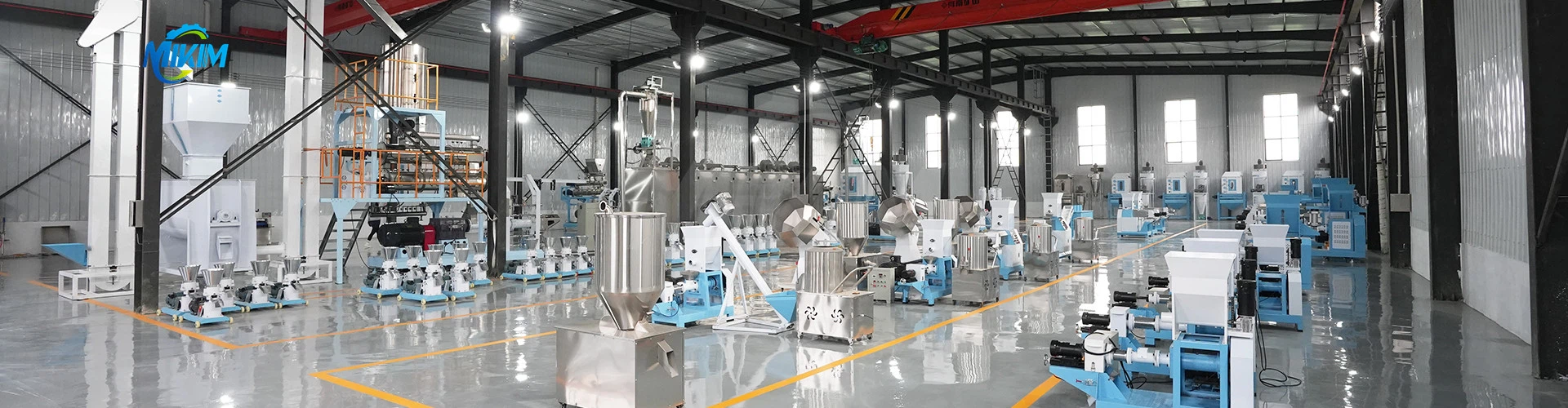
Revolutionary Floating Feed Extruder Transforms Aquaculture Industry
Aquaculture, or fish farming, has become an increasingly important sector in meeting the world's growing demand for seafood. However, the industry faces several challenges, including the availability and cost of high-quality feed for fish. Traditional feed production methods often struggle to meet the nutritional needs of farmed fish efficiently. However, with the advent of a revolutionary technology called the floating feed extruder, the aquaculture industry is witnessing a transformative change. This cutting-edge machine is revolutionizing feed production, enhancing fish health, and contributing to the sustainability and profitability of the aquaculture sector.
The floating feed extruder is a state-of-the-art machine designed specifically for the production of floating feeds, which are essential for many species of farmed fish. It combines innovative engineering with advanced processing capabilities to produce nutritionally balanced and buoyant feed pellets. These pellets float on the water's surface, allowing fish to readily consume them while minimizing waste and water pollution.
One of the key advantages of the floating feed extruder is its ability to produce feed pellets with precise control over their size, shape, and composition. This machine incorporates sophisticated technology to precisely mix and extrude a variety of ingredients, including proteins, grains, vitamins, and minerals, into a homogeneous blend. The extrusion process ensures optimal gelatinization and expansion of the feed, resulting in pellets that are highly palatable, easily digestible, and nutritionally dense. The ability to customize feed formulations based on specific species and growth stages of fish allows for improved feed conversion ratios and enhanced fish growth and health.
Furthermore, the floating feed extruder offers versatility in terms of feed pellet size and shape. Fish species have different feeding habits and preferences, and the extruder can produce pellets of various sizes and shapes to cater to these requirements. This flexibility ensures that the feed meets the specific needs of different fish species, optimizing their feeding behavior and nutrient uptake.
In addition to the nutritional benefits, the floating feed extruder addresses sustainability concerns in aquaculture. Traditional feed production methods often result in feed wastage, as sinking pellets tend to be lost or accumulate at the bottom of fish ponds or cages. This leads to environmental pollution and increased feed costs. However, the floating feed extruder produces pellets that remain on the water's surface, reducing feed wastage and improving feed efficiency. The pellets can be consumed by fish more effectively, resulting in better utilization of nutrients and minimizing the environmental impact.
Moreover, the floating feed extruder enhances the overall profitability of aquaculture operations. By producing nutritionally balanced feed pellets, the extruder promotes optimal fish growth and health, reducing the incidence of diseases and mortality. Healthy fish exhibit better feed conversion ratios, meaning they convert feed into body mass more efficiently. This translates into improved production yields, reduced production costs, and increased profitability for fish farmers. The extruder's ability to produce feed pellets of consistent quality also contributes to market competitiveness and customer satisfaction.
The floating feed extruder's automation and advanced control systems further enhance its efficiency and ease of use. These machines are equipped with sophisticated sensors, controllers, and software that monitor and regulate the extrusion process. Operators can set precise parameters for feed production, such as temperature, pressure, and moisture content, and the machine ensures that these conditions are maintained consistently. The automation reduces human error, enhances productivity, and simplifies operation, making the extruder accessible to both large-scale commercial operations and smaller fish farms.
Additionally, the floating feed extruder promotes innovation and research in the aquaculture industry. With the ability to create customized feed formulations, researchers and nutritionists can experiment with different ingredients and additives to optimize fish health, growth, and sustainability. This opens up possibilities for developing feeds with specific functional properties, such as probiotics or omega-3 fatty acids, which can further enhance fish performance and contribute to human health benefits.
In conclusion, the revolutionary floating feed extruder is transforming the aquaculture industry by improving feed production, fish health, and environmental sustainability. Its ability to produce nutritionally balanced and buoyant feed pellets ensures optimal nutrient uptake, reduced wastage, and improved feed efficiency. The extruder's versatility, automation, and control systems simplify operation and enhance productivity. With its impact on profitability, market competitiveness, and research possibilities, the floating feed extruder is revolutionizing aquaculture practices, paving the way for a more sustainable and thriving industry.