
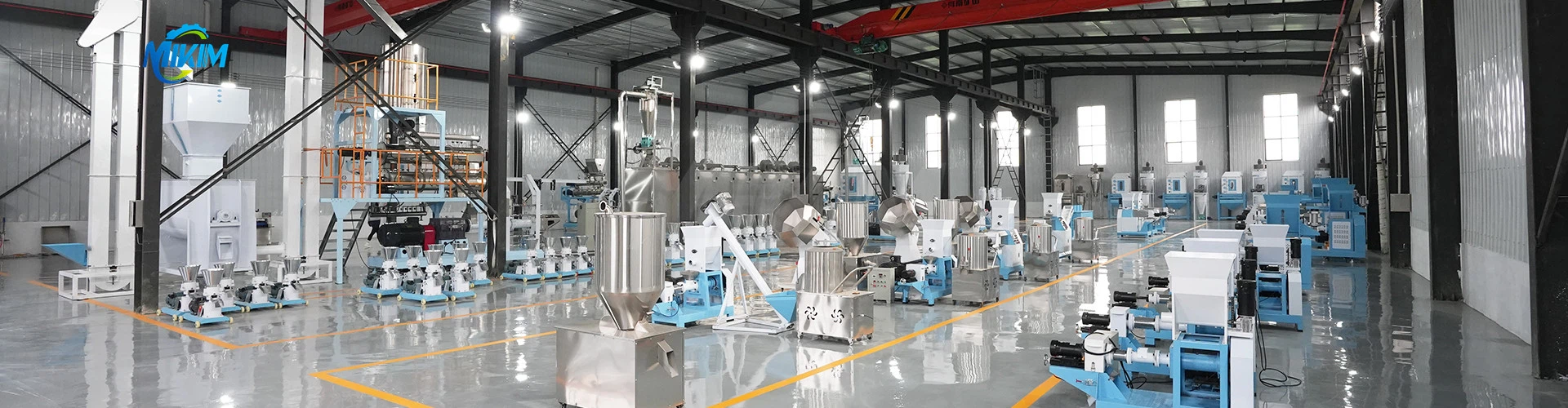
Revolutionary Floating Feed Extruder Boosts Aquaculture Efficiency
Aquaculture, the farming of aquatic organisms, has seen tremendous growth over the past few decades as the demand for seafood continues to rise. However, the industry has faced significant challenges, including the efficient production of high-quality fish feed. The introduction of a revolutionary floating feed extruder is set to transform aquaculture by significantly boosting efficiency and addressing some of the industry's key concerns.
Traditionally, fish feed production has been a labor-intensive and resource-consuming process. Manufacturers have struggled to produce large quantities of feed while maintaining consistent quality and nutritional value. This has resulted in increased costs and environmental impact, hampering the industry's sustainability efforts. The floating feed extruder aims to tackle these challenges head-on.
The floating feed extruder is an innovative piece of equipment specifically designed for the production of floating fish feed. It combines advanced technology with cutting-edge engineering to streamline the feed manufacturing process. The extruder operates by forcing a mixture of ingredients, including proteins, fats, carbohydrates, vitamins, and minerals, through a die. The resulting feed pellets are then dried and cooled before being ready for use.
One of the key advantages of the floating feed extruder is its ability to produce floating fish feed. Unlike sinking feed, which can result in waste and pollution, floating feed remains on the water's surface, minimizing the environmental impact and facilitating efficient feeding practices. This is particularly crucial in open-water aquaculture systems, where fish can efficiently consume floating feed, reducing feed loss and maximizing nutrient absorption.
Furthermore, the floating feed extruder offers exceptional efficiency in terms of production capacity. With its advanced design and automation features, the extruder can produce large volumes of feed in a relatively short period. This not only reduces labor requirements but also allows aquaculture farmers to meet the growing demand for seafood in a more cost-effective and timely manner.
Another significant benefit of the floating feed extruder is its ability to produce feed with consistent quality and nutritional value. By precisely controlling the extrusion process, the extruder ensures uniform pellet size, density, and composition. This consistency translates into improved feed conversion ratios, promoting healthy growth and reducing feed wastage. Moreover, the extruder's flexibility enables farmers to customize feed formulations based on the specific nutritional needs of their aquatic organisms, optimizing their growth and overall performance.
In addition to its production efficiency, the floating feed extruder also addresses sustainability concerns in aquaculture. By reducing feed loss and waste, it minimizes the environmental impact associated with excessive nutrient discharge into surrounding waters. Furthermore, the extruder's precise control over feed composition allows for a more efficient use of raw materials, reducing reliance on fishmeal and other finite resources. This, in turn, contributes to the conservation of marine ecosystems and helps alleviate pressure on wild fish stocks.
The introduction of the floating feed extruder has already made waves in the aquaculture industry. Farmers and feed manufacturers alike are embracing this technology for its ability to revolutionize their operations and improve overall efficiency. With its production capacity, feed quality control, and environmental benefits, the extruder is playing a pivotal role in driving the industry towards a more sustainable and profitable future.
Moreover, the floating feed extruder is not limited to large-scale commercial operations. Its versatility allows it to be used by small-scale farmers as well, empowering them to produce their own high-quality feed and reducing their dependence on costly and sometimes unreliable external suppliers. This democratization of feed production promotes self-sufficiency, empowers local communities, and contributes to the socio-economic development of rural areas.
In conclusion, the introduction of the revolutionary floating feed extruder represents a significant leap forward for the aquaculture industry. By boosting efficiency, improving feed quality, and promoting sustainability, this technology is transforming the way fish feed is manufactured. As the demand for seafood continues to grow, the floating feed extruder is poised to play a pivotal role in meeting this demand while minimizing environmental impact and ensuring the long-term viability of aquaculture.
