
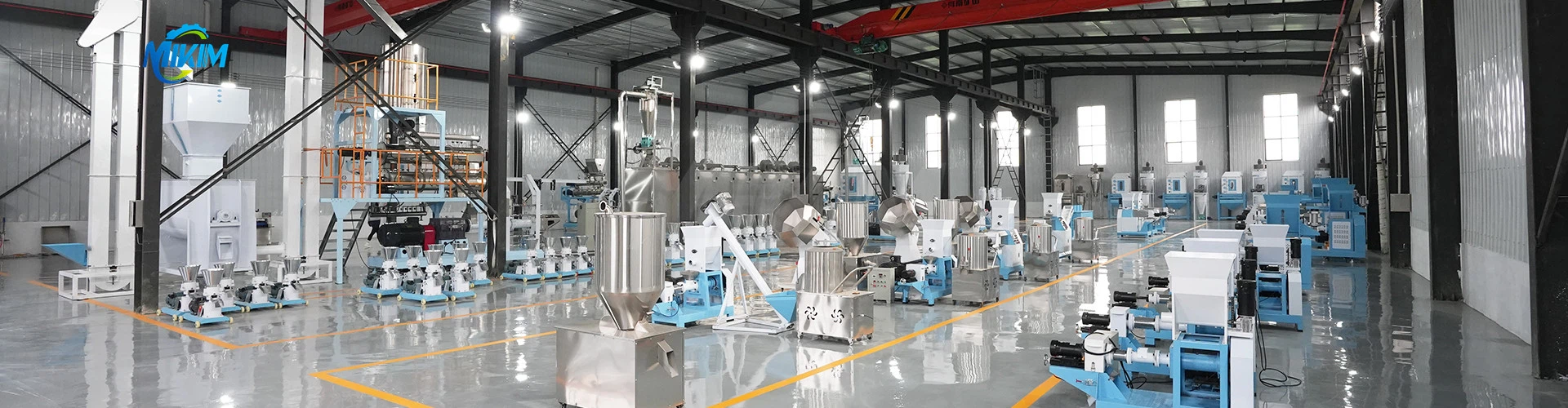
Floating Feed Extruder: A Game-Changer for Sustainable Fish Farming
Sustainable fish farming is becoming increasingly important as the global demand for seafood continues to rise. In this pursuit, the introduction of a floating feed extruder is emerging as a game-changer for the industry. This innovative technology offers significant advantages in terms of sustainability, feed efficiency, and environmental impact, making it a crucial tool for the future of fish farming.
One of the primary challenges in fish farming is the production of high-quality feed that meets the nutritional needs of the aquatic organisms. Traditional feed manufacturing processes often involve significant energy consumption and raw material wastage, leading to environmental concerns. The floating feed extruder addresses these issues by revolutionizing the way fish feed is produced.
The floating feed extruder operates by combining various ingredients, including proteins, fats, carbohydrates, vitamins, and minerals, and extruding them through a die to form floating pellets. Unlike traditional sinking feed, these floating pellets have several advantages. Firstly, they minimize waste and nutrient discharge into the surrounding environment. By remaining on the water's surface, the fish have better access to the feed, reducing feed loss and optimizing feed conversion ratios.
Furthermore, the floating feed extruder offers remarkable efficiency in terms of production capacity. With its advanced design and automation features, it enables fish farmers to produce large quantities of feed in a shorter time frame, reducing labor requirements and overall costs. This increased efficiency not only enhances the profitability of fish farming operations but also facilitates the industry's ability to meet the growing demand for sustainable seafood.
Another significant benefit of the floating feed extruder is its ability to produce feed with consistent quality and nutritional value. The extruder's precision control over the extrusion process ensures uniform pellet size, composition, and nutrient distribution. This consistency is vital for promoting healthy growth and maximizing the nutritional uptake of the fish. Additionally, the extruder allows for flexibility in feed formulation, enabling farmers to tailor the feed to the specific nutritional requirements of different aquatic species and growth stages.
Sustainability is a critical aspect of modern fish farming, and the floating feed extruder plays a key role in promoting sustainable practices. By minimizing feed waste and nutrient discharge, it helps reduce the environmental impact associated with excessive nutrient input into aquatic ecosystems. Additionally, the extruder's efficient use of raw materials contributes to the conservation of marine resources. By optimizing feed composition and reducing reliance on fishmeal and other finite resources, it mitigates pressure on wild fish stocks and promotes the long-term sustainability of the industry.
Moreover, the floating feed extruder supports the principles of circular economy in fish farming. It can incorporate alternative ingredients, such as byproducts from the food industry or sustainable plant-based proteins, reducing the reliance on marine resources and improving the overall ecological footprint of fish feed production. This not only enhances the environmental sustainability of fish farming but also aligns with consumer preferences for environmentally friendly and ethically produced seafood.
The adoption of floating feed extruders is already gaining traction in the aquaculture industry. Fish farmers and feed manufacturers recognize the immense value and potential this technology brings to their operations. Its ability to improve feed efficiency, enhance sustainability, and ensure consistent feed quality positions it as a transformative tool for the industry.
Furthermore, the floating feed extruder's impact extends beyond large-scale commercial fish farming operations. It also offers opportunities for small-scale farmers and local communities. By empowering them to produce their own high-quality feed, it reduces dependency on external suppliers, lowers production costs, and promotes self-sufficiency. This, in turn, contributes to rural development and strengthens local economies.
In conclusion, the floating feed extruder represents a significant leap forward in sustainable fish farming practices. Its ability to produce floating feed, improve feed efficiency, ensure consistent quality, and reduce environmental impact make it a game-changer for the industry. By embracing this technology, fish farmers can enhance their productivity, profitability, and environmental stewardship, ultimately meeting the growing global demand for sustainable seafood. The floating feed extruder is set to shape the future of fish farming, ushering in an era of increased sustainability, efficiency, and responsible aquaculture practices.
