
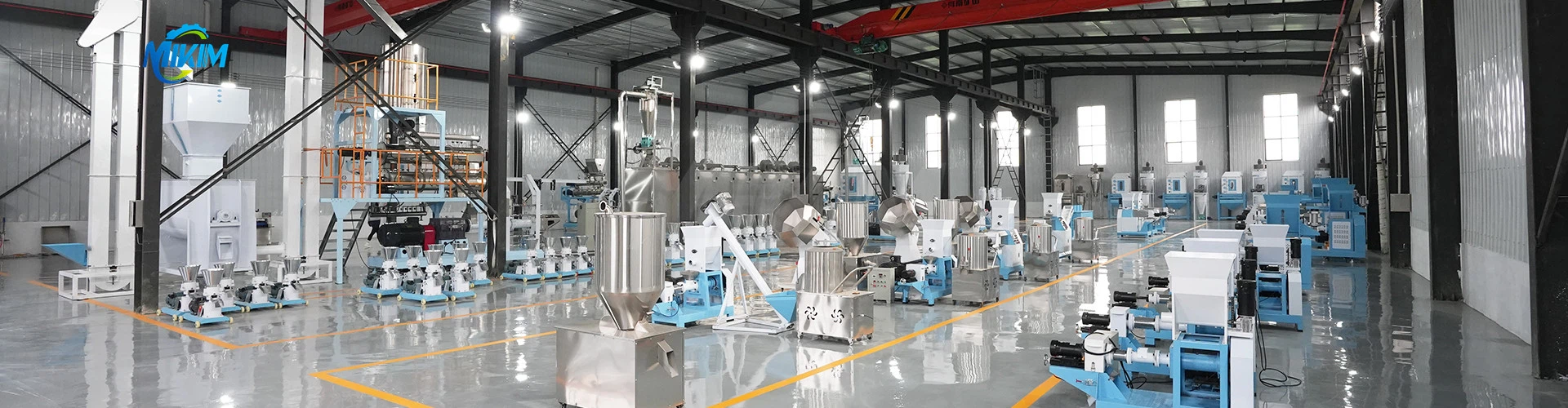
Optimizing the process can not only improve productivity, but also ensure feed quality, thereby enhancing market competitiveness. This article will explore how to optimize the process of pellet feed production lines through several key steps.
First, the selection and pretreatment of raw materials are the starting point for optimizing the process. High-quality raw materials are the basis for producing high-quality pellet feed. Therefore, raw materials should be strictly screened to ensure their freshness and nutritional value. In addition, proper crushing and mixing of raw materials can improve their availability and mixing uniformity, laying a solid foundation for the subsequent granulation process.

| Model | Capacity(t/h) | Power(kw) | Screw Diameter(mm) | Weight |
| 75-B | 0.3-0.4 | 22 | 80 | 1000 |
| 85-B | 0.5-0.6 | 30 | 90 | 2000 |
| 90-B | 0.6-0.7 | 37 | 100 | 2100 |
| 100-B | 0.7-0.8 | 55 | 120 | 2200 |
| 135-B | 1-1.5 | 75 | 135 | 3200 |
| 145-B | 2-3 | 90 | 145 | 4000 |
Second, precise control of the granulation process is the key to ensuring product quality. The temperature, pressure and humidity in the granulation process need to be precisely controlled. Too high or too low temperature will affect the molding quality of the pellets. At the same time, maintaining a constant pressure can ensure that the density and hardness of the pellets meet the standard requirements. In addition, the appropriate moisture content is also crucial to reduce the breakage of pellets during storage.
Furthermore, the optimization of the cooling and drying process cannot be ignored. After the pellets are released from the high temperature and high pressure environment, they need to be cooled quickly to avoid excessive expansion and deformation. The use of an efficient cooling system can shorten the cooling time and improve production efficiency. At the same time, a reasonable drying process can effectively remove excess moisture from the pellets to prevent mildew and agglomeration.
Finally, packaging and storage are equally important. High-quality packaging materials and sealing technology can effectively extend the shelf life of pellet feed and reduce losses during transportation. In addition, scientific warehouse management is also an important link to ensure product quality. Appropriate temperature and humidity and good ventilation conditions can reduce the risk of moisture and deterioration of feed.