Maximizing Resource Utilization: Briquette Machines for Efficient Biomass Conversion
The demand for sustainable and renewable energy sources continues to grow as the world seeks to reduce its reliance on fossil fuels and mitigate climate change. Biomass, derived from organic materials such as agricultural waste, forestry residues, or energy crops, offers a viable alternative. However, efficiently converting biomass into a usable form has been a challenge due to its low energy density and bulkiness. In recent years, briquette machines have emerged as a game-changing technology for biomass conversion, enabling efficient and effective utilization of this valuable resource.
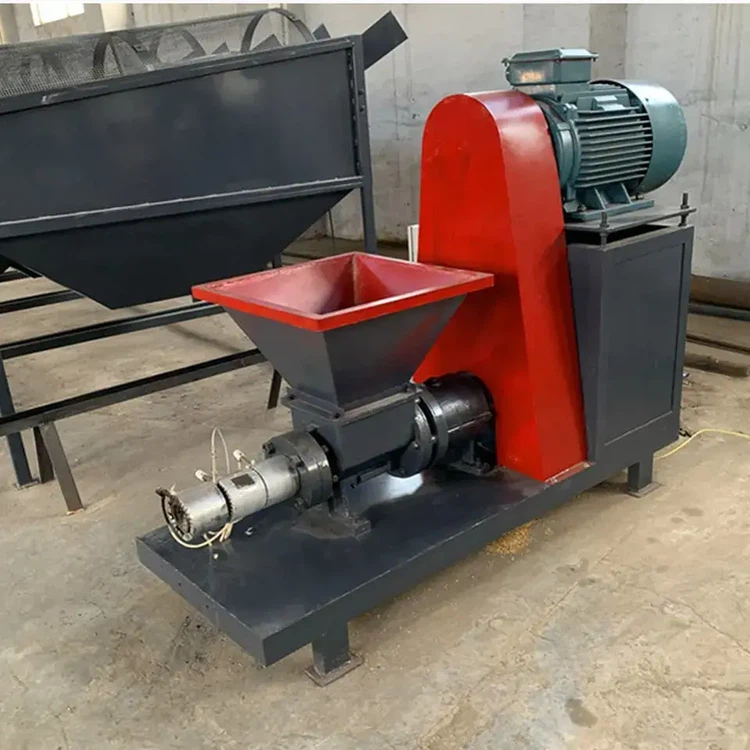
Briquette machines are specialized equipment designed to compress biomass materials into compact and uniform briquettes. This process involves applying high pressure to biomass, often with the aid of binders, to form briquettes of consistent shape and size. The resulting briquettes serve as a high-density and energy-rich fuel source that can be used in various applications, such as heating, cooking, and power generation.
One of the primary advantages of briquette machines is their ability to maximize resource utilization. Biomass, in its raw form, often has low energy density and is challenging to handle and transport efficiently. However, the briquetting process significantly increases the energy density of biomass by compressing it into denser briquettes. This transformation not only reduces the volume of biomass but also enhances its energy content, making it easier to store, transport, and utilize effectively.
Moreover, briquette machines enable the conversion of various types of biomass into a standardized and usable form. Agricultural residues like rice husks, corn stalks, or straw, as well as forestry waste such as wood chips, sawdust, or bark, can be effectively processed using briquette machines. This versatility allows for the utilization of diverse biomass feedstocks, maximizing resource utilization and promoting sustainable practices. By converting these often-underutilized biomass materials into briquettes, briquette machines unlock their potential as a valuable energy resource.
Efficient biomass conversion with briquette machines also has significant environmental benefits. Biomass briquettes are considered carbon-neutral since the carbon dioxide released during combustion is offset by the carbon absorbed during biomass growth. By replacing fossil fuels with biomass briquettes, the net carbon emissions are reduced, contributing to climate change mitigation efforts. Additionally, the utilization of biomass residues in briquette production reduces the burden on landfills and promotes sustainable waste management practices.
Briquette machines also play a crucial role in reducing air pollution associated with traditional biomass combustion. Raw biomass materials often release significant amounts of smoke, particulate matter, and harmful emissions when burned directly. In contrast, the controlled combustion of biomass briquettes produced by briquette machines results in cleaner and more efficient combustion. The high-density nature of briquettes and their uniform composition lead to improved combustion characteristics, reducing smoke and emissions. This has positive implications for indoor air quality and public health, particularly in areas where traditional biomass combustion is prevalent.
Furthermore, briquette machines contribute to the development of local economies and rural communities. Biomass resources are often abundant in rural areas, where agriculture and forestry activities are prevalent. By converting biomass into briquettes, communities can harness their local resources, create employment opportunities, and foster economic growth. This decentralized approach to biomass utilization promotes local self-sufficiency and reduces dependence on imported fossil fuels, thereby enhancing energy security.
The adoption of briquette machines has gained momentum globally, driven by the increasing demand for sustainable and renewable energy sources. Governments, industries, and individuals recognize the value of biomass briquettes as an efficient and environmentally friendly fuel option. Supportive policies, incentives, and investments in research and development have further fueled the growth of the briquette machine market. Ongoing efforts are focused on improving the efficiency and performance of briquette machines, exploring new feedstock options, and developing innovative binder materials.
In conclusion, briquette machines are revolutionizing biomass conversion and maximizing resource utilization. These machines enable the efficient compression of biomass into dense and energy-rich briquettes, addressing the challenges of low energy density and bulkiness. With their versatile nature, environmental benefits, and contribution to local economies, briquette machines are playing a pivotal role in the transition towards a sustainable and renewable energy future. By harnessing the potential of biomass and converting it into valuable briquettes, we can reduce our dependence on fossil fuels, mitigate climate change, and promote a greener and more sustainable world.