
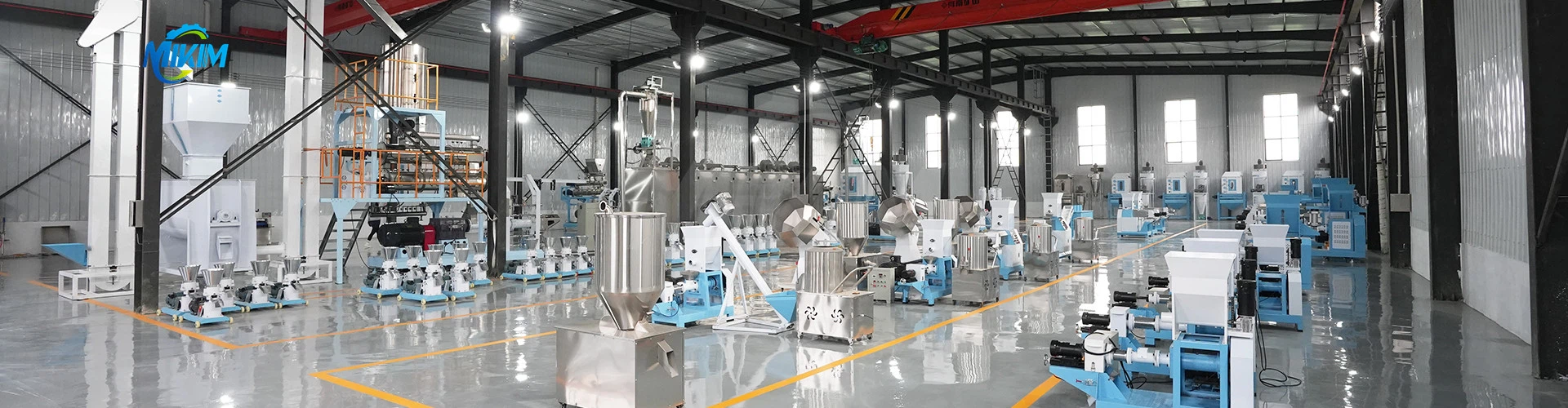
Innovative Floating Feed Extruder Optimizes Fish Farming Practices
Fish farming, also known as aquaculture, has become increasingly important in meeting the rising global demand for seafood. However, the success of fish farming depends on various factors, including the quality of fish feed and the efficiency of feeding practices. This is where innovative floating feed extruders come into play, revolutionizing fish farming practices and optimizing production outcomes.
Floating feed extruders are advanced machines designed to produce high-quality floating fish feed. They utilize a combination of heat, pressure, and mechanical force to process raw ingredients into nutritionally optimized pellets. This innovative technology has numerous benefits for fish farming practices.
One of the key advantages of floating feed extruders is their ability to produce floating pellets. Floating feed is particularly advantageous for species like tilapia, catfish, and carp, which are surface feeders. The floating pellets remain on the water surface, ensuring that the fish can easily locate and consume them. This reduces feed wastage, as the pellets are not lost to the bottom of the fish tanks or ponds. The ability to efficiently deliver feed to the fish improves their feeding efficiency and reduces the risk of underfeeding or overfeeding, leading to better growth rates and overall health.
Floating feed extruders also offer precise control over feed formulation and pellet characteristics. These machines can handle a wide range of ingredients, including fishmeal, plant proteins, grains, and oilseeds. By adjusting the extrusion parameters, such as temperature, pressure, and screw speed, the nutritional composition and physical properties of the pellets can be customized to meet the specific requirements of different fish species and life stages. This ensures that the fish receive a well-balanced diet that promotes optimal growth, development, and overall performance.
Furthermore, the extrusion process used in floating feed extruders improves the digestibility and nutrient utilization of fish feed. The combination of heat, pressure, and mechanical force breaks down complex structures in the ingredients, making the nutrients more readily available for digestion by the fish. Starches are gelatinized during the extrusion process, increasing their digestibility and providing a valuable energy source for the fish. Additionally, the extrusion process can help to destroy anti-nutritional factors and pathogens present in the raw ingredients, contributing to improved fish health and disease resistance.
Another notable benefit of floating feed extruders is their efficiency and productivity in fish feed production. These machines are designed for continuous and automated operation, enabling large-scale production of fish feed. The high-speed extrusion process allows for rapid production, reducing the time required for feed manufacturing. This ensures a steady and reliable supply of feed, even during peak production periods, while minimizing labor and operational costs for fish farmers. The efficiency of floating feed extruders is further enhanced by their ability to produce pellets of consistent size, shape, and density, facilitating accurate feeding management and reducing feed wastage.
The use of floating feed extruders also contributes to the sustainability of fish farming practices. By optimizing feed utilization and reducing feed wastage, these machines help to minimize the environmental impact of aquaculture operations. The efficient conversion of feed into fish biomass reduces the overall feed conversion ratio (FCR), which is an important measure of resource efficiency in fish farming. Lower FCR values indicate that less feed is required to produce a unit of fish, reducing the reliance on finite feed resources and decreasing the potential for environmental pollution.
Furthermore, floating feed extruders support the use of alternative and sustainable feed ingredients. As the demand for fishmeal and fish oil continues to rise, there is a need to find alternative protein and lipid sources for fish feed. Floating feed extruders can process a wide range of plant-based proteins, such as soybean meal and corn gluten meal, as well as novel protein sources like insect meal and single-cell proteins. This not only reduces the pressure on marine resources but also promotes the circular economy by utilizing agricultural by-products and food waste as feed ingredients.
In conclusion, innovative floating feed extruders have revolutionized fish farming practices by optimizing fish feed production. These machines enable the production of high-quality floating pellets that improve feeding efficiency, enhance nutrient utilization, and promote optimal growth and development of farmed fish. With their precise control over feed formulation, efficient production capabilities, and support for sustainable feed ingredients, floating feed extruders contribute to the sustainability and profitability of aquaculture operations. As the demand for seafood continues to grow, the adoption of floating feed extruders will play a crucial role in meeting this demand while ensuring the long-term sustainability of the fish farming industry.
