
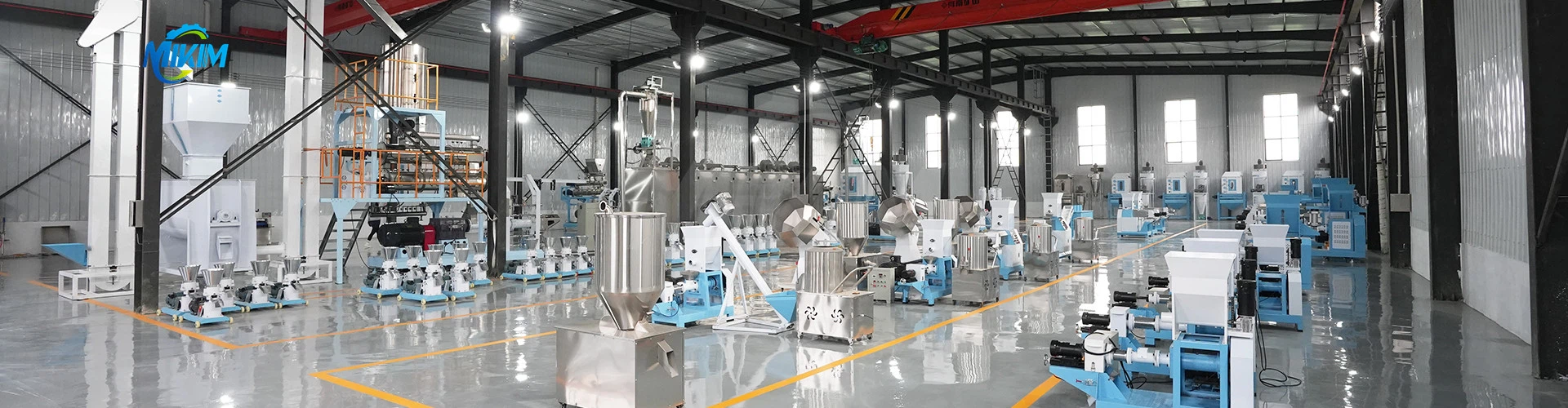
Understand the scale, type and specific needs of livestock and poultry farming, including farming types, feed types, production volume, etc.
According to the actual situation of the farm, determine the type and function of the required equipment, such as crusher, mixer, pellet machine, etc.
Focus on equipment performance and quality :
Select equipment with good performance and quality to ensure that the equipment can operate stably and efficiently.
Pay attention to key indicators such as mixing uniformity, measurement accuracy, cleanliness and hygiene standards of the equipment.
Consider the processing capacity and accuracy of the equipment :

| Model | Capacity | Power | Dimension | Weight |
| 125 | 80-100kg/h | 3kw | 110*35*70 cm | 95 kg |
| 150 | 120-150kg/h | 4kw | 115*35*80cm | 100 kg |
| 210 | 200-300kg/h | 7.5kw | 115*45*95cm | 300 kg |
| 260 | 500-600kg/h | 15kw | 138*46*100cm | 350 kg |
| 300 | 700-800kg/h | 22kw | 130*53*105cm | 600 kg |
| 360 | 900-1000kg/h | 22kw | 160*67*150cm | 800 kg |
| 400 | 1200-1500kg/h | 30kw | 160*68*145cm | 1200 kg |
Select equipment with appropriate processing capacity according to production volume to avoid waste of resources.
High-precision equipment can ensure the accuracy of feed ratio, which is crucial to the healthy growth of livestock and poultry .
Pay attention to the durability and convenience of equipment maintenance :
Select equipment with a sturdy structure, easy operation and maintenance, reduce the occurrence of failures and reduce maintenance costs.
Consider the quality of after-sales service provided by the equipment supplier to ensure that the equipment can be maintained in a timely and effective manner.