
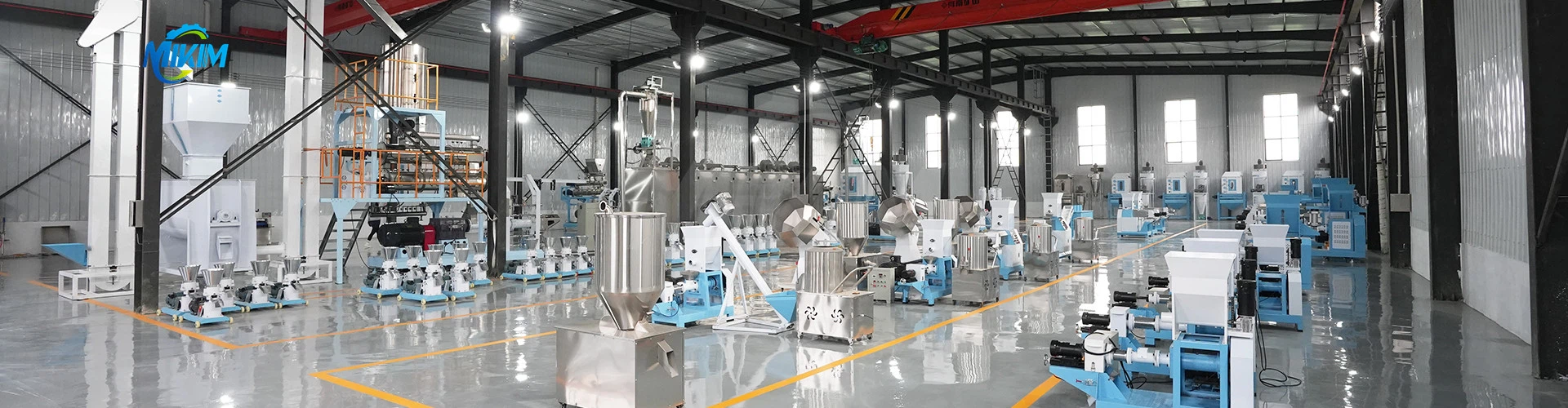
First, it is key to clarify the feed needs of laying hens. The feed of laying hens mainly includes nutrients such as protein, fat, minerals, vitamins, etc., and the demand for these nutrients of laying hens of different breeds and stages is different. Therefore, when choosing feed production line equipment, it is necessary to ensure that the equipment can produce feed that meets the characteristics of each growth stage and breed of laying hens.

| Model | Capacity | Power | Dimension | Weight |
| 125 | 80-100kg/h | 3kw | 110*35*70 cm | 95 kg |
| 150 | 120-150kg/h | 4kw | 115*35*80cm | 100 kg |
| 210 | 200-300kg/h | 7.5kw | 115*45*95cm | 300 kg |
| 260 | 500-600kg/h | 15kw | 138*46*100cm | 350 kg |
| 300 | 700-800kg/h | 22kw | 130*53*105cm | 600 kg |
| 360 | 900-1000kg/h | 22kw | 160*67*150cm | 800 kg |
| 400 | 1200-1500kg/h | 30kw | 160*68*145cm | 1200 kg |
Secondly, it is crucial to pay attention to the performance parameters of feed production line equipment. Production capacity, crushing efficiency, mixing uniformity, etc. are important indicators for evaluating equipment performance. The production capacity of the production line should be greater than the actual production demand to prevent the production line from being overloaded or insufficient. Crushing efficiency and mixing uniformity directly affect the quality of the feed, so equipment with excellent performance should be selected.
The safety and reliability of the equipment are also factors that cannot be ignored. When purchasing equipment, pay attention to the safety production indicators of the equipment, such as whether it has overload protection, leakage protection and other functions. At the same time, understand the service life and maintenance of the equipment to ensure that the equipment can maintain good working condition during long-term operation.