
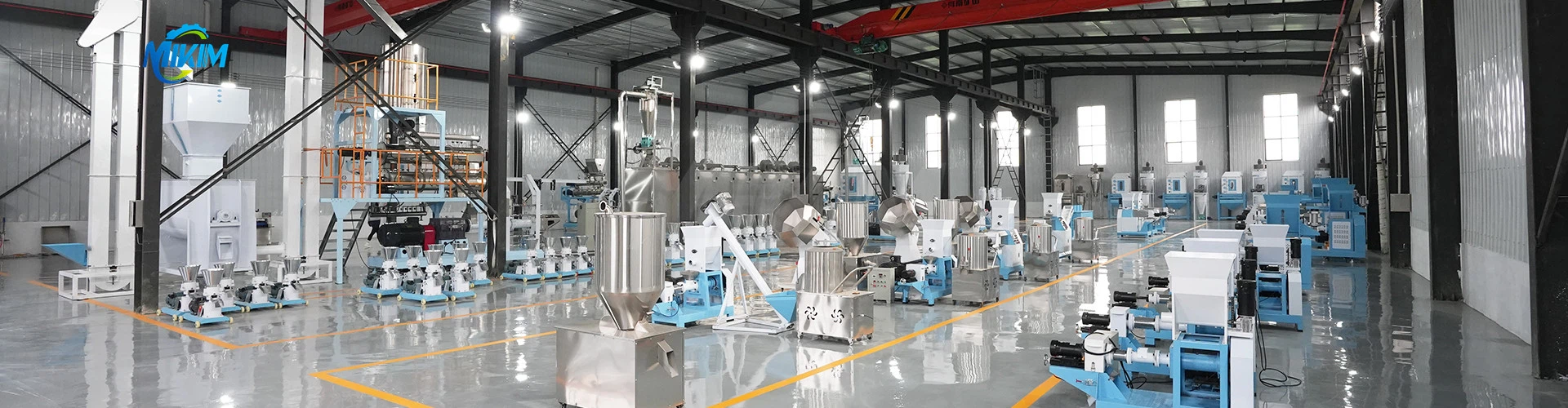
In actual production, some quality problems often occur, which not only affects the market competitiveness of the product, but may also have an adverse impact on the company's brand reputation. The following will introduce several common problems in pellet production and their corresponding solutions.
The unevenness of particle size distribution refers to the presence of particles of different sizes in the produced pellets. This situation may be caused by uneven mixing of raw materials or improper adjustment of the pelletizing equipment. In order to solve this problem, first ensure that the raw materials are fully and evenly mixed. In addition, it is also necessary to adjust and optimize the parameters of the pelletizing equipment, such as adjusting the speed, angle and spacing of the cutting tool to ensure the consistent size of the pellets.
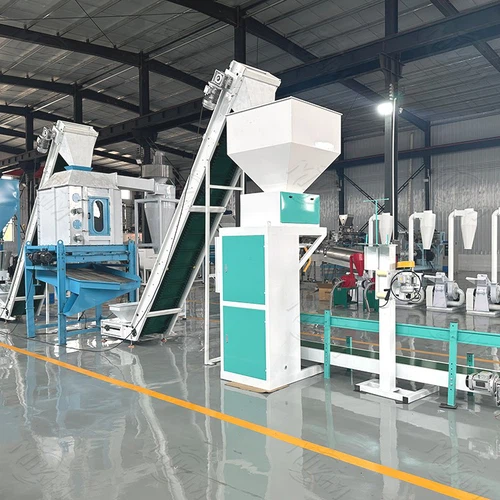
| Model | Capacity(t/h) | Power(kw) | Screw Diameter(mm) | Weight |
| 75-B | 0.3-0.4 | 22 | 80 | 1000 |
| 85-B | 0.5-0.6 | 30 | 90 | 2000 |
| 90-B | 0.6-0.7 | 37 | 100 | 2100 |
| 100-B | 0.7-0.8 | 55 | 120 | 2200 |
| 135-B | 1-1.5 | 75 | 135 | 3200 |
| 145-B | 2-3 | 90 | 145 | 4000 |
| 160-B | 3-4 | 110 | 160 | 4500 |
| 175-B | 4-5 | 132 | 175 | 5000 |
The moisture content of the pellets has an important influence on their storage stability, fluidity and subsequent processing performance. Too high a moisture content may cause particles to stick together and clump together, making storage more difficult; while too low a moisture content may make particles fragile and increase dust, affecting the working environment and product quality. Therefore, it is very important to strictly control the moisture content during the production process. At the same time, strengthen the humidity control of the warehouse environment to prevent the particles from absorbing moisture or losing water during storage.