
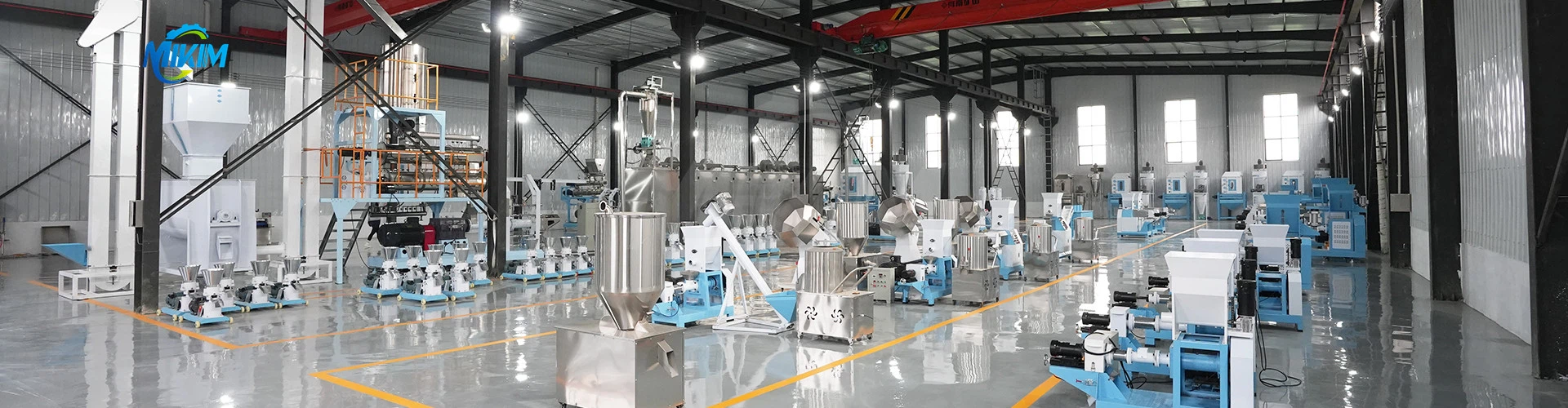
Boosting Sustainability in Aquaculture with Floating Feed Extruder
Aquaculture, or fish farming, plays a vital role in meeting the growing global demand for seafood. However, the industry faces various challenges, including environmental concerns and the need for sustainable practices. In recent years, the Floating Feed Extruder has emerged as a technology that can significantly contribute to boosting sustainability in aquaculture. This innovative equipment offers a range of benefits that promote environmentally friendly and economically viable fish farming operations.
One of the key advantages of the Floating Feed Extruder is its ability to optimize feed utilization and reduce waste. Traditional fish feeding methods often result in excessive feed wastage, which can lead to water pollution and negative environmental impacts. With the Floating Feed Extruder, fish farmers can produce high-quality floating pellets that have excellent water stability and durability. These pellets are less prone to disintegration, minimizing feed wastage and reducing the risk of nutrient leaching into the surrounding water. As a result, fish consume more of the feed, leading to improved feed conversion ratios and reduced environmental impact.
Furthermore, the Floating Feed Extruder promotes the use of locally available and sustainable feed ingredients. Traditional fish feeds often rely on imported ingredients, contributing to deforestation and the depletion of marine resources. The extruder allows fish farmers to incorporate alternative feed ingredients, such as by-products from agriculture or food processing industries, into their feed formulations. This not only reduces the dependence on imported feed ingredients but also supports the concept of a circular economy by utilizing waste streams and reducing environmental burdens. By utilizing sustainable feed ingredients, the Floating Feed Extruder contributes to the conservation of natural resources and helps to minimize the ecological footprint of fish farming.
Sustainability in aquaculture also involves minimizing the carbon footprint associated with fish feed production and distribution. The Floating Feed Extruder offers a solution to this challenge by enabling on-site feed production. By producing feeds directly at the fish farming facility, the need for long-distance transportation and associated emissions is significantly reduced. This localized approach to feed production not only lowers carbon emissions but also enhances logistical efficiency and reduces costs. The extruder's compact design allows for installation on floating platforms or boats, making it suitable for various farming environments, including land-based and open-water systems. The ability to produce feeds on-site with the Floating Feed Extruder aligns with the principles of sustainable development, reducing environmental impact and enhancing the overall efficiency of aquaculture operations.
Water quality management is a critical aspect of sustainable aquaculture, and the Floating Feed Extruder contributes to this endeavor. The extruder produces floating pellets that remain on the water surface, preventing them from sinking and accumulating at the bottom of the fish ponds or cages. This characteristic reduces the risk of organic sedimentation and oxygen depletion, thereby maintaining better water quality. Additionally, the extruded pellets are designed to have optimal buoyancy, ensuring that fish have easy access to the feed without excessive searching or competition. This improves feeding efficiency and minimizes the amount of uneaten feed that can contribute to water pollution. By promoting better water quality management, the Floating Feed Extruder supports the health and welfare of farmed fish while minimizing the ecological impact on surrounding aquatic ecosystems.
Another aspect of sustainability in aquaculture is the economic viability and profitability of fish farming operations. The Floating Feed Extruder offers cost-effective solutions that enhance the financial sustainability of fish farms. By producing feeds on-site, farmers can reduce the dependency on commercial feed suppliers, which often incur high transportation and storage costs. The ability to adjust feed formulations and incorporate locally available ingredients further lowers production costs. Moreover, the improved feed conversion ratios achieved with the high-quality floating pellets generated by the extruder contribute to better growth rates and reduced feed requirements. This translates into increased profitability and economic stability for fish farmers, encouraging the long-term sustainability of aquaculture enterprises.
In conclusion, the Floating Feed Extruder represents a significant advancement in promoting sustainability in aquaculture. Its ability to optimize feed utilization, incorporate sustainable ingredients, reduce carbon footprint, and improve water quality management has transformative potential for the industry. By adopting this innovative technology, fish farmers can enhance the efficiency and profitability of their operations while minimizing environmental impacts. The Floating Feed Extruder offers a practical and economically viable solution to address the sustainability challenges faced by the aquaculture sector, paving the way for a more sustainable and resilient future in fish farming.
