

As India pivots toward renewable energy under the MNRE (Ministry of New and Renewable Energy) mandates, biomass briquetting-known locally as "White Coal"-has become a high-ROI venture. However, operational success in the Indian subcontinent requires solving specific challenges: volatile 415V grids, high-silica rice husk wear, and monsoon humidity. This guide provides the technical blueprints for optimizing sawdust charcoal extruder machines for the Indian industrial landscape.
200-300 kg/h screw press briquetting machine test for Indian customer
I am interested in this product
1. Electrical Engineering for the Indian Industrial Grid (415V/50Hz)
In regions like Punjab, Uttar Pradesh, and Gujarat, industrial power lines often suffer from voltage sags and phase imbalances, which are fatal to standard sawdust charcoal making machines.
- The Problem: Standard motors operating under 380V (International) will overheat and fail when subjected to the common 370V-400V drops in rural India.
- The Solution: MIKIM's India-Spec machines utilize Class H insulated copper-core motors rated for a steady 415V/50Hz 3-phase supply.
- VFD Integration: We integrate Variable Frequency Drives (VFDs) that allow for a soft start, reducing the initial current surge by 60% and protecting the grid from tripping-a critical feature for plants operating in "Industrial Areas" with shared transformers.

2. Material Science: Solving the "High-Silica" Wear Challenge
India's primary biomass sources-Rice Husk and Mustard Stalks-are notoriously abrasive. Rice husk, in particular, has a silica content of nearly 20%, which acts as an industrial abrasive on the screw propeller.
The "Tungsten Carbide" Advantage
Standard carbon steel screws fail within 10-15 hours in India.
Technical Optimization: Our India-market screw propellers are manufactured from 38CrMoAl alloy steel, treated with Tungsten Carbide (WC) hard-facing.
Performance: This increases the maintenance interval from 12 hours to 120+ hours of continuous extrusion, significantly lowering the "Cost per Ton" for Indian producers.

3. Comparative Analysis: Why "White Coal" Beats Traditional Coal
For Indian boiler operators, the shift to biomass is driven by both emission norms and calorific efficiency.
| Feature | Biomass Briquettes (White Coal) | Traditional Indian Coal (Grade D/E) |
| Calorific Value | 3,800 - 4,500 kcal/kg | 3,000 - 4,000 kcal/kg |
| Ash Content | 2% - 8% | 25% - 45% |
| Sulphur Content | < 0.05% | 0.5% - 1.5% |
| Carbon Credits | Eligible for Carbon Offsets | High Carbon Tax Liability |
| Price Stability | High (Locally Sourced) | Volatile (Import/Market Dependent) |
4. Environmental Adaptation: The Monsoon & Temperature Strategy
The Indian climate presents two extremes: 45°C dry heat and 90% monsoon humidity.
- Moisture Control (The 12% Rule): In states like Kerala or West Bengal, raw material moisture can hit 30% in July. A sawdust log press machine cannot extrude material above 12% moisture. We pair our sawdust brick press machines with Biomass Wood Chips Sawdust Rotary Dryer Machine specifically sized to handle the "Monsoon Peak," ensuring year-round production.
- High-Ambient Cooling: Our gearboxes utilize heavy-duty thermal fins and high-viscosity synthetic lubricants (ISO VG 320), preventing oil thinning during the intense North Indian summers.
5. Economic ROI: A Case Study in Gujarat, India
Understanding the "Payback Period" is essential for Indian entrepreneurs. Below is a real-world projection for a 1-Ton Per Hour (TPH) plant.
- Raw Material (Mustard Husk/Sawdust): ₹2,800 / Ton
- Electricity (415V Industrial Tariff): ₹800 / Ton
- Labor & Maintenance: ₹400 / Ton
- Total Production Cost: ₹4,000 / Ton
- Market Selling Price (Briquettes): ₹6,500 / Ton
- Net Profit: ₹2,500 / Ton
- Annual Profit (20 hrs/day, 300 days): ₹1.5 Crores (approx. $180,000 USD)
- Average ROI Period: 10 - 14 Months

6. FAQ
What is the GST rate on sawdust briquette press machines in India?
Currently, most biomass-related machinery falls under the 12% GST bracket (subject to local state variations and HSN code classification), as the Indian government encourages "Green Energy" equipment.
Can I process "Parali" (Paddy Straw) to prevent stubble burning?
Yes. Paddy straw is a major raw material in Punjab and Haryana. However, it requires a Pre-Shredder (Chaff Cutter) to reduce the length to 3-5mm before it enters the sawdust briquette making machine to avoid clogging the feed throat.
Is a binder required for Indian agro-waste using a wood chip brick-making machine?
No. Our Screw Press Technology utilizes the high-pressure friction to heat the material to 300°C, melting the natural Lignin in the biomass. This acts as a natural glue, creating a high-density, waterproof briquette without chemical additives.
Q4: Are there any government subsidies or financial incentives for setting up a biomass briquetting plant in India?
Answer: Yes. Under the MNRE (Ministry of New and Renewable Energy) and the Central Financial Assistance (CFA) schemes, the Indian government provides significant support for biomass energy projects. Key incentives include:
- MSME Loans: Many nationalized banks offer dedicated loans under the PMEGP (Prime Minister's Employment Generation Programme) with subsidies ranging from 15% to 35% on the project cost.
- Interest Subvention: Programs through IREDA (Indian Renewable Energy Development Agency) offer reduced interest rates for biomass conversion technologies.
- GST Benefits: While machinery GST varies, the sale of Biomass Briquettes (White Coal) often enjoys a lower GST rate (typically 5%) compared to the 18% tax on industrial coal, making it highly competitive for local boiler industries.
Q5: What is the difference between a screw-type wood dust charcoal briquetting machine and a Piston Stamping Biomass Pellet Briquette Making Machine, and which is better for the Indian market?
Answer: The choice depends on your end-user and scale of investment in India:
- Screw-type wood briquette press machine (Recommended for High Quality): Produces hexagonal briquettes with a hole in the center. These have a higher density (>1.2g/cm³) and a "glassy" finish. They are preferred by hotels, Tandoors, and premium industrial boilers because the central hole acts as a chimney, ensuring 100% combustion.
- Piston stamping Briquette Making Machine Biomass (Recommended for Bulk Volume): Produces solid, round briquettes (often called 'Bio-coal'). These are produced at a higher speed but have lower density and are more prone to breaking during the monsoon. They are typically used for large-scale power plants or heavy industrial furnaces where volume matters more than combustion precision.
- Verdict: If you are targeting the "White Coal" retail market or charcoal production in India, the screw-type wood shavings briquette maker machine is the industry standard due to its superior calorific efficiency and transport durability.
Contact us to help you choose the right briquette machine
Repeat-Order Dossier: An Indian Client's Biomass Line Expansion
The India-spec engineering blueprint laid out above - 415V/50Hz supply, tungsten-carbide wear parts for high-silica feed, and a humidity-aware design built for the monsoon - now has a real field result to point to. An Indian client commissioned that exact India-spec briquette configuration, ran it through a full monsoon season in commercial production, and then returned for a second capital investment: a full biomass plant that adds a wood pellet plant, a hoisting carbonization furnace, a conveyor-equipped briquette machine, and a mobile gantry crane. It is the same "White Coal" logic from the Gujarat ROI case - turning local residue into dense, export-ready fuel - scaled from a single line into an integrated operation.
What counts as a repeat order? We don't count a spare-parts top-up as a repeat order. A repeat order is a second capital investment in our equipment - and the strongest third-party evidence of reliability we can put in front of a new buyer.
This was a large-scale repeat order and a major capacity expansion: the same Indian client made a second capital investment to grow from a single briquette line into a full production plant. The expanded plant integrates multiple equipment units - a 1.5–2 T/H wood pellet plant, a hoisting carbonization furnace, a conveyor-equipped briquette machine, and a mobile gantry crane - turning one workshop into an integrated biomass operation.
Equipment Spec Sheet at a Glance
The second order consisted of four units, each chosen to extend the client's operation from briquetting alone into integrated pelletizing, carbonizing, and safe material handling. At the center sits a wood pellet plant rated 1.5–2 T/H, backed by a carbonization furnace, a conveyor briquette machine, and a mobile crane.
Wood pellets are graded to ISO 17225-2 and ENplus quality standards, so the pellet plant this client added must hold consistent specs for both export and local buyers.
| Equipment | Capacity | Primary Use |
|---|---|---|
| Wood Sawdust Pellet Plant | 1.5–2 T/H | Converts sawdust and biomass fines into dense fuel pellets |
| Hoisting Carbonization Furnace | Batch (hoist-assisted) | Carbonizes biomass residues into charcoal with mechanical lifting |
| Conveyor-Equipped Briquette Machine | Matched to existing line | Presses briquettes with automated conveyor feed |
| Mobile Gantry Crane with Hanging Scale | Floor-mobile | Lifts and weighs bins/batches for safe loading |
1.5–2 T/H Wood Sawdust Pellet Plant
This 1.5–2 T/H wood sawdust pellet plant turns wood sawdust and similar biomass fines into dense fuel pellets at 1.5 to 2 tonnes per hour. It complements the existing briquette line by adding a second product form that suits different buyers and storage needs.
Hoisting Carbonization Furnace
Hand-loading a hot carbonization basket is slow and risky. The hoisting carbonization furnace this client chose lifts it mechanically instead of by hand. The client added this to produce charcoal from biomass residues with safer, faster batch handling.
Conveyor-Equipped Briquette Machine
By pairing the conveyor-fed briquette press with an integrated conveyor, the client reduced manual material transfer between stages. The conveyor-fed design keeps a steadier feed into the press, which supports more uniform briquette density.
Mobile Gantry Crane with Hanging Scale
Moving bins by hand slows every batch. A mobile gantry crane with a hanging scale gives the workshop a floor-mobile lifting point that moves along the floor. The hanging scale lets operators weigh raw bins or finished batches during loading, improving both safety and inventory control.
Reorder Timeline: From First Briquette Line to Full Plant
Photo Evidence From the Workshop

Quotation for the 1.5–2 t/h Wood Pellet Production Line

Electrical Control Panel

Automobile manufacturing

Wood Pellet Production Line Before Shipment

Loading Wood Pellet Production Equipment

Payment Record
Why This Client Placed a Second Order
Frequently Asked Questions
Explore Related Biomass Equipment
Company Profile
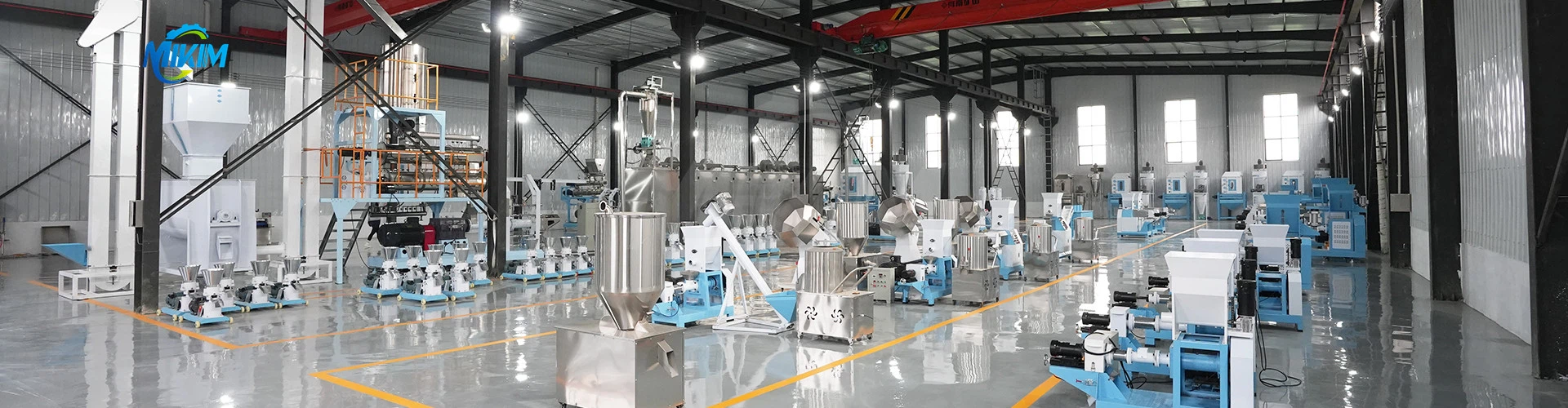
Biomass Briquette Press Workshop

Packaging and Shipping

Certificate of Honor
