
content
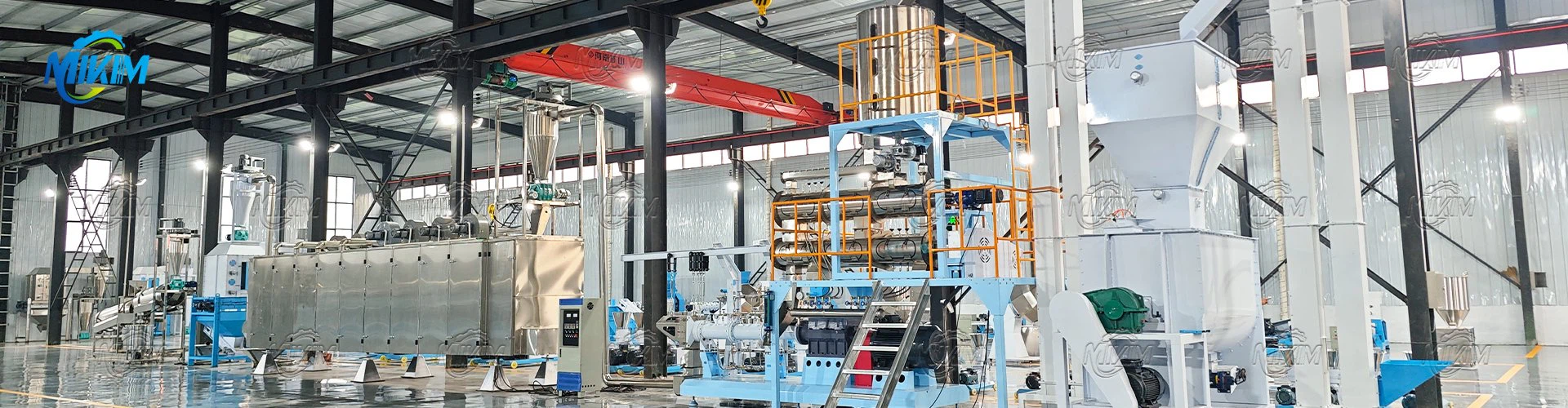
When purchasing a Small Fish Feed Extruder Machine, the primary consideration is the match between its capacity and the scale of aquaculture and production plans. Different scales of aquaculture have vastly different feed capacity requirements. Small-scale family aquaculture (1-5 mu of ponds) typically requires 100-500 catties of feed per month, necessitating a small fish feed extruder with a capacity of 50-200 catties per hour. Medium-sized farms (10-50 mu of ponds) require 500-2000 catties per month, suitable for equipment with a capacity of 200-500 catties per hour. Large-scale aquaculture (over 50 mu) requires industrial-grade equipment with a capacity of over 1000 catties per hour. Choosing an excessively large capacity will result in idle equipment and wasted energy; conversely, insufficient capacity will fail to meet aquaculture needs and negatively impact fish growth.
The core support for this capacity lies in the equipment's core component-the small fish feed making machine. Therefore, the capacity adaptability and stability of the extruder must be carefully considered. Small-scale equipment typically features a single-screw pet food extrusion machine, which is simple in structure, low in energy consumption, and suitable for small-scale production needs. However, attention must be paid to the matching accuracy between its screw speed and feed rate. A high-quality small extruder's screw speed can be precisely adjusted within the range of 300-400 rpm, ensuring stable output capacity under different raw material formulations. Medium and larger-scale equipment mostly uses twin-screw extruders, which offer better mixing and maturation effects and stronger capacity stability. When purchasing, the length-to-diameter ratio of the extruder should be confirmed (10:1-20:1 is recommended). A larger length-to-diameter ratio means a longer residence time of the raw material in the extrusion chamber, resulting in more thorough maturation and also increasing the upper limit of production capacity.
Furthermore, the flexibility of the fish feed pellet extruder's capacity adjustment should be considered. A high-quality fish feed maker's extruder should support multi-level capacity adjustment, allowing for flexible adjustments based on feed demand at different stages of aquaculture. For example, capacity can be reduced during the fry stage when demand is low, and increased during the rapid growth stage of adult fish, avoiding resource waste or insufficient supply due to fixed capacity. At the same time, it's essential to verify whether the actual capacity of the extruder matches the manufacturer's specifications. Requesting the manufacturer to provide on-site trial runs or capacity testing reports can ensure that the equipment's capacity meets procurement expectations. Only by comprehensively considering capacity requirements and the extruder's adaptability, stability, and adjustability can you select a fish feed production machine that truly suits your needs.
Related equipment


about Us
Customer visit

Certificate of Honor

FAQ
1. What is the price of the dry dog food making machine?
The price ranges from approximately $1,500-$55,000
2. Do you provide maintenance services for your customers?
Yes, we offer comprehensive after-sales maintenance services to our customers.
If you would like to learn more about MIKIM machinery, please contact us. We offer one-stop service and welcome your inquiries!!!