
content
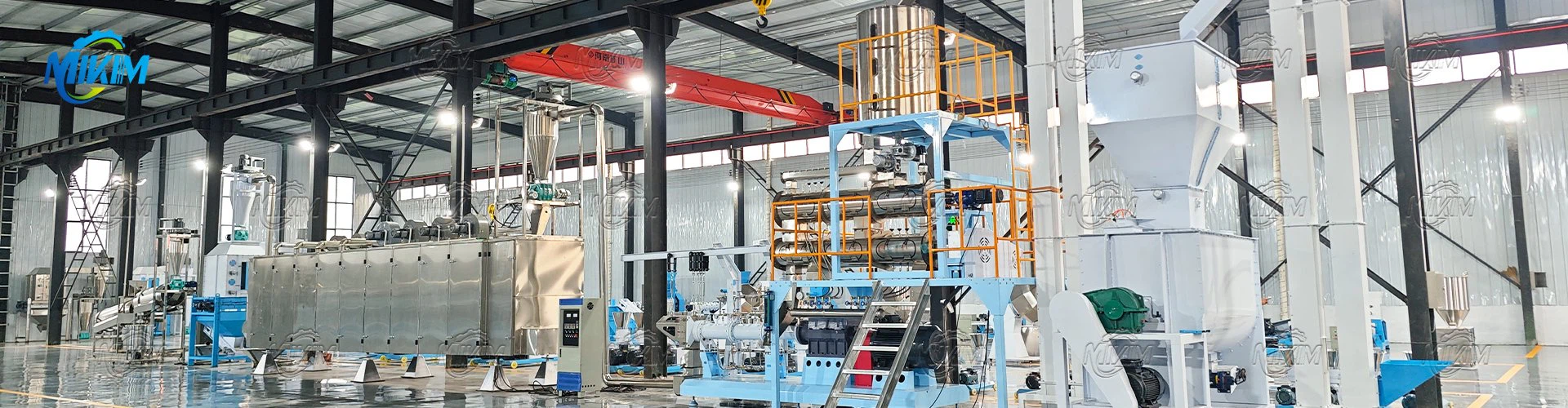
Temperature control precision is a core consideration when purchasing a fish feed making machine. Fish feed production requires high-temperature cooking to gelatinize and sterilize starch. A high-quality extruder should be able to precisely control the temperature within the range of 120-160℃, with an error of no more than ±1℃. Too low a temperature will result in insufficient starch gelatinization (below 80%), low feed digestibility, and indigestion in fish; too high a temperature will cause the raw materials to scorch, destroying nutrients and affecting palatability. When purchasing, it is necessary to confirm whether the extruder is equipped with an intelligent temperature control system and whether it supports zoned temperature control (feeding section, extrusion section, and discharge section). Zoned temperature control allows the raw materials to gradually heat up, resulting in more uniform cooking, which is especially suitable for producing high-nutrient-density fish feed.
The stability of the extrusion pressure is also crucial. The extrusion pressure of the fish feed extruder machine needs to be stable at 3-8MPa. Stable pressure ensures uniform feed particle density and good forming effect, avoiding problems such as loose and brittle particles or excessively hard particles. When purchasing an extruder, it's crucial to understand its pressure regulation mechanism. High-quality equipment should be equipped with a pressure sensor and an automatic adjustment system. This system should automatically reduce the feed rate when the pressure is too high and increase it when the pressure is too low, ensuring pressure stability. Simultaneously, pay attention to the extruder's die design. The precision and replaceability of the die diameter directly affect particle size. A high-quality die should be made of wear-resistant alloy material, with minimal diameter error, and support multiple diameter options (1-8mm) to suit the feeding needs of different fish sizes.
The adjustable range and stability of the screw speed are also critical considerations. Screw speed directly affects the residence time of the raw material in the extrusion chamber. The adjustable speed range should cover 300-600 r/min, with different speeds adapting to different raw material formulations and production capacity requirements. Too high a speed results in a short residence time and insufficient cooking; too low a speed leads to over-cooking. During procurement, the stability of the screw speed should be tested; it should operate without significant fluctuations and respond quickly to adjustments. In addition, the material and structure of the screw are also crucial. Screws made of wear-resistant alloys and with a gradually changing pitch design should be selected. These screws deliver raw materials more smoothly, have lower wear rates, and longer service lives. Only by comprehensively considering the core parameters of the extruder, such as temperature, pressure, and speed, can we ensure that the purchased floating fish feed machine has the ability to produce high-quality feed.
Related equipment


about Us
Customer visit

Certificate of Honor

FAQ
1. What is the price of the fish feed processing machine?
The price ranges from approximately $1,500-$55,000
2. Do you provide maintenance services for your customers?
Yes, we offer comprehensive after-sales maintenance services to our customers.
If you would like to learn more about MIKIM machinery, please contact us. We offer one-stop service and welcome your inquiries!!!