
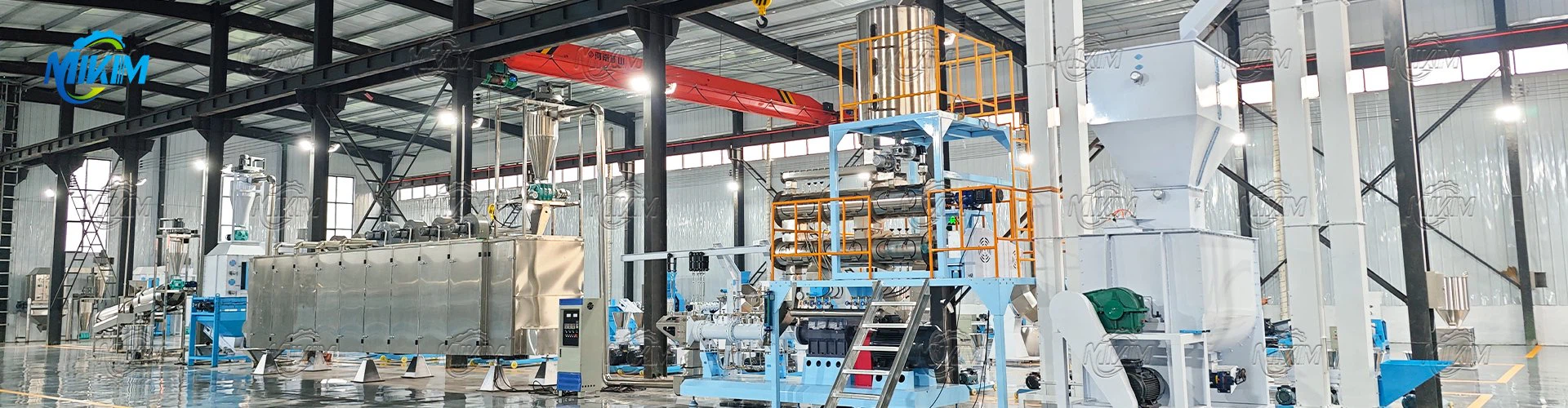
The Pelletizer Is the Core of the Production Line
In any feed pellet production line, the pelletizer - also called the pellet mill or granulator - is the core of the whole pelleting process. Every other machine in the plant exists to deliver a clean, correctly proportioned and properly conditioned mash to it. The pelletizer presses that mash through a die to form granules with a defined hardness, and the finished granule has a smooth surface that is not easy to break during conveying, bagging or feeding.
A single pelletizer can press more than 30 kinds of common raw materials, which is why it is treated as the central asset of the line rather than just one machine among many. If the pelletizer is undersized or badly set, no upstream or downstream adjustment can recover the pellet quality afterwards.
How a Pelletizer Actually Forms a Pellet
Inside the working chamber, a die and a set of rollers move relative to each other. Conditioned mash is squeezed into the die holes; pressure and friction bind the particles together, and the strands that emerge are cut to length by knives at the die face. Three variables dominate what comes out of the machine: the die hole size, the die compression ratio, and the clearance between the rollers and the die.
Die hole size sets the diameter of the finished pellet.
Die compression ratio sets how much resistance the mash meets on its way through; a higher ratio produces a harder, denser granule.
Roller-to-die clearance controls whether material is drawn in smoothly or slips; too wide a gap causes caking, uneven output and a hot die.
Feed moisture and conditioning are just as important. Steam conditioning softens starch and protein, lubricates the die and lowers the energy needed for each tonne of pellets. Mash that is too dry makes the die run hot and accelerates wear on the die and rollers, while mash that is too wet produces soft pellets that crumble in the cooler or in the bag.
Why Pellet Hardness and Surface Quality Matter
Durability is the commercial point of pelleting. A smooth, hard granule survives pneumatic conveying, bulk delivery and automatic feeding lines with little breakage, and it generates less fines. Fines are not only a handling nuisance: in poultry and livestock feeding they separate from the pellet, so animals can sort the ration and the intended nutrient balance no longer reaches them. Consistent hardness also allows a smaller pellet diameter to be used for young animals while keeping breakage at an acceptable level.
A Simple and Cost-Effective Line Configuration
Not every farm needs a full industrial plant. A simple pellet production line consisting of a mixer, a feeder and a granulator is a strong choice for a small feed processing unit, and it is especially suitable for pig, cattle and sheep farmers who want to convert home-grown grain and by-products into pellets on site. The configuration keeps capital cost, floor space and operator skill requirements low while still delivering a finished pellet.
Mixer: blends the ground components into a uniform mash.
Feeder: meters mash into the pelleting chamber at a constant rate.
Granulator: presses and cuts the mash into finished pellets.
In this layout the mixer and the feeder matter as much as the pelletizer itself. An uneven feed rate shows up immediately as fluctuating pellet hardness and a rising share of fines in the finished product, and it also shortens die life.
Selection, Operation and Maintenance of the Core Machine
When comparing models, start from the hourly output the farm actually needs. Large models in the range reach an output of about 1100 kilograms per hour, which suits a medium-scale plant, while smaller units serve a single farm. Then match the fitted power to the available electrical supply, confirm that the die and roller assembly can be exchanged for different pellet diameters, and check that spare dies and rollers are readily available in the region. The raw material mix should also be reviewed before selection, because oil content, fibre content and bulk density all change the achievable capacity and the pellet quality.
Once the machine is chosen, a pelletizer rewards a simple routine. Keep the roller-to-die gap at its specified setting and re-check it after every die change, because a gap that drifts open is the most common cause of lost output. Protect the machine from metal and stone contamination, since a single hard fragment can crack a die or score a roller surface and destroy the working face. Control mash moisture before pelleting rather than compensating with water added inside the chamber, and record output per die so that wear can be judged from data instead of from noise alone.
Regular lubrication and cleaning of the chamber, together with prompt replacement of worn knives, keeps pellet length consistent. Most of the practical problems reported on a feed pellet line - dust, soft pellets and unstable output - come from feeding, moisture and gap settings rather than from the machine itself, so the cheapest improvement is usually a disciplined operating routine around the core pelletizer.
Frequently Asked Questions
Q: What exactly is the core part of a feed pellet production line?
The pelletizer, also called the pellet mill or granulator. It is the machine that converts prepared mash into finished pellets and it determines hardness, surface quality and output.
Q: How many raw materials can one pelletizer handle?
A single machine can press more than 30 kinds of common raw materials, which is why it is the component that sets the flexibility of the whole line.
Q: What makes up a simple pellet production line?
A mixer, a feeder and a granulator. This configuration is economical and cost-effective, and it is a good fit for small feed processing units and for pig, cattle and sheep farms.
Q: Why are the mixer and feeder so important if the pelletizer is the core?
The pelletizer can only work with what it receives. Uneven blending or an unstable feed rate produces pellets of inconsistent hardness no matter how well the mill itself is adjusted.
Q: How is pellet hardness controlled?
Mainly through the die compression ratio, the die hole size, the roller-to-die clearance and the conditioning of the mash. Hardness cannot be corrected after the pellet leaves the die.
Q: How much output can a larger pelletizer reach?
Large models in the range reach about 1100 kilograms per hour, which is enough for a medium-scale feed plant when the raw material and pellet diameter are suitable.