
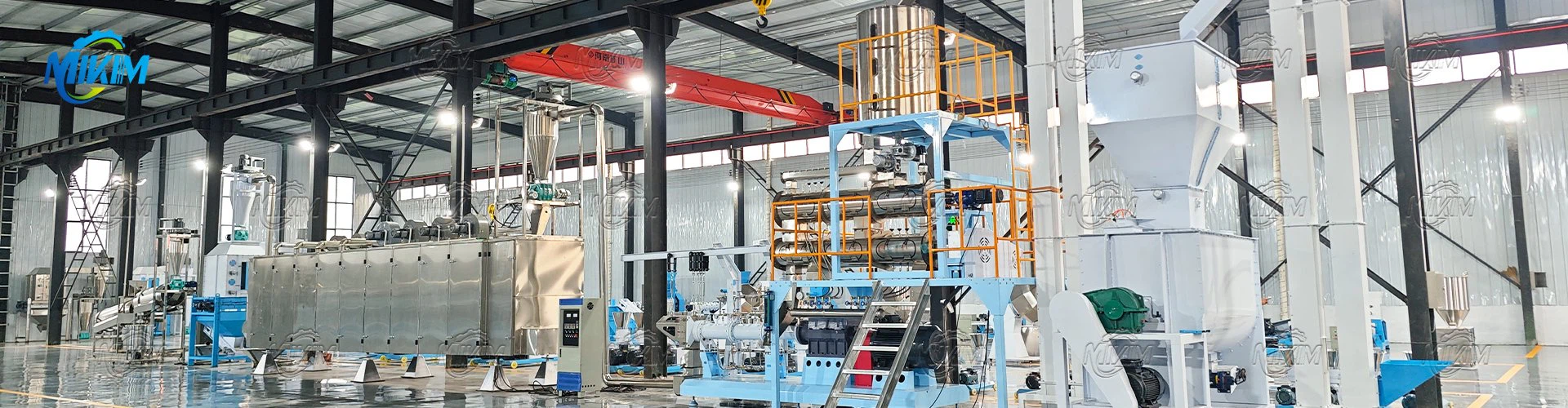
What are the components of the Twin Screw Teaching Lab Puffer?
Twin-screw teaching experimental puffing machine extrusion technology as one of the modern food engineering high and new technology, widely used in colleges and universities, scientific research institutions of scientific research and teaching, covering the agricultural processing industry in the cereal food, leisure food and feed, brewing, modified starch and other processing areas.
Twin-screw extrusion experimental machine is mainly composed of feeding system, accumulation system, rotary cutting system, heating system, driving system, lubrication system and control system.
Extruder feeding system, driving system, rotary cutting system all adopt frequency conversion speed regulation, strong power, smooth running.
Automatic lubrication and forced cooling ensure the safe operation of the extruder.
For different raw materials, single or double screw feeding system is selected, which makes the feeding uniform, stable and reliable.
The screw is processed by special technology, which is wear-resistant and anti-fatigue, and has a long service life.
Equipment system composition.
(1)Power driving system: it is composed of main motor and distribution box;
(2)Extruding system: composed of screw, barrel, connecting section;
(3)Heating system: it is composed of the heating ring which surrounds the barrel;
(4)Cooling system: consists of water jacket, water pump, cooling pipeline;
(5)Electrical control system:motor speed control is frequency conversion speed control, frequency converter selects Delta frequency converter, temperature control is control system, 10.5 inches true color man-machine interface, it can be temperature, speed setting and control, it can display the value of die head pressure;
(6) The machine shell is stainless steel.
Advantages of twin-screw testing machine: more intuitive parameter detection, more convenient operation, more functional and more professional, more comprehensive process integrity. Small machine size, small footprint, easy transportation, low yield, less material wasted in the experimental cycle, low power consumption. Disadvantages of experimental twin-screw extruder: low output, not able to produce routinely like production equipment, due to low energy consumption, the extrusion is not strong enough, resulting in the degree of expansion relative to conventional production equipment will be a little lower, and the production of food particles will be slightly lacking in the puffing effect and taste, which is normal.
