
content
Comprehensive Clog Clearance Guide: Precise Solutions for Efficient Results
Based on over 90 real-world case studies from pet food factories, this guide summarizes three common types of clogs in the nozzles of floating fish food making machines. It provides precise solutions tailored to each type, balancing professionalism with practicality, and also includes information on extruder maintenance. 1. Dry Material Clogs (70%): The core principle is "high-temperature soaking + professional tool cleaning." The process involves stopping the machine to cool down → disassembling the nozzle → soaking in warm water and neutral detergent → cleaning with a fine brush → rinsing and drying → resetting and testing. This is suitable for clogs caused by inadequate cleaning after daily production. 2. Hard Impurity Clogs (20%): The core principle is "precise removal + avoiding damage." The process involves checking and confirming → stopping the machine to cool down → removing with tweezers/wire wrapped in soft cloth → grinding and calibrating the nozzle → resetting and testing. This is suitable for clogs caused by incomplete raw material screening. 3. Oil Sludge Clogs (10%): The core principle is "degreasing and softening + high-pressure rinsing." The process involves soaking in a degreasing agent → rinsing with a high-pressure water gun → cleaning with a fine brush → disinfecting and drying → resetting and testing. This is suitable for clogs caused by production of high-protein, high-fat pet food.


Long-term prevention techniques: Source control reduces blockage probability by up to 80%
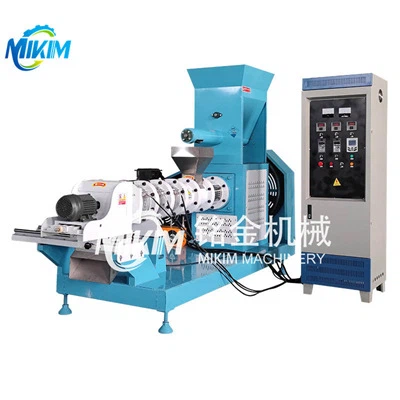
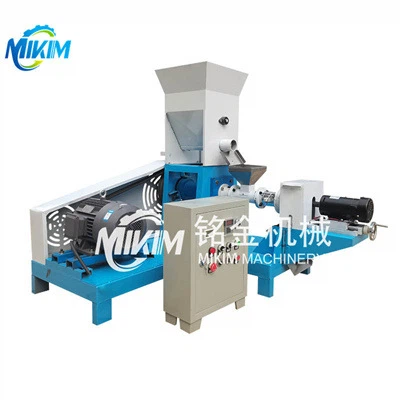
First, standardize daily cleaning procedures. After production, immediately stop the machine and cool it down. Clean the nozzles and discharge channels with warm water and a neutral detergent to ensure no material residue and prevent drying. Second, strictly control raw material quality. Establish a double-layer screening and inspection mechanism to remove hard impurities and broken lumps, and control raw material moisture (15%-18%) to prevent material adhesion. Third, regularly maintain the nozzles. Check the nozzle orifice diameter weekly, clean small residues, grind and calibrate the orifice diameter monthly, and replace the nozzles every 6 months (adjust according to production intensity). Also, regularly maintain the screw and barrel of the floating fish meal processing machine to prevent material accumulation in the barrel and subsequent nozzle blockage. Fourth, optimize production parameters. Adjust the temperature, pressure, and speed of the extruder to ensure uniform material cooking and smooth conveying, reducing the residence time of material at the nozzles and preventing drying.
Division of Responsibilities and Effectiveness Monitoring: Ensuring Implementation and Long-Term Stability
The implementation of a prevention system requires a clear division of responsibilities and regular effectiveness monitoring to ensure long-term avoidance of nozzle clogging issues in floating fish meal making machines. First, clearly define responsibilities: designate specific personnel for daily nozzle cleaning and regular maintenance; operators are responsible for timely troubleshooting and emergency handling of nozzle clogging during production; and maintenance personnel are responsible for nozzle grinding, calibration, and replacement. Second, establish a maintenance log to record the date, operator, clogging status, and handling method for nozzle cleaning, maintenance, and replacement, facilitating subsequent traceability and optimization. Third, regularly monitor effectiveness: monthly statistics on nozzle clogging frequency, unclogging time, and raw material loss rate. If the number of clogging incidents does not decrease significantly, optimize the prevention plan (e.g., adjusting raw material screening processes and production parameters). Fourth, strengthen personnel training: regularly provide professional training to operators and maintenance personnel to ensure they are proficient in nozzle unclogging methods, prevention techniques, and key points of extruder-based maintenance, improving practical skills and ensuring the effective implementation of the prevention system to guarantee stable production.
about Us
Customer visit

Certificate of Honor

FAQ
1. What is the price of the fish feed processing machine?
The price ranges from approximately $1,500-$55,000
2. Do you provide maintenance services for your customers?
Yes, we offer comprehensive after-sales maintenance services to our customers.
If you would like to learn more about MIKIM machinery, please contact us. We offer one-stop service and welcome your inquiries!!!