
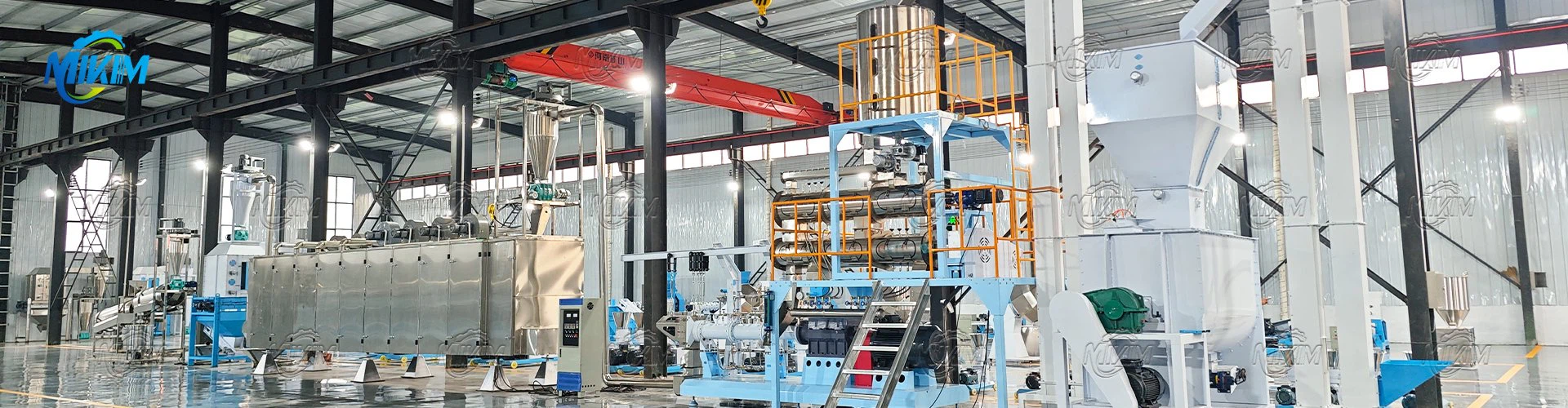
The process flow of ruminant feed production line mainly includes the following key steps:
Raw material receiving and cleaning: The raw materials are transported to the feed factory by truck or conveyor belt, unloaded and metered in the receiving area. Subsequently, the raw materials enter the cleaning stage, and impurities and foreign matter are removed by equipment such as vibrating screens, magnetic separators, and stone removers to ensure the purity of the raw materials.
Crushing and batching: The cleaned raw materials enter the crusher and are crushed into a particle size suitable for ruminant digestion and absorption. The surface area of the crushed raw materials is increased, which is conducive to animal digestion and absorption. Then, according to the requirements of the feed formula, various raw materials are mixed in a certain proportion to ensure the nutritional balance of the feed.
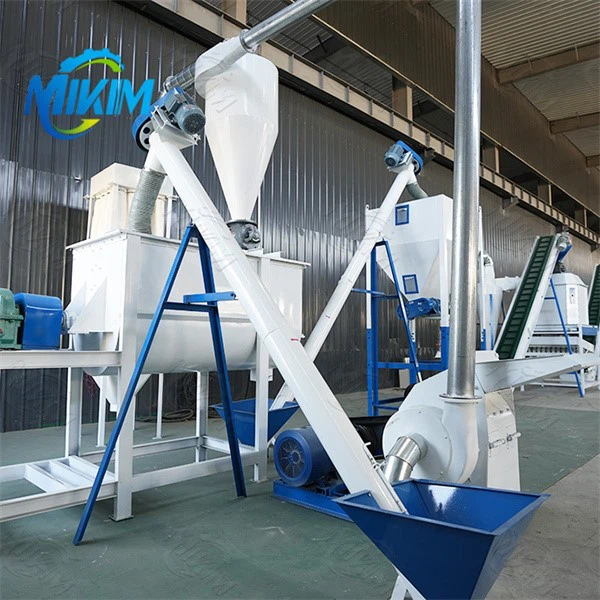
| Model | Capacity | Power | Dimension | Weight |
| 125 | 80-100kg/h | 3kw | 110*35*70 cm | 95 kg |
| 150 | 120-150kg/h | 4kw | 115*35*80cm | 100 kg |
| 210 | 200-300kg/h | 7.5kw | 115*45*95cm | 300 kg |
| 260 | 500-600kg/h | 15kw | 138*46*100cm | 350 kg |
| 300 | 700-800kg/h | 22kw | 130*53*105cm | 600 kg |
| 360 | 900-1000kg/h | 22kw | 160*67*150cm | 800 kg |
| 400 | 1200-1500kg/h | 30kw | 160*68*145cm | 1200 kg |
Pelletizing: The mixed raw materials enter the pelletizing stage. First, the raw materials are tempered and mixed with steam or water to reach a certain temperature and humidity. Then, they are pressed into granular feed by a pelletizer. The pelletized feed has good fluidity and stability, which is convenient for storage and transportation.
Cooling and screening: The pelletized feed has a high temperature and needs to be cooled by a cooler. The cooled feed is screened to remove lumps and unqualified particles to ensure the quality of the finished product.
Finished product packaging and storage: The screened qualified feed enters the packaging machine for packaging, and the packaging materials are mostly paper bags or plastic bags. The packaged feed needs to be stored in a dry, ventilated, moisture-proof warehouse, and cleaned and disinfected regularly to ensure the hygiene and safety of the feed.