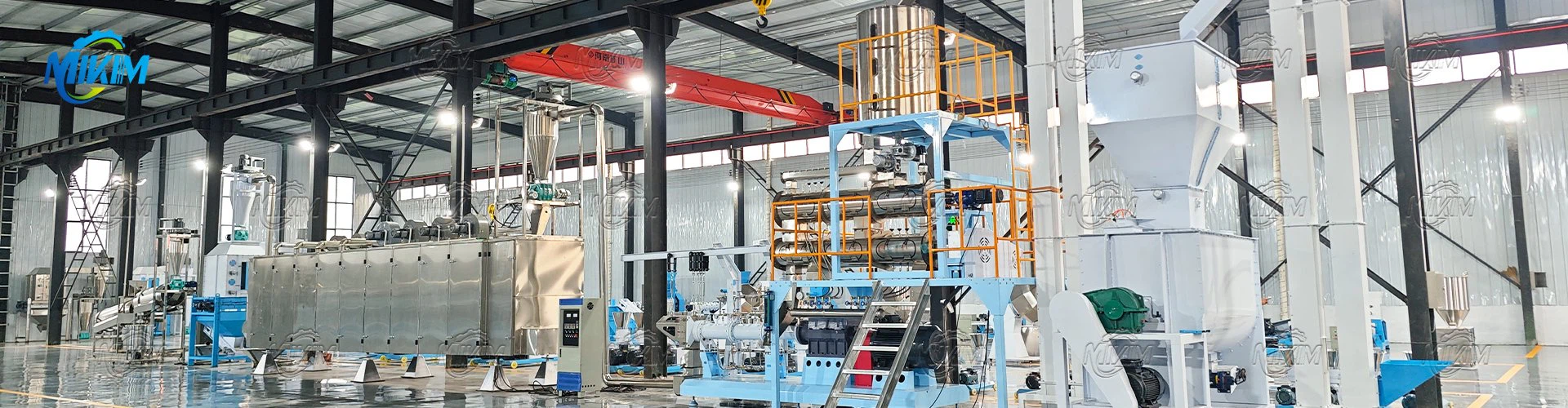
Floating fish feed pellet making machines process raw materials under high temperature and pressure, but this can lead to nutrient degradation. Proper temperature control, moisture adjustment, and optimized production processes are key to improving nutrient retention and enhancing feed quality.
Featured Snippet (Quick Answer)
How can I reduce nutrient loss in floating fish feed pellet making machines?
- To reduce nutrient loss:
- Control processing temperature with segmented control.
- Optimize moisture content around 20%.
- Balance raw material formulation and add stabilizers.
- Shorten processing time by increasing screw speed.
- Use post-coating technology for heat-sensitive nutrients.
- Select high-performance equipment with precise control systems.
- Regularly test nutrient content and train operators for optimal production.
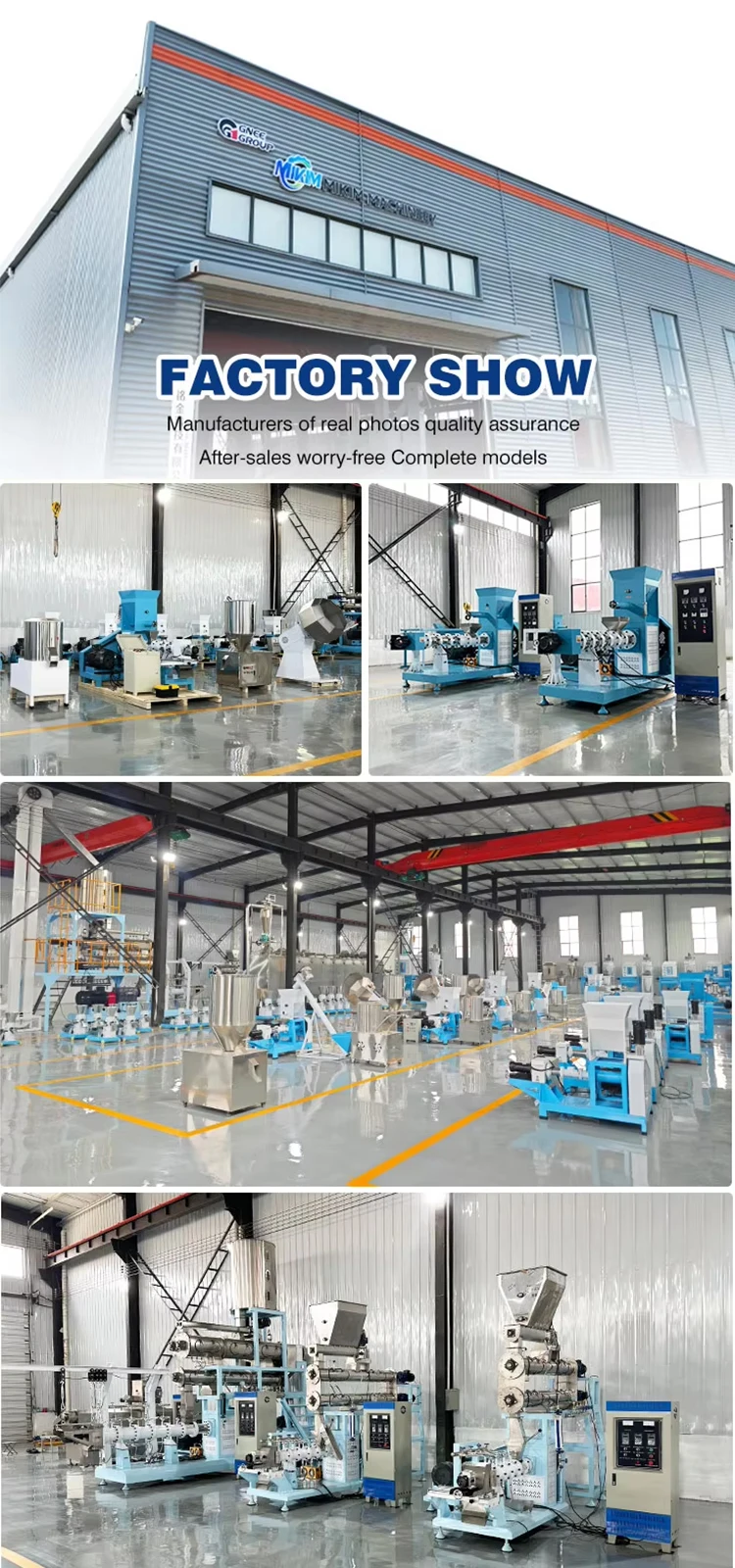
Pet Food Extruder Factory Trial Run
Details
I. How to Control Processing Temperature to Reduce Nutrient Loss
Problem: High temperatures degrade heat-sensitive nutrients.
Solution:
- Segmented temperature control: Gradually increase temperature to reduce sudden heat exposure.
- Avoid excessive temperatures while ensuring sufficient starch gelatinization.
Effect: Reduces degradation of vitamins A and C and amino acids, improving nutrient retention.
II. How to Optimize Moisture Content for Nutrient Stability
Problem: Low moisture increases frictional heat, while excessive moisture can affect pellet quality.
Solution:
- Maintain moisture around 20% to reduce nutrient loss.
- Precise moisture control helps manage temperature fluctuations during extrusion.
Effect: Balanced moisture improves nutrient stability and pellet quality while reducing nutrient degradation.
III. How to Select the Right Raw Material Formulation
Problem: Imbalanced formulations can lead to excessive nutrient exposure to heat.
Solution:
- Balance protein, fat, and starch ratios for optimal extrusion.
- Increase starch content to improve extrusion efficiency and reduce nutrient exposure time.
- Add antioxidants or stabilizers to protect vulnerable nutrients.
Effect: Better formulation design reduces nutrient degradation, improves extrusion efficiency, and enhances feed quality.
IV. How to Shorten Processing Time and Minimize Nutrient Exposure
Problem: Longer exposure to high temperatures leads to increased nutrient loss.
Solution:
- Increase screw speed and optimize screw structure to reduce processing time.
- Optimize floating fish feed pellet maker machine parameters to improve material throughput and reduce time in high heat.
Effect: Reduces nutrient exposure to high temperatures, leading to better nutrient retention and increased production efficiency.
V. How to Apply Post-Coating Technology to Protect Heat-Sensitive Nutrients
Problem: Heat-sensitive nutrients degrade during extrusion.
Solution:
- Use post-coating technology to spray nutrients onto pellets after extrusion and cooling.
- This method prevents high-temperature damage to vitamins, probiotics, and enzymes.
Effect: Protects sensitive nutrients, enhancing nutrient retention and feed quality.
VI. How to Choose the best Floating fish feed pellet extruder machine
Problem: Low-quality equipment causes unstable processing and higher nutrient loss.
Solution:
- Choose high-quality fish feed extruders with precise temperature control and stable screw structures.
- Ensure the extruder has excellent sealing performance to minimize nutrient loss.
Effect: Stable equipment performance reduces nutrient loss and improves overall production efficiency.
VII. How to Strengthen Production Process Management and Testing
Problem: Lack of proper quality management and monitoring can result in nutrient loss.
Solution:
- Establish a quality management system to test nutrient content regularly.
- Train operators to maintain optimal equipment settings.
Effect: Regular testing and operator training improve product consistency and reduce production risks.
Expanded FAQ
1. How does high temperature affect nutrients in fish feed?
Excessive temperature degrades heat-sensitive vitamins (A, C) and amino acids, reducing the nutritional value of the feed.
2. Why is moisture content important in fish feed extrusion?
Proper moisture control helps reduce frictional heat and improves nutrient stability while preventing over- or under-extrusion.
3. What raw material formulation is best for reducing nutrient loss?
Balance protein, fat, and starch, and increase starch for better extrusion and shorter processing time.
4. How does post-coating technology protect nutrients in fish feed?
Post-coating applies sensitive nutrients like vitamins and probiotics onto the pellet surface after cooling, avoiding high-temperature degradation.
5. Why should I choose high-performance floating fish food production machine?
High-quality small fish feed pellet mill ensures precise temperature control, stable screw structure, and better sealing, which minimizes nutrient loss during processing.
6. How can I improve nutrient retention during fish feed production?
Shortening processing time, maintaining optimal moisture levels, and using post-coating technology can help reduce nutrient loss.
Company Profile