
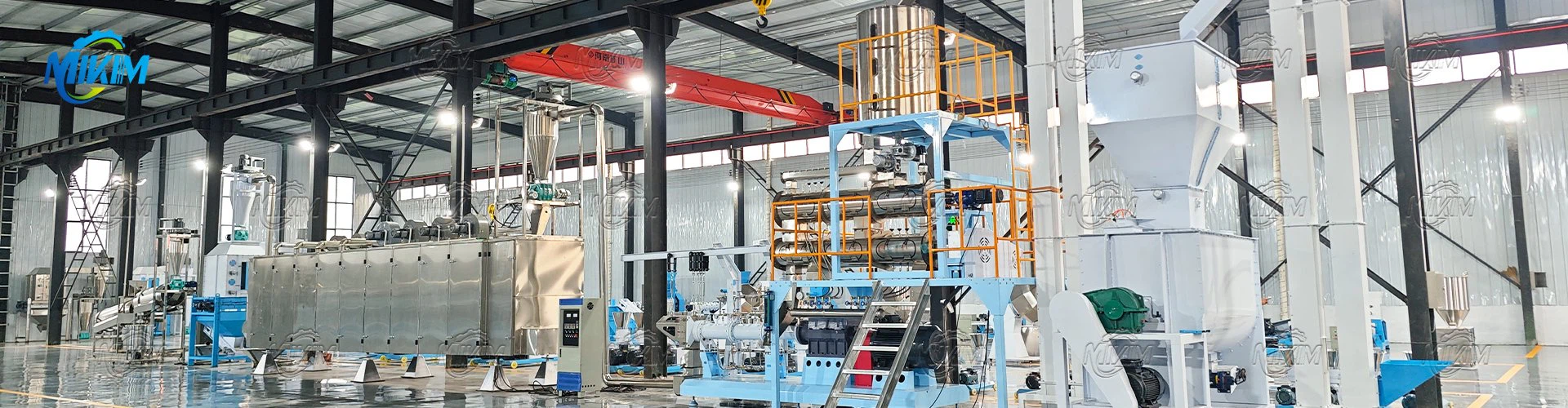

Is a Twin screw floating fish feed making machine Profitable?
Yes - a Twin screw floating fish feed pellet extruder machine is highly profitable for commercial operations targeting the premium aquaculture market. Although the initial investment (CAPEX) is higher than single-screw models, it generates profit through higher market pricing for premium feed, reduced raw material waste and superior feed conversion ratios that ensure customer loyalty.
1. How Twin-Screw Technology Drives Profitability
In the aquafeed business, profit is a function of value minus operational cost (OPEX), and twin-screw machines improve both sides of this equation.
- Premium market positioning: single screw floating fish feed machines produce commodity feed; twin-screw machines produce specialty feed - high-protein/high-fat recipes for salmon, trout and shrimp, with perfectly uniform, dust-free pellets that command a higher price at the distributor level (typically 15–25% premium).
- Operational efficiency: Twin screw floating fish feed pellet making machines stabilize faster, so less off-spec material is discarded during startup and shutdown (waste under 1% vs 3–5% for single-screw); most twin-screw systems require fewer operators thanks to PLC integration, saving labor costs.
2. Financial Comparison (5-Year TCO)
| Profit factor | Twin screw floating fish machine | single screw floating fish feed machine |
|---|---|---|
| Initial investment | High (premium) | Low (budget) |
| Formula cost | Low (handles cheaper proteins) | High (requires expensive binders) |
| Product waste rate | < 1% | 3–5% |
| Downtime cost | Low (self-cleaning) | High (frequent blockages) |
| Feed selling price | Premium | Commodity |
| Customer retention | High (stable FCR) | Moderate |
3. The "Silent" Profit Maker: Better FCR
Profit is not just made at the machine - it is made in the fish pond. Twin-Screw floating fish feed extruder machines achieve higher starch gelatinization (over 90%), so fish grow faster with less feed. When farmers see better results with your feed, they become repeat buyers, significantly reducing marketing and sales costs.
4. Who Gains Most?
Commercial feed mills producing 1–10 t/h, export-oriented businesses meeting international standards for pellet durability and nutritional density, and specialty producers focusing on shrimp, crab or ornamental fish.
Micro-scale farming with a single pond: the high CAPEX may take too long to recover - a single-screw machine is a more profitable entry-level choice.
5. FAQ Highlights
- Payback period: for most commercial mills operating at 60–70% capacity, ROI is typically achieved within 12–24 months.
- Raw material costs: Twin screw floating fish feed pellet maker machines process lower-cost plant proteins and high-fiber ingredients more effectively than single-screw machines, which often need expensive starch binders.
- Maintenance: spare parts (screws/sleeves) are more expensive, but maintenance frequency is lower; the self-cleaning nature and robust gearbox design reduce emergency repairs and lost production.
- Price premium: premium floating feed from twin-screw technology can often be sold at a 10–20% premium over basic single-screw feed.
- Used machines: risky - profitability depends on screw-to-barrel clearance precision; a worn machine produces inconsistent pellets and high waste.
The figures above are typical estimates based on market data and manufacturer testing; actual results depend on the formula, species, local market and operating discipline.