
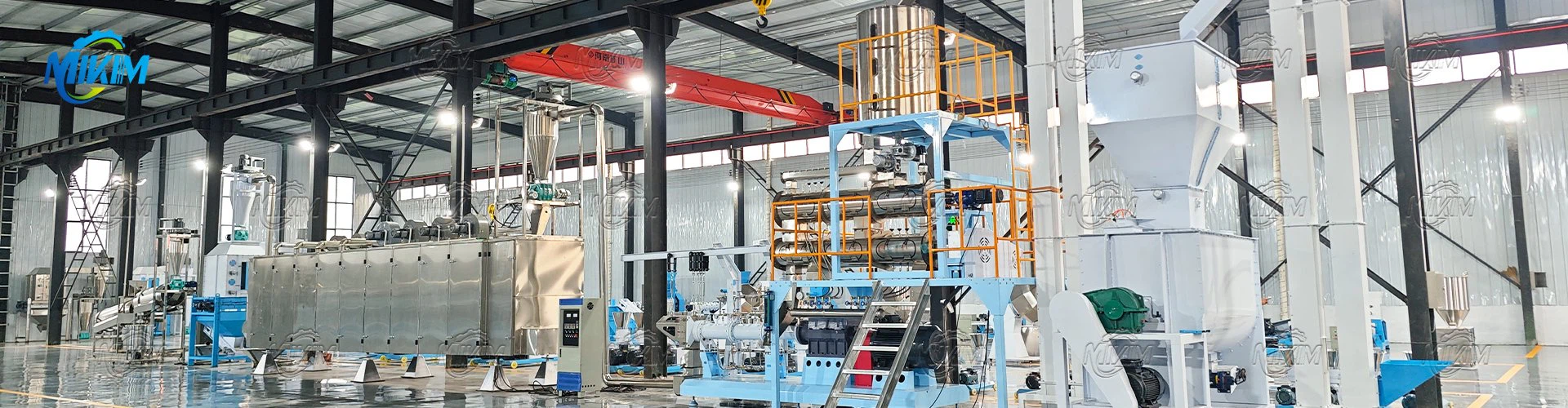
Correct use:
1. Before operation, the machine head, machine core, screw and other working parts should be removed, and the rice dirt and oil stains on the machine core and screw should be carefully cleaned. After cleaning, they should be dried and reassembled.
2. When using, start the machine and run it for 1-2 minutes, then slowly add the raw materials to the feed port. When about a handful of raw materials can fill the ring groove of the spiral shaft head, stop feeding and perform friction preheating. Wait until the temperature of the machine head rises, the pressure in the machine cavity increases, and the nozzle starts to spit, then feed. Since the normal temperature and pressure in the machine cavity have not yet been reached at this time, the feeding amount should be gradually and slowly increased.
3. Feeding should be continuous and uniform, and the material should be dry, otherwise it is easy to cause the spiral groove to be blocked.
4. When the spiral groove is found to be blocked, do not stop the machine immediately. It should be operated for a while after stopping the feeding until there is a burnt smell before stopping the machine. This can avoid the nozzle and spiral sleeve from biting. If the nozzle or spiral sleeve is stuck and cannot be removed, do not knock it hard. You can remove it from the machine body and burn it in the fire for a while, then you can remove it.
5. When the nozzle cannot spray out the formed product at the beginning of the operation, it is often caused by the nozzle temperature being too high. The reason is that the raw material is too dry, there are foreign objects in the spiral groove, or the feeding is interrupted. The cause should be found and the fault should be eliminated according to different situations.
6. After the operation is completed and the feeding is stopped, let the machine idle for 1 minute, and stop the machine after the material in the machine is drained. Then remove the nozzle and spiral sleeve while it is hot, flush out the spiral shaft, remove the residue in the machine, and dredge the nozzle for reuse. Note: Wear gloves when disassembling to prevent burns.

| Model | Capacity(kg/h) | Main Power(kw) | Feed Power(kw) | Cut Power(kw) | Screw Dia(mm) |
Pelletsize (mm) |
| DGP40 | 40-60 | 7.5 | 0.4 | 0.4 | Φ40 | 1-12mm |
| DGP50 | 60-80 | 11 | 0.4 | 0.4 | Φ50 | 1-12mm |
| DGP60 | 100-150 | 15 | 0.4 | 0.4 | Φ60 | 1-12mm |
| DGP70 | 180-250 | 18.5 | 0.4 | 0.4 | Φ70 | 1-12mm |
| DGP80 | 300-350 | 22 | 0.4 | 0.6 | Φ80 | 1-12mm |
| DGP90 | 400-450 | 37 | 1.1 | 0.6 | Φ90 | 1-12mm |
| DGP120 | 500-700 | 55 | 1.1 | 1.5 | Φ120 | 1-12mm |
Maintenance and care of the puffed food production line
1. The box bearings should be filled with lubricating grease in time. After running for 500 hours, all lubricating grease should be replaced. (A proper amount of grease should be added before the new machine is operated, and the oil should be changed after running for 200 hours.)
2. Other bearing parts should be filled with grease regularly.
3. It is strictly forbidden to use hard objects and heavy hammers on the screws, screw sleeves and other wearing parts during the disassembly and assembly process. It is strictly forbidden to place heavy objects or stand on the puffing chamber.
4. The puffed raw materials should be cleaned to prevent metal and other foreign objects from entering the machine and causing damage Broken parts.
5. Check the quality of the extruder at any time during the puffed food production line, and pay attention to replacing wearing parts.
6. Keep the area around the equipment clean.
7. When the machine is shut down for a long time or the puffed material is replaced, the material in the puffing chamber should be cleaned to avoid agglomeration, mildew or cross contamination between materials.
8. Since the wearing parts near the discharge port wear relatively quickly, the wearing parts near the feed port wear less, so when replacing wearing parts, they should be replaced in sequence starting from the discharge end, and it is not advisable to replace multiple parts at one time.