
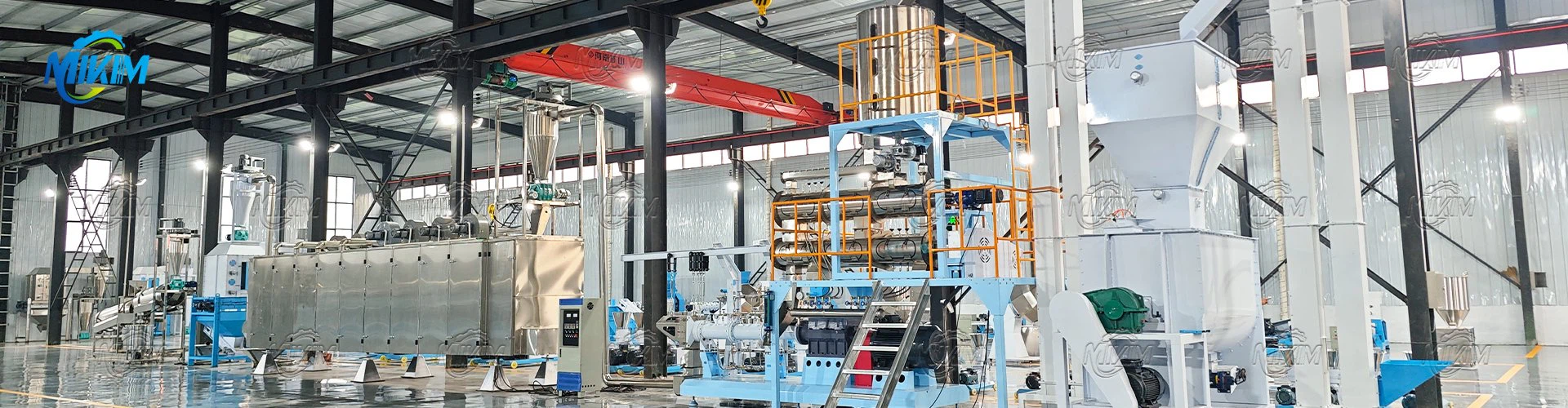
An efficient and stable pellet feed production line can not only meet the nutritional needs of different livestock and poultry, but also significantly reduce waste, improve feed conversion rate, and thus increase economic benefits.
The production process of pellet feed mainly includes key steps such as raw material processing, ingredient mixing, pressing and molding, cooling and drying, screening and packaging. Each link needs to be precisely controlled to ensure the quality of feed. For example, a reasonable raw material ratio can ensure nutritional balance; precise temperature and pressure control is directly related to the molding effect and feed quality.

| Model | Capacity(t/h) | Power(kw) | Screw Diameter(mm) | Weight |
| 75-B | 0.3-0.4 | 22 | 80 | 1000 |
| 85-B | 0.5-0.6 | 30 | 90 | 2000 |
| 90-B | 0.6-0.7 | 37 | 100 | 2100 |
| 100-B | 0.7-0.8 | 55 | 120 | 2200 |
| 135-B | 1-1.5 | 75 | 135 | 3200 |
| 145-B | 2-3 | 90 | 145 | 4000 |
| 160-B | 3-4 | 110 | 160 | 4500 |
What are the strategies to improve feeding efficiency?
1. Optimize the formula: adjust the formula according to the growth needs of different livestock and poultry to maximize the use of nutrition.
2. Improve the degree of automation: use modern automatic control technology to improve production efficiency and product quality and reduce labor costs.
Understanding and optimizing the pellet feed production line plays an important role in improving the overall benefits of the breeding industry. Through scientific management and technological innovation, production costs can be effectively reduced and product quality can be improved.