
content
Troubleshooting: Typical Manifestations of Raw Material Moisture and Conditioning Failures in Fish Food Making Machines
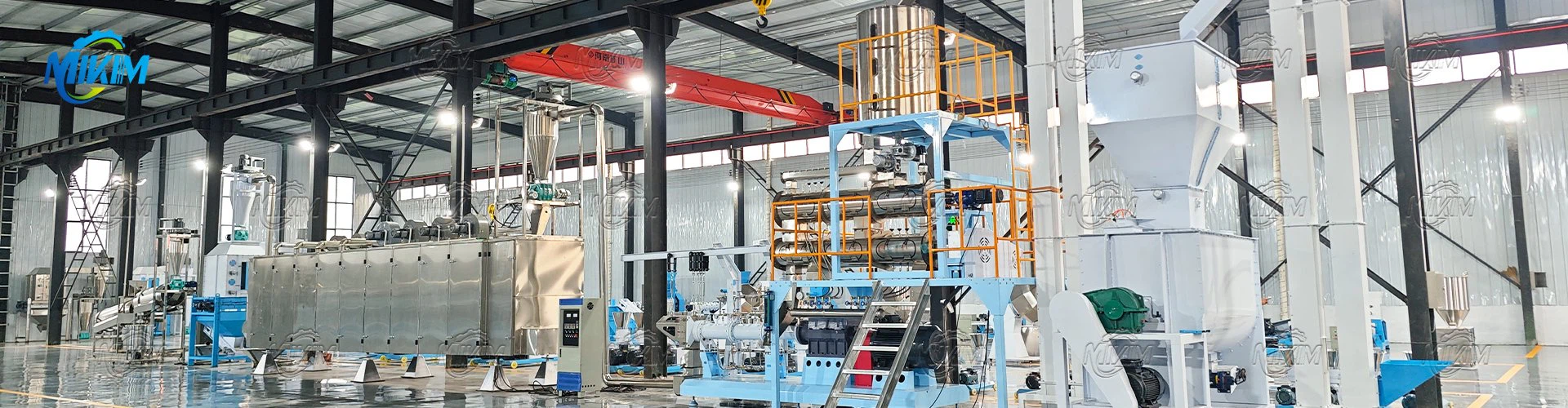
The core manifestations of this type of grinding failure are directly related to the conditioning effect of the fish food maker machine and the moisture content of the raw materials, making it easily distinguishable from component wear failures. There are three main manifestations: First, the ground particles severely agglomerate, exhibiting clumping. A noticeable layer of material adheres to the surface of the grinding components, which re-agglomerates shortly after cleaning. Simultaneously, the extruded material feels damp and sticky. Second, grinding noises are intermittent, accompanied by fluctuations in the pellet mill's operating resistance. When the raw material moisture content is too high, the resistance increases, exacerbating the noise; uneven moisture content results in significant differences in particle size. Third, grinding efficiency drops drastically. Some material adheres to the grinding components and cannot be ground, leading to a raw material loss rate increase of over 25%. Even after ruling out wear of grinding components and abnormal linkage issues, the failure persists.

Core Cause: Abnormal Raw Material Moisture + Conditioning Failure in Fish Food Extruder Machine
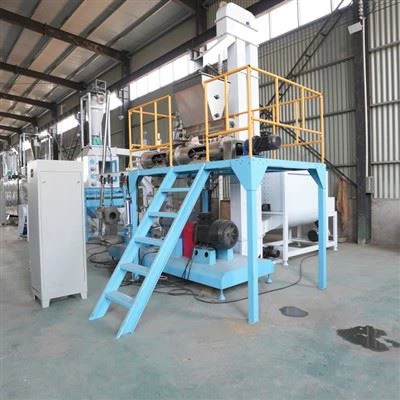
The core cause of this type of grinding failure is inadequate conditioning effect of the extruder and insufficient control of raw material moisture content; these two factors influence each other. First, abnormal raw material moisture content. Initial raw material moisture exceeding 18% (standard range 15%-18%) or uneven moisture content prevents sufficient conditioning after entering the extruder, leading to material agglomeration. Second, extruder conditioning malfunction. Clogged extruder conditioner nozzles prevent even spraying of conditioning water, resulting in uneven material moisture content; excessively low conditioning temperature (below 120℃) fails to effectively evaporate excess moisture, causing excessive material moisture content; excessively high extruder speed results in insufficient material residence time in the conditioner, leading to inadequate conditioning. Third, worn extruder conditioner blades cause uneven mixing, resulting in significant differences in material conditioning effects. Upon entering the pellet mill, some material agglomerates while others dry out, exacerbating grinding malfunctions.

Repair Steps: Control Moisture First, Repair the Extruder, and Calibrate the Grinding Unit
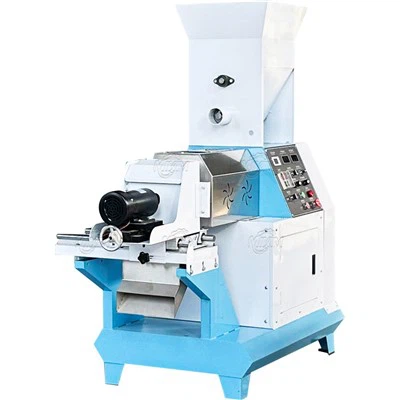
Following the principle of "first controlling raw material moisture, then repairing conditioning malfunctions, and finally calibrating grinding components," we provide actionable repair steps. The first step is to control the moisture content of the raw materials. Test the initial moisture content of the raw materials; if it exceeds 18%, dry them to the standard moisture range. If the moisture content is uneven, mix and stir to ensure uniform moisture. The second step is to repair the extruder's conditioning malfunction. Disassemble the extruder's conditioner, clean any nozzle blockages, and ensure even spraying. Calibrate the conditioning temperature of the floating fish feed extruder machine to 120-160℃, extending the material's residence time in the conditioner (adjust the rotation speed to 300-320 r/min). Inspect the conditioner blades; if worn, repair or replace them promptly to ensure uniform mixing. The third step is to clean the grinding components of the pellet mill. Use warm water and a neutral detergent to clean any adhering materials from the surface. After drying, adjust the grinding gap to ensure uniform grinding force. The fourth step is trial production testing. Start the extruder and pellet mill to test the material conditioning and grinding effects, adjust parameters to optimal levels, ensure the grinding malfunction is completely repaired, and establish a raw material moisture detection mechanism to prevent recurrence of abnormalities.
about Us
Customer visit

Certificate of Honor

FAQ
1. What is the price of the floating fish food making machine?
The price ranges from approximately $1,500-$55,000
2. Do you provide maintenance services for your customers?
Yes, we offer comprehensive after-sales maintenance services to our customers.
If you would like to learn more about MIKIM machinery, please contact us. We offer one-stop service and welcome your inquiries!!!