
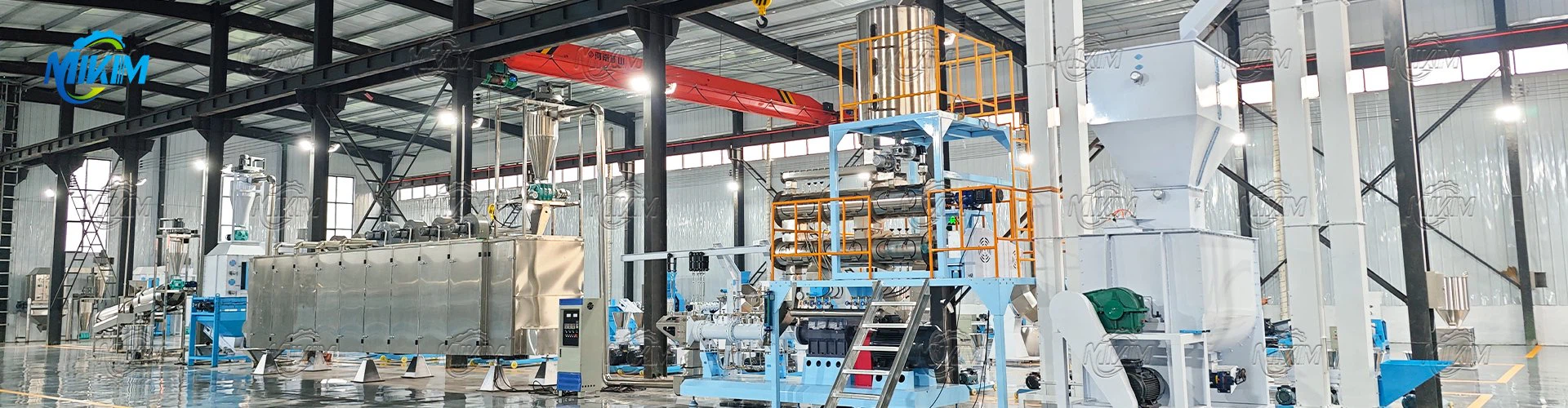

Quick answer - pet food extruder machine: Choosing a pet food extruder machine comes down to three questions: how many kg/h you need, what product and recipe you will run, and whether a single-screw or twin-screw, dry-type or wet-type machine fits. Coverage runs from about 40 kg/h to about 4,000 kg/h.
At a glance
Key takeaways
- A pet food extruder machine does three jobs: cook, expand and shape. Every downstream machine is sized from the extruder's real throughput.
- Single-screw suits standard dry kibble and tighter budgets. Twin-screw handles higher fresh-meat and fat levels and self-cleans between recipes.
- Dry-type extrusion keeps CAPEX low for small and mid-scale lines. Wet-type extrusion raises gelatinisation and pellet stability for higher-spec products.
- Size capacity from your daily target plus 20–30% headroom. Always size the dryer, coater and packaging machine from the same figure.
- A good quotation states the model, rating, inclusions and warranty in writing. Ask for one against your own recipe, not a sample.
What does a pet food extruder machine do?
A pet food extrusion machine cooks, expands and shapes a blended recipe into kibble. It uses mechanical energy, heat and moisture to gelatinise starch and texturise protein. The cooked mass is then forced through a die, where a cutter sets the final kibble shape.
dry-type dog feed pellet extruder line test
I am interested in this product
Cooking and gelatinisation
Extrusion is a continuous cooking process. As the recipe moves along the screw inside the barrel, friction, added heat and steam raise its temperature and pressure. That cooks the starch. Gelatinisation is what makes kibble digestible and gives it structural strength, rather than simply pressing dry powder together.
Shaping and density
At the die, the cooked mass is forced through shaped openings and cut to length. The material is under pressure, so it expands as it exits. How much it expands sets the kibble density. That density decides whether the product is light and crunchy or denser.
Why it matters for kibble quality
Kibble quality is decided inside the extruder and the drying stage that follows. Consistent cook gives consistent colour, texture and density. Inconsistent cook gives the broken, dusty, uneven bags that customers return. That is why a dog food making machine is the first thing to size carefully, before anything downstream.
Single-Screw vs Twin-Screw pet food making machine: Which Is Right for Your Pet Food?
The single-screw versus twin-screw choice is about recipe flexibility and budget. Single-screw handles standard dry kibble well at a lower cost. Twin screw dog food maker machine handles higher fresh-meat and fat levels, mixes more uniformly, and self-cleans between recipes. For standard dry kibble, a single-screw design is usually the lower-cost route.
When Single-Screw pet food extruder machine is the right call
Single-Screw dog food extruder machine is the economical choice for standard dry dog and cat kibble. Grain-based or moderate-meat recipes run well on it. The priority is a reliable, cost-effective line. For a new pet food business focused on volume and a tight budget, a standard dog food pellet machine is often the sensible starting point.

When Twin screw pet food extruder machine earns its cost
Twin screw pet food processing machine earns its higher price when the recipe is demanding. Intermeshing, often self-wiping screws mix more uniformly. They tolerate higher fresh-meat and fat inclusion without slipping or blocking. They also clean themselves between recipes, so switching products does not mean a long manual strip-down. For premium or specialty pet food, a twin-screw machine is what makes the recipe possible.

Fresh-meat and fat limits
Fresh meat and added fat both reduce the friction that drives extrusion. They are the two ingredients that most often push a machine up a class. A recipe with only a small share of fresh meat can run on a single-screw. A recipe with high fresh-meat content usually needs a twin-screw to keep throughput and pellet quality steady. Before you commit, tell the supplier your intended fresh-meat and fat percentages. Then ask how they will prove the model on your recipe.
Comparing single-screw and Twin screw dog food making machine for your recipe? Send us your formula outline and target output. We will confirm the configuration rather than quote from a brochure figure. Explore twin-screw extruder options →
Dry-Type vs Wet-Type Extrusion: How Do You Choose?
Choose dry-type extrusion for lower CAPEX and smaller scale. Choose wet-type extrusion when you need higher gelatinisation and more stable, higher-spec pellets. The decision follows your scale, budget and product quality target, not a brand preference.
Dry-type: lower CAPEX, small scale
Dry Type dog food manufacturing machine relies on friction and barrel heating rather than injected steam. It needs no boiler, which keeps the capital cost and site requirements low. That makes it a practical fit for small and mid-scale lines and for sites where steam is not available. For a new pet food business, a dry-type machine is a common first choice.

Wet-type: higher gelatinisation and stability
Wet Type Pet Food pellet Extruder injects steam into a preconditioner before the material reaches the screw. The extra heat and moisture drive starch gelatinisation higher. That improves digestibility and gives a denser, more stable pellet, which matters for higher-spec products and demanding recipes. The trade-off is the boiler and the extra conditioning hardware, which raise both cost and footprint. A wet-type extruder is the usual choice when product quality is the priority, because the wet-type pet food extruder machine trades higher cost for a better cook.

How Much Capacity Does Your Pet Food Extruder Machine Need?
Size capacity for your pet food extruder machine from your daily production target. Convert it to an hourly figure over realistic operating hours, then add 20–30% headroom. The table below shows the dry-type single-screw ladder, from a small starter machine up to a large production unit. Models appear only in this table. Use it to identify the model class you need, then verify the rating against your own recipe before you order.
Table B-1 - Dry-type Single-Screw dog food pellet maker machine

Reserve 20–30% headroom
Do not size your line at 100% of your target output. A machine running flat out has no room for a demanding batch, a cold start or a period of high demand, and it wears faster. If you need 500 kg/h of steady output, choose a pet food extruder machine rated above that. Normal operation should sit comfortably inside the rating. Use the table to narrow the choices, then check the final figure against your own recipe. Capacity moves with recipe, moisture and kibble size. Headroom is not waste. It is uptime.
Send us four details and we will confirm the model: target output (kg/h), product type, recipe outline (including fresh-meat and fat levels), and site power. Request an extruder sizing recommendation →
Which Raw Materials and Recipes Can the dog food pellet maker machine Handle?
A pet food extruder machine can run a wide range of dry, semi-moist and high-protein recipes. The fresh-meat and fat content decides whether you need a single-screw or a twin-screw machine. Grain-based dry kibble is the easiest to run. High-fresh-meat, grain-free and high-protein diets are the most demanding. Whether you operate a small dog food making machine or a full production line, the recipe drives the choice. Modern formulations follow published nutrient targets such as the FEDIAF nutritional guidelines for cats and dogs, so ask how the pet food extruder machine performs on your target specification.
Fresh-meat percentage
Fresh meat carries a lot of water, which reduces friction inside the barrel and can pull throughput and pellet quality down. Low-to-moderate fresh-meat recipes run comfortably on a single-screw. As the fresh-meat share rises, a twin-screw becomes the reliable choice. Tell the supplier your intended percentage up front. That way the pet food extruder machine is matched to the recipe, not to a generic specification.
Fat percentage
Fat is a lubricant. A little helps the process. A lot reduces the shear that cooks the product. High-fat recipes usually need the mixing and control a twin-screw provides, plus coating equipment that applies fat after drying rather than inside the pet food extruder machine.
Grain-free and high-protein diets
Grain-free and high-protein recipes change the starch available for gelatinisation. The extruder has to work harder to bind the pellet without the starch it would normally rely on. These are exactly the recipes where the extra control of a twin-screw, and the higher gelatinisation of wet-type extrusion, pay off. Match the machine class to the recipe class, then prove the result with your own recipe.
How Should You Match a dog food pellet extruder machine Machine to the Rest of the Line?
Match every downstream machine to the throughput of your dog food pellet extruder machine, or the line runs at the speed of its slowest unit. The dryer, coater, cooler and packaging machine must all be sized from the same capacity figure, adjusted for how your recipe performs.
Your extruder's stated capacity also depends on the material. The dry-type twin-screw table below shows capacity for soybean and corn separately. The same machine runs at different rates on different recipes. When you size the rest of the line, use the lower of the two figures. Build in headroom instead of a bottleneck. If the pet food extruder machine outruns the dryer, the whole line slows to the dryer's pace.
Table B-2 - Dry-type twin-screw extruder

Dryer, coater, cooler and packaging: avoid bottlenecks
- Dryer: sized from the extruder's throughput at your recipe's moisture, since a wetter fresh-meat recipe takes more drying.
- Coater: sized for the fat percentage you plan to add, because heavy coating needs a longer or larger coater.
- Cooler: sized to bring the product to ambient before packing; warm bagging causes condensation and mould.
- Packaging machine: sized to the bag format and speed you actually sell, so the line does not back up at the bagging point. An automatic weighing packing machine matched to your bag size keeps the last stage clean.
A complete pet food production line should be quoted as a set of matched machines against one capacity figure. If a supplier quotes each machine in isolation, that is a warning sign. The line can be perfectly good on paper and still bottleneck in practice. This is why the pet food extruder machine should be specified first, and everything else built around it.
What Should You Check in a Quotation?
Check that a quotation states the model, rating, equipment inclusions, warranty and spare-parts terms in writing. It should also be priced against your own recipe. The table below shows the wet-type twin-screw range, so you can see the kind of model and capacity spread a quotation should make explicit.
Table B-3 - Wet-type twin-screw extruder
A quotation checklist:
- Model and rating: is the exact model stated, with its capacity and power clearly listed?
- Inclusions: are the die, cutter, feeder and conditioner included, or priced separately?
- Compliance and features: does the machine specify food-contact surfaces in stainless steel? Is it built to the hygienic standards your market expects (see EHEDG hygienic design principles)? Buyers shipping to the United States should also check FDA animal food standards. [To be confirmed: applicable certification marks for the destination market.]
- Warranty: what is the warranty period, and what does it cover?
- Spare parts: are wear parts such as dies and cutters available, and at what lead time?
- Total cost of ownership (TCO): power use, wear-part life and servicing all sit on top of the purchase price.
- ROI: model the payback from the spread between your raw-material cost and the market price of finished pet food, at realistic operating hours.
Most disputes come from what was not written down. Ask for the model, the inclusions and the warranty in writing. Confirm the machine with your own recipe before you pay a deposit. Where a figure or certification cannot be confirmed yet, treat it as open and ask the supplier to state it. Do not accept a verbal assurance. A written quotation should describe the pet food extruder machine precisely, down to the wear parts.
Want a quotation you can actually compare? Send your capacity target, recipe outline and destination market. We will return a written quotation with the model, inclusions and warranty stated. Request a pet food extruder machine quotation →
Pet Food Extruder Machine FAQ
What does a pet food extruder machine do?
A pet food extruder machine cooks, expands and shapes a blended recipe into kibble. It uses heat, moisture and mechanical energy to gelatinise starch and texturise protein. The cooked mass is then forced through a die, where a cutter sets the kibble size and shape.
Single-screw or twin-screw extruder - which is better for pet food?
Neither is universally better. Single-screw suits standard dry kibble at a lower cost. Twin-screw suits higher fresh-meat and fat recipes, mixes more uniformly and self-cleans between recipes. Match the pet food extruder machine to your recipe, not to a trend.
Dry-type vs wet-type extrusion - which is right for my pet food line?
Dry-type extrusion needs no boiler, so it keeps CAPEX and site requirements low. That makes it a good fit for small and mid-scale lines. Wet-type extrusion injects steam for higher gelatinisation and more stable pellets, which suits premium products and demanding recipes.
What capacity (kg/h) do I need for my pet food processing machine?
Work from your daily production target, convert it to an hourly figure over your real operating hours, then add 20–30% headroom. If you need 500 kg/h of steady output, choose a pet food extruder machine rated above that so normal running sits inside the rating.
What raw materials and fresh-meat ratios can a pet food extrusion equipment handle?
A pet food extruder machine handles dry, semi-moist and high-protein recipes, but fresh-meat and fat levels drive the machine class. Low-to-moderate fresh meat suits a single-screw. High fresh-meat or high-fat recipes usually need a twin-screw. Confirm the model with your own recipe before you order.
How do I match the extruder to my dryer, coater and packaging equipment?
Size every downstream machine from the extruder's real throughput at your recipe, using the lower capacity figure where material affects the rate. A wetter recipe needs more drying, heavy coating needs a larger coater, and packaging must match your bag format so the line does not back up. Treat the pet food extruder machine as the anchor of the line.
What certifications and features should a pet food extrusion machine have?
Look for food-contact surfaces in stainless steel and a build that meets the standards of your destination market. Ask the supplier to state applicable certification marks in writing. [To be confirmed: specific certification marks, to be listed per destination market.]
How much does a pet food making machine cost?
There is no single price, because cost follows capacity, screw configuration, extrusion method and the equipment included. A small single-screw machine and a large twin-screw unit differ widely. Request a written quotation against your own recipe and capacity for a comparable figure.
Conclusion: Decide the Recipe, Then the Machine
Choosing a pet food extruder machine is a sequence, not a guess. Start with your recipe, especially the fresh-meat and fat levels. Then decide whether a single-screw or twin-screw configuration fits. Next, decide whether dry-type or wet-type extrusion matches your scale and quality target. Only then size capacity, add headroom, and match the dryer, coater, cooler and packaging machines to the same figure.
The buyers who ask questions first are the ones who confirm the model with their own recipe, and who insist on a written quotation stating the model, inclusions and warranty. Do that, and the pet food extruder machine you buy will already fit the product you intend to sell. Recipe first. Machine second.
Send us your capacity target, product type, recipe outline and destination market. We will confirm the configuration and return an indicative quotation on request.


