
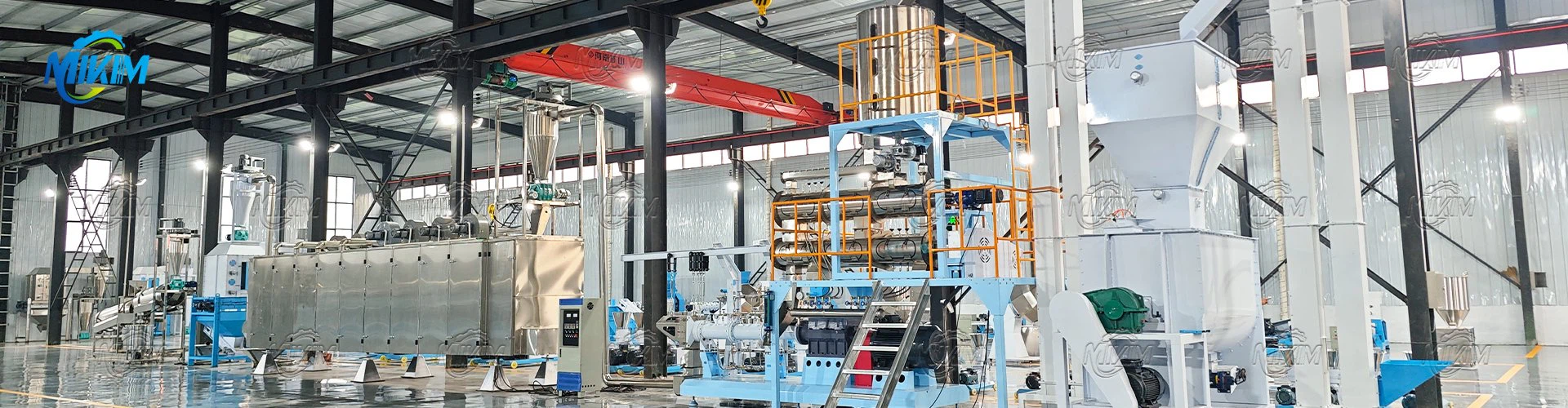
First of all, it is necessary to clarify the production needs. Before choosing pellet feed processing and production equipment, enterprises need to have a clear understanding of their own production scale, feed types, production capacity requirements, etc. Different equipment is suitable for different production scenarios. Therefore, clarifying the needs is the first step in choosing equipment. For example, for large-scale feed production enterprises, it may be necessary to choose equipment with high automation and large production capacity; while for small or medium-sized enterprises, they may pay more attention to the flexibility and cost-effectiveness of the equipment.
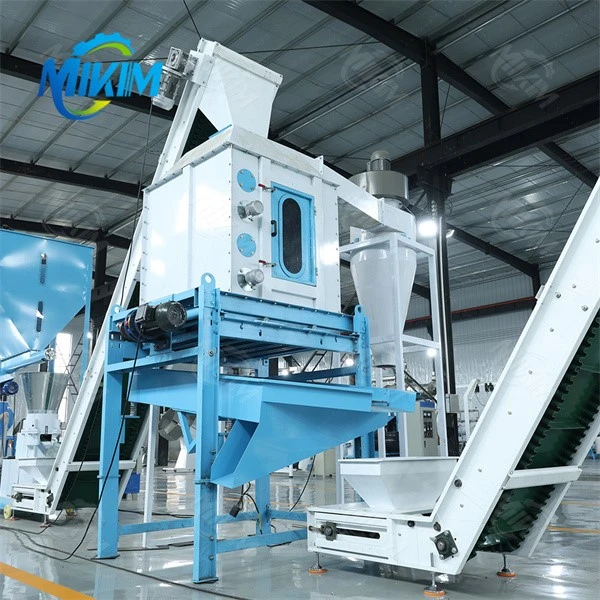
| Model | Capacity | Power | Dimension | Weight |
| 125 | 80-100kg/h | 3kw | 110*35*70 cm | 95 kg |
| 150 | 120-150kg/h | 4kw | 115*35*80cm | 100 kg |
| 210 | 200-300kg/h | 7.5kw | 115*45*95cm | 300 kg |
| 260 | 500-600kg/h | 15kw | 138*46*100cm | 350 kg |
| 300 | 700-800kg/h | 22kw | 130*53*105cm | 600 kg |
| 360 | 900-1000kg/h | 22kw | 160*67*150cm | 800 kg |
| 400 | 1200-1500kg/h | 30kw | 160*68*145cm | 1200 kg |
Secondly, examine the performance and quality of the equipment. The performance of pellet feed processing and production equipment is directly related to production efficiency and feed quality. When choosing, we should focus on indicators such as equipment crushing efficiency, mixing uniformity, granulation effect and energy consumption. At the same time, the quality of the equipment is also a factor that cannot be ignored. High-quality equipment not only has a long service life, but also reduces failure rate and maintenance costs. Therefore, when choosing equipment, it is recommended to give priority to well-known brands and reputable manufacturers, and carefully check the quality certification and test reports of the equipment.
Secondly, consider the level of automation and intelligence of the equipment. With the development of science and technology, automation and intelligence have become an important trend in modern feed production equipment. Equipment with a high degree of automation can greatly reduce manual operations and improve production efficiency; while intelligent equipment can achieve precise control of the production process through data analysis and remote monitoring. For companies that want to improve their production management level, it is wise to choose equipment with a certain level of automation and intelligence.