
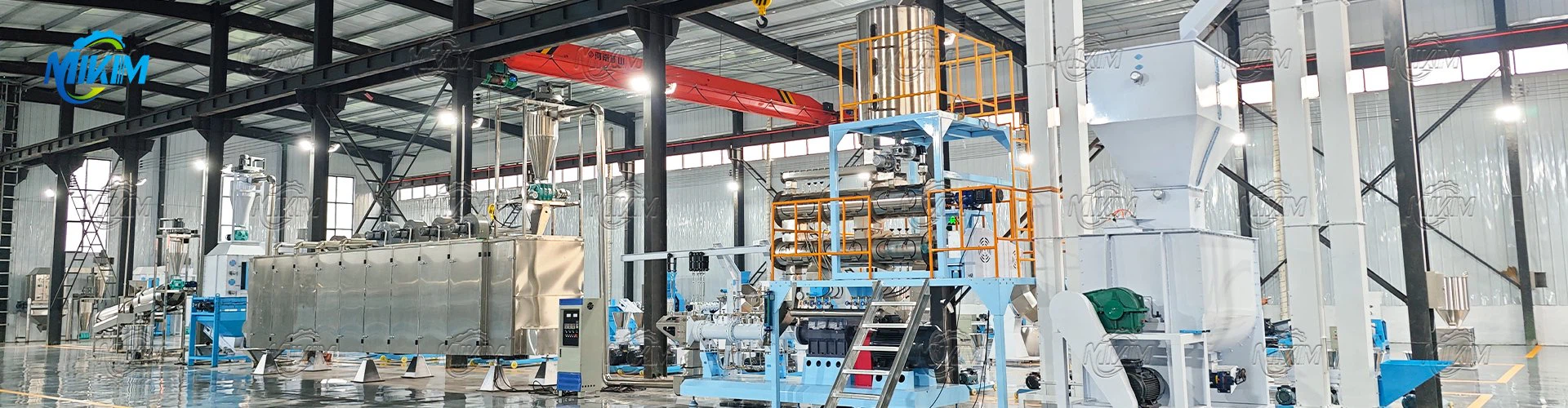
Start From the Feeding Object and the Formula
Pellet mill selection begins with the animal, not with the motor size. Fish and poultry rations are concentrated, with a high proportion of grain and protein meals, so the mash presses easily and a thicker die plate can be used at the same pellet diameter. Rabbit and sheep rations normally carry 50-60% grass meal, and grass flour is fibrous and springy: it resists extrusion through the die holes, so power draw rises and output per kilowatt falls compared with a fish or poultry ration of the same diameter. Choosing a die for a rabbit or sheep ration means choosing a thinner plate, accepting the higher wear rate, and sizing the motor for the harder pressing duty.
The practical rule is to define the ration first - species, grass meal share, fat level, target pellet diameter - and then read the mill specification against that ration rather than against a generic capacity figure.
Die Thickness, Hole Diameter and Compression Ratio
The die is the single component that most affects output, hardness and power consumption. Hole diameter sets the pellet size the stock will accept; plate thickness relative to hole diameter sets the compression ratio, which governs how much the mash is compacted and how much heat is generated in the hole. A high compression ratio gives a dense, durable pellet but demands more power and generates more heat, which is not always wanted - for young stock or for formulas carrying heat-sensitive additives, a lower ratio is safer. Check that the die is matched to the mill frame and that spare dies are available in the diameter range the farm actually feeds, since a farm that needs 3 mm calf pellets and 6 mm sow pellets cannot work with a single fixed die set.
Matching Power, Throughput and Drive Type
Published throughput must be read together with the duty point. A flat die mill quoted at a given hourly output is quoting it for a defined pellet diameter and a defined ration. The usual benchmark for small flat die machines is an output of not less than about 40 kg per hour at 4-6 mm pellet diameter on a conventional grain-based ration; below that figure, the machine is oversized for its motor or the die is worn. Belt-driven machines are cheaper and easier to service; direct-coupled or gearbox-driven machines hold speed better under load and give steadier pellet quality. For a farm, the decision usually comes down to whether the mill runs a few hours a week or is the bottleneck of a daily feed routine.
Temperature, Moisture and Pellet Quality Targets
The mill should be judged on the pellets it produces, not only on the tonnage. Three targets are worth checking on the first run. First, pellet appearance: a smooth, uniformly glossy surface with moderate hardness and no cracks normally means the die, moisture and temperature are in balance. Second, moisture: feed should leave the process below about 10%, because higher moisture invites mould in storage, and moisture is routinely verified by oven methods such as ISO 6496. Third, discharge temperature: pellets leaving the die usually sit near 60 °C, which reflects the conditioning and friction heat that develops the cooked character of the pellet; the practical ceiling is about 80 °C, because above that the added trace minerals and the live microbial cultures used in some formulas lose activity and the intended intake level cannot be guaranteed.
Dry-In, Dry-Out Configuration
For on-farm use, a dry-in, dry-out machine is the simplest configuration. Moisture is controlled at the mixing stage to a level the die can handle, the pellets leave the die warm and firm, and they are then cooled to ambient temperature and bagged without any drying or sun curing step. Removing the dryer also removes a fan, a heat source and a large share of the maintenance burden. If the ration arrives at high moisture, a conditioner with controlled steam or water addition should be fitted so the mash is presented to the die at a consistent moisture instead of depending on the operator's judgement.
Pre-Purchase Verification List
Before ordering, confirm the following in writing: pellet diameter range needed; die thickness and compression ratio supplied as standard; motor power, drive type and operating voltage; measured output for the buyer's own ration rather than a catalogue figure; die and roller material and expected life; spare part availability for die, roller, bearing and belt; and the feed hygiene requirements that apply to the finished pellet. On hygiene, compound feed placed on the market has to comply with mandatory limits for heavy metals, mycotoxins and other contaminants, in China for example as set out in GB 13078-2017, and the sampling procedure used to demonstrate that compliance should follow a defined method such as GB/T 14699.1. A mill that cannot hold moisture and temperature consistently makes those limits harder to meet, so process repeatability is a quality issue and not only an efficiency one.
Frequently Asked Questions
Q: Why do rabbit and sheep rations need a thinner die plate?
A: Grass meal makes up 50-60% of those rations and presses harder than grain, so a thinner plate lowers resistance, power draw and die wear while keeping the pellet intact.
Q: What hourly output should a small flat die mill deliver?
A: A useful benchmark is not less than about 40 kg per hour at 4-6 mm pellet diameter on a conventional ration; a lower figure points to an oversized motor or a worn die.
Q: What pellet temperature is acceptable at the die outlet?
A: Around 60 °C is normal because it reflects proper conditioning; stay below roughly 80 °C so that added trace minerals and live cultures are not degraded.
Q: How dry should the finished pellet be?
A: Below about 10% moisture, verified by an oven method such as ISO 6496, so the feed stays stable in storage instead of moulding.
Q: Is a belt drive or a gearbox drive better?
A: A belt drive is cheaper and easier to maintain; a gearbox or direct-coupled drive holds speed better under load and gives more consistent pellet hardness on heavy duty cycles.
Q: Should the mill be bought with a dryer?
A: Usually not for on-farm use. A dry-in, dry-out machine lets pellets cool and be bagged directly; a dryer adds cost and maintenance without improving pellet quality if moisture is controlled at mixing.