
1. Clarify the needs:
First, clarify your feed production needs, including production scale, feed type, raw material type and quality standards. Different needs require different types of equipment.
2. Understand the types of equipment:
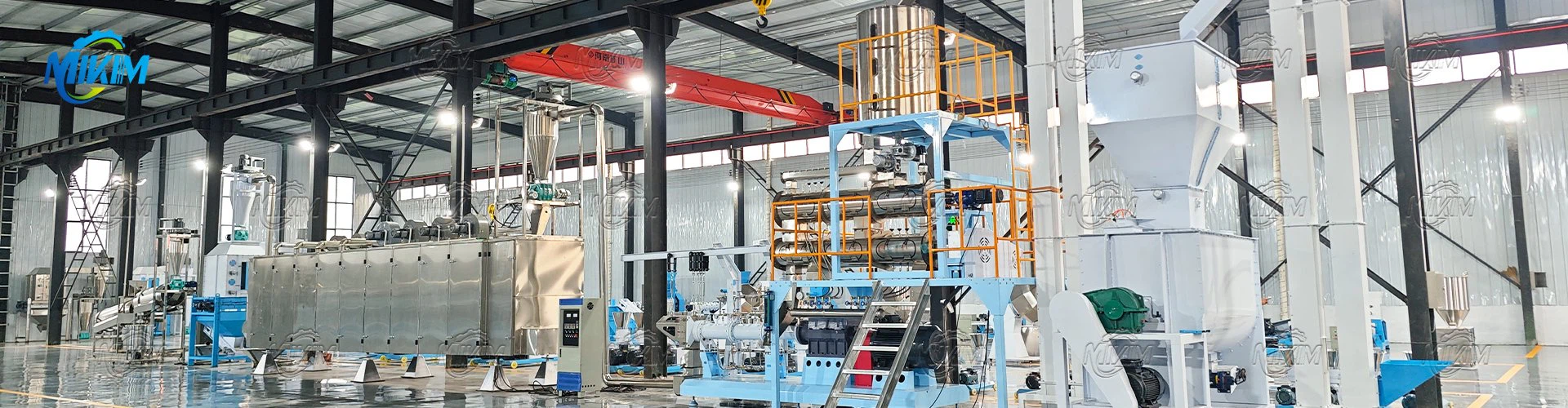
Understand the common types of feed production line equipment on the market, including pellet machines, mixers, crushers, coolers, packaging machines, etc. Each equipment has different functions, and choose the right equipment according to the needs of the production process.

| Model | Capacity | Power | Dimension | Weight |
| 125 | 80-100kg/h | 3kw | 110*35*70 cm | 95 kg |
| 150 | 120-150kg/h | 4kw | 115*35*80cm | 100 kg |
| 210 | 200-300kg/h | 7.5kw | 115*45*95cm | 300 kg |
| 260 | 500-600kg/h | 15kw | 138*46*100cm | 350 kg |
| 300 | 700-800kg/h | 22kw | 130*53*105cm | 600 kg |
| 360 | 900-1000kg/h | 22kw | 160*67*150cm | 800 kg |
| 400 | 1200-1500kg/h | 30kw | 160*68*145cm | 1200 kg |
3. Consider the degree of automation:
Modern feed production line equipment usually has different degrees of automation. Equipment with a high degree of automation can reduce manual operations and improve production efficiency. Choose the degree of automation according to budget and needs.
4. Adaptability and flexibility:
Choose equipment that can adapt to different raw materials, feed types and scales, with greater production adaptability and flexibility. In this way, when production needs change, the equipment can make corresponding adjustments.
5. Consider after-sales service:
Choose a manufacturer that provides good after-sales service, including equipment installation and commissioning, training, maintenance and parts supply. Timely after-sales service can ensure the long-term and stable operation of the equipment.