

Key Takeaways
- The 40–60 kg/h mini fish feed pellet making machine is ideal for home fish farming.
- Easy operation with low energy consumption.
- Suitable for beginners and small ponds.
- Floating performance depends mainly on the formula and moisture content.
- Real factory testing confirms stable short-to-medium operation.
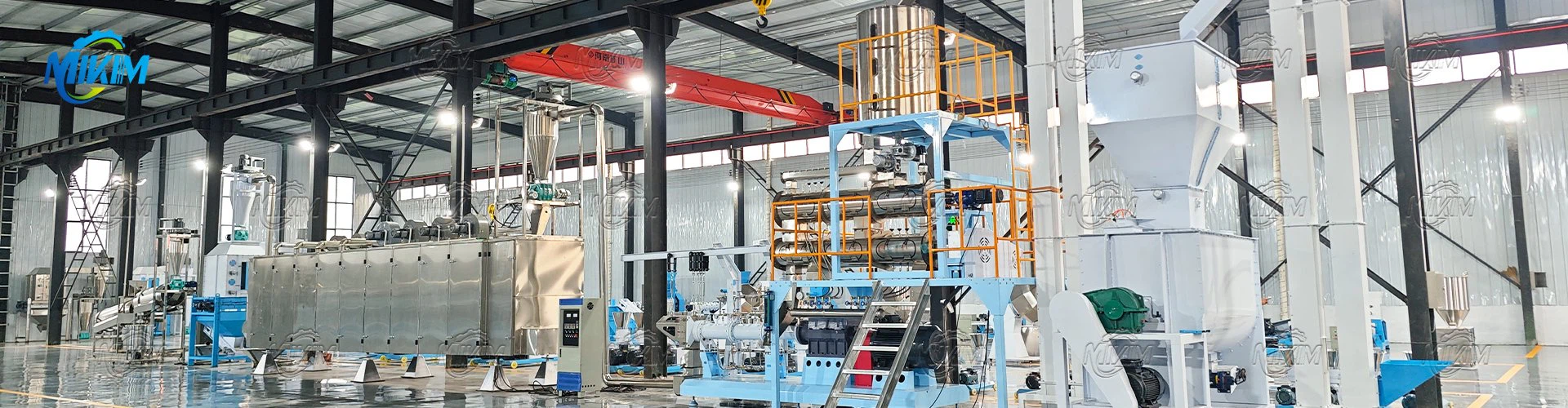
Home-use floating fish feed extruder machine display
I am interested in this product
Introduction: Is a Home home-use mini floating fish feed pellet making machine Really Worth It?
In small-scale aquaculture, especially for backyard fish ponds and family farms, feed cost is often the biggest daily expense. That is why many users are turning to the 40–60 kg/h home-use mini floating fish food extruder machine to produce feed themselves. Before investing, most buyers ask the same questions:
- Can a home-use machine really produce stable fish feed?
- Is 40–60 kg/h enough for daily feeding?
- Is the operation simple enough for beginners?
This article presents the factory test setup, performance data and a practical usage guide to help you decide.
Real Factory Test: How the 40–60 kg/h home-use mini floating fish feed extruder machine Performs
This machine was tested under real working conditions in our factory before delivery.
Test Setup
- Raw materials: corn flour, fish meal, soybean meal, wheat bran.
- Moisture content: 20–25%.
- Die size: 1–4 mm (adjustable; tested with small pellet output).
- Operator: basic trained worker.
- Running mode: continuous test operation.
What the Test Showed
- Smooth and stable feeding process.
- No blockage during operation.
- Continuous extrusion without interruption.
- Uniform pellet cutting and shaping.
Finished Pellet Performance
- Floating immediately in water.
- Consistent shape and size.
- Low breakage rate.
- Clean surface texture.
Even in small-scale equipment, stable pressure and a correct formula can produce professional-grade floating fish feed.
Machine Overview: Why 40–60 kg/h Is Perfect for Home Use
The 40–60 kg/h home-use mini fish feed pellet making machine is designed specifically for home and small-scale aquaculture users.
Main Specifications
- Output capacity: 40–60 kg/h.
- Power: 3–7.5 kW.
- Structure: compact single-screw extruder.
- Power supply: household electricity or a small generator.
- Design: portable and space-saving.
Key Advantages
- Low investment cost.
- Easy installation and operation.
- Suitable for beginners.
- No industrial power required.
This machine is designed for daily practical use, not industrial production.
Factory Test Data: Performance Results
| Item | Result |
|---|---|
| Output capacity (measured) | 40–60 kg/h |
| Pellet size | 1–4 mm (adjustable) |
| Floating performance | Immediate floating, stable over time |
| Pellet uniformity | Consistent shape and size, low breakage |
Note: actual output depends on the formula, moisture content, die size and operator experience.
Practical Usage Guide
- Keep the raw-material moisture at 20–25% for stable extrusion and good floating behavior.
- Start with a 2–3 mm die and adjust to the fish size.
- Run the machine on household electricity or a small generator; no industrial power is required.
- Clean the die and screw after each batch to maintain performance.
FAQ
Q1. Can a home-use mini floating fish food maker machine produce stable floating fish feed?
Yes. A small fish feed extruder can produce stable floating fish feed when the formula, moisture content, and extrusion conditions are properly controlled. For the tested formula, a moisture content of about 20–25% and sufficient starch helped produce well-formed pellets with immediate floating performance and low breakage.
Q2. Is 40–60 kg/h enough for daily fish feeding?
Yes. A production capacity of 40–60 kg/h is generally sufficient for small ponds, family farms, and small-scale aquaculture operations. The actual capacity required depends on the number of fish, feeding frequency, pellet size, and daily feed consumption. Larger farms should consider a higher-capacity fish feed machine.
Q3. Is the home-use mini floating fish food extruder machine easy for beginners to operate?
Yes. The machine is designed for simple installation and operation. After basic training, beginners can learn the main operating procedures, including feeding, extrusion, pellet cutting, and routine cleaning. Depending on the machine model and local power supply, it can be operated with a suitable single-phase power source or generator.
Q4. What factors affect the floating performance of fish feed pellets?
Floating performance mainly depends on starch content, moisture content, raw material composition, extrusion temperature, screw speed, feed rate, and die size. A starch-rich formula and properly controlled moisture help the extruder create a porous pellet structure that improves buoyancy. Incorrect moisture or extrusion settings can result in sinking, poor expansion, irregular pellet shapes, or increased breakage.
Q5. What moisture content is recommended for floating fish feed extrusion?
For many floating fish feed formulas, the feed mixture entering the extruder is commonly adjusted to about 20–30% moisture, but the ideal level depends on the raw materials, starch content, extruder type, and processing conditions. For small dry-type floating fish feed machines, a moisture level of around 20–25% can be a practical starting point for testing a starch-rich formula.FAO technical guidance also describes approximately 25% moisture as a typical level for extruded fish feed before extrusion.
Moisture is important because it helps the feed ingredients gelatinize and flow under heat and pressure. When the extruded material exits the die, part of the water rapidly vaporizes, creating a porous structure that reduces pellet density and improves floating performance. However, excessive or insufficient moisture can affect expansion, pellet shape, density, and production stability.
For best results, moisture should be adjusted according to the specific feed formula and machine rather than using one fixed value for every application.
Q6. Why do some fish feed pellets sink instead of float?
Fish feed pellets may sink when the extrusion process does not produce enough expansion or when the pellet density remains too high. The main factors include insufficient starch, incorrect moisture content, unsuitable extrusion temperature, excessive feed rate, improper screw speed, and an unsuitable die configuration.
Starch is particularly important because it gelatinizes during extrusion and helps form the expanded structure of floating pellets. FAO guidance notes that raw starch is required for good floating-pellet expansion, while the degree of starch cooking and expansion directly affects whether an extruded pellet floats or sinks.
If pellets consistently sink, check the following factors:
- Formula: Make sure the feed contains enough suitable starch sources.
- Moisture: Adjust water content according to the formula and extrusion process.
- Extrusion conditions: Check temperature, screw speed, pressure, and feed rate.
- Die size: Confirm that the selected die matches the required pellet diameter and formula.
- Drying: Avoid evaluating the final floating performance only from freshly extruded pellets, because drying changes pellet moisture and physical properties.
In practice, formula and extrusion conditions should be adjusted together. Changing only one parameter may not solve a floating problem.
Q7. What fish can be fed with 40–60 kg/h floating fish feed pellets?
A 40–60 kg/h home-use mini floating fish food extruder machine is suitable for producing feed for many small-scale freshwater aquaculture operations, including tilapia, carp, grass carp, catfish, and other surface- or mid-water-feeding fish, provided that the feed formula and pellet size are appropriate for the species and growth stage.
Floating feed is particularly useful when farmers want to observe feeding activity and reduce uneaten feed. Because the pellets remain at or near the water surface, farmers can monitor how actively fish are feeding and adjust the feeding rate accordingly. FAO aquaculture guidance identifies floating feed as useful for fish that feed near the surface and notes that it can make feed consumption easier to observe.
The 40–60 kg/h capacity describes production output, not the number of fish the machine can feed. The actual daily feed requirement depends on fish species, biomass, water temperature, growth stage, feeding frequency, and feeding rate.
For example, a small family farm may use a 40–60 kg/h machine to produce several batches of feed as needed, while a larger commercial farm may require a higher-capacity production line to meet its daily feed demand.
Our Factory

Packaging and Shipping
Our machines are first wrapped with stretch film, securely packed in wooden crates, and then loaded into containers for safe international shipping.

Certificate of Quality Compliance
