
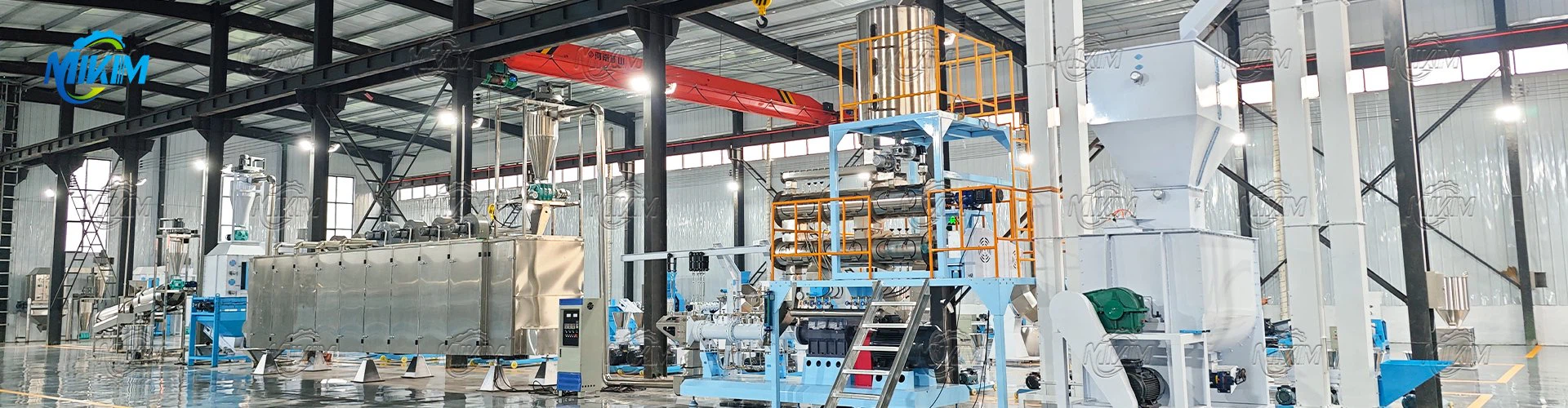

home-use mini floating fish food extruder machine: Factory Test and Working Principle
For many small fish farmers or home users, buying fish feed directly from the market can be expensive and inconsistent in quality. A home-use mini fish feed pellet making machine becomes a practical solution: it allows users to produce fresh fish feed on-site with simple operation and low investment. This article explains how the machine works, what a factory test verifies, and the measured performance data.
1. Why a Home-Use Mini Fish Feed Pellet Making Machine Matters
Producing feed at home or on a small farm removes the dependence on the commercial feed supply, cuts feed cost, and gives the user full control over ingredients and quality. The machine is compact, easy to operate, and suitable for small fish ponds or family fish farming.
2. How It Works: Four Steps
- Raw material mixing: ingredients such as corn flour, rice bran, and fishmeal are mixed evenly.
- Feeding into the machine: the mixed material is fed into the hopper manually or automatically.
- Extrusion process: inside the home-use mini floating fish food extruder machine, heat and pressure convert the material into expanded feed.
- Pellet output: the cutter produces small floating pellets of adjustable size.
40-60kg/h home-use mini floating fish feed machine test
I am interested in this product
3. Key Performance Data
| Parameter | Value |
|---|---|
| Output capacity | 40 - 60 kg/h |
| Power | 3 - 5.5 kW (home electricity compatible) |
| Pellet size | 1 - 3 mm, adjustable |
| Floating rate | ≥ 90% |
| Operation | Simple manual / semi-automatic use |
4. What the Factory Test Verifies
- Easy feeding: users can manually feed raw materials without complex systems.
- Stable extrusion: the machine runs smoothly with low noise.
- Uniform pellet output: pellets are small, consistent, and suitable for small fish.
- Floating performance: the finished feed floats well on the water surface.
5. Step-by-Step Test Procedure
- Raw material preparation: common home-use materials-corn flour, rice bran, and soybean meal-are simple and locally available ingredients.
- Machine setup: plug in the electricity, install the die plate, and check the cutter system.
- Working test: the home-use mini floating fish food maker machine is tested continuously to confirm stable output (40-60 kg/h), smooth operation, and no blockage.
- Pellet quality check: floating ability, size uniformity and hardness are verified.
6. Advantages of a home-use mini floating fish feed extruder machine
- Low cost operation: uses a small-power motor with low electricity consumption.
- Easy to operate: no professional skills required.
- Saves feed cost: users can produce their own fish feed.
- Fresh feed production: better nutrition compared with stored commercial feed.
7. Common Buyer Questions
| Question | Answer |
|---|---|
| Is it hard to operate? | No, it is beginner-friendly. |
| Can it run on home electricity? | Yes, 220 V or 380 V optional. |
| Can it make sinking feed? | Yes, by adjusting the formula. |
| Is output stable? | Yes, tested at 40-60 kg/h. |
8. Who Should Use This home-use mini floating fish food pellet making machine
The home-use mini floating fish feed pellet making machine is ideal for small fish pond owners, home fish farming users, rural farmers, and beginner aquaculture entrepreneurs. It is the best starting point for small-scale feed production with low risk in scenarios such as backyard fish ponds, small aquaculture farms, rural family farming, and trial fish feed production.
Our Factory

Packaging and Shipping
Our machines are first wrapped with stretch film, securely packed in wooden crates, and then loaded into containers for safe international shipping.

Certificate of Quality Compliance
