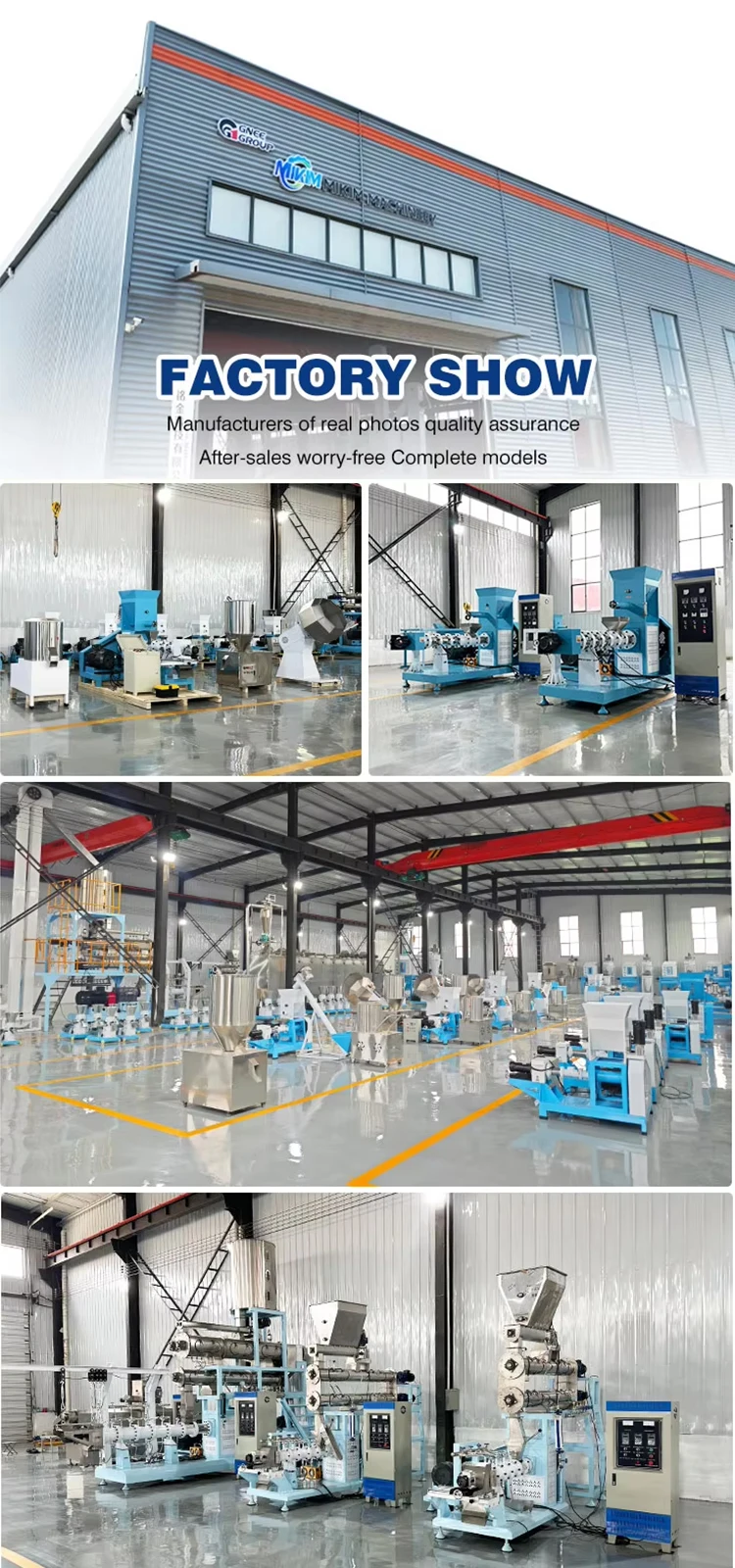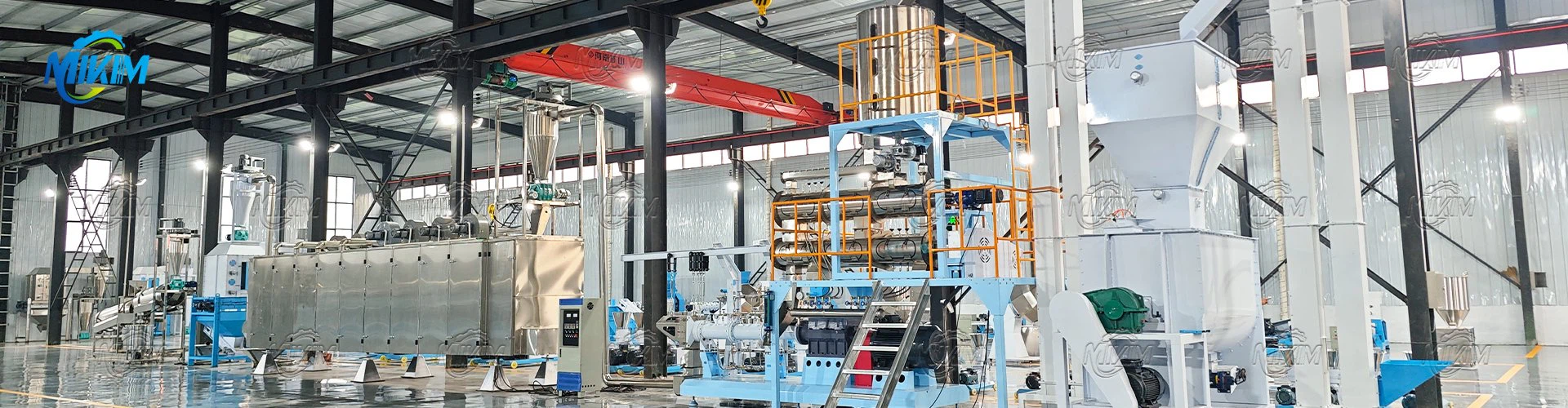

The primary difference lies in Starch Gelatinization and Density Control. Extruded feed (produced via fish feed extruder) uses high heat (>120°C) and expansion to create floating, highly digestible pellets with 80-90% starch gelatinization. Pelleted feed (produced via pellet mill) uses compression and lower heat (<90°C) to create dense, sinking pellets. While extruded feed has a higher manufacturing cost, its superior Feed Conversion Ratio (FCR) and water stability make it the most profitable choice for intensive commercial aquaculture.
1. Deep Dive: The Manufacturing Process
What is Extruded Feed? (The HTST Method)
Extruded feed is manufactured using High-Temperature Short-Time (HTST) technology.
- The Process: Raw materials are subjected to high pressure (>30 bar) and temperature (120°C-150°C) inside the Floating aquatic feed pellet extruder machine barrel. When the material exits the die, the sudden pressure drop causes the moisture to flash into steam, expanding the pellet.
- Unique Property: The expansion creates a porous internal structure, allowing the pellet to float. By adjusting the screw configuration, you can also produce slow-sinking or sinking extruded feed.
What is Pelleted Feed? (The Compression Method)
Pelleted feed is made by a animal feed pellet machine that forces conditioned mash through a metal die.
- The Process: It relies on mechanical compression and steam conditioning (70°C-90°C). There is no "puffing" or expansion.
- Unique Property: The pellets are dense and sink immediately. It is the traditional standard for poultry and livestock, but its use in aquaculture is decreasing as farmers shift toward higher efficiency.
2. Key Technical Comparison
| Feature | Extruded Feed (Expansion) | Pelleted Feed (Compression) |
| Starch Gelatinization | 80% - 95% (Highly digestible) | 15% - 25% (Lower utilization) |
| Buoyancy Control | Floating, Slow-sinking, or Sinking | Sinking Only |
| Water Stability | 12 - 24 hours | 30 - 60 minutes |
| Nutrient Loss | Minimal (Coating remains intact) | High (Fine particles leach easily) |
| FCR (Feed Conversion) | 1.0 - 1.3 (Lower is better) | 1.5 - 2.0 |
| Pathogen Safety | Sterilized by high temp/pressure | Moderate reduction |
3. Why Extrusion Technology Dominates Modern Aquaculture?
A. The "Floating" Advantage
Extruded feed allows for Observation-Based Feeding. Farmers can see exactly how much fish are eating, preventing overfeeding.
ROI Impact: Reduces wasted feed, which is the largest expense in fish farming (up to 70% of total costs).
B. Superior Water Quality
Because extruded pellets have high water stability, they do not dissolve quickly. This prevents the "clouding" of pond water and reduces ammonia buildup.
Expert Insight: Better water quality means fewer fish diseases and lower mortality rates.
C. Enhanced Nutritional Bioavailability
The high-heat extrusion process breaks down complex carbohydrate chains (starch) and denatures anti-nutritional factors (like trypsin inhibitors in soy).
Result: Fish grow faster with less feed.
4. Economic Analysis: Manufacturing vs. Farming Profit
| Metric | Pelleted Feed Mill | Extruded Feed Line |
| Initial Investment | Lower | Higher |
| Energy Consumption | ~15-25 kWh/ton | ~30-50 kWh/ton |
| Market Price of Feed | Standard | Premium |
| Farmer's Net Profit | Lower (due to higher FCR) | Higher (due to faster growth) |
Conclusion: For a feed manufacturer, the higher investment in a floating fish feed pellet extruder machine is offset by the ability to sell a premium, high-demand product that offers clear results to the end-user (the farmer).
FAQ:
Q1: Can I make sinking feed with a floating fish food extruder machiner?
Yes. By removing the expansion environment (adjusting screw speed, moisture, and formula), a floating fish feed extruder machine can produce high-quality sinking feed that is still more digestible than traditional pelleted feed.
Q2: Is extruded feed better for all fish?
Mostly, yes. While bottom feeders like shrimp can eat pelleted feed, intensive shrimp farming is increasingly moving toward micro-extruded feeds because they reduce water pollution and promote faster growth.
Q3: Why is pelleted feed still used in poultry and cattle?
A: Land animals do not have the "water stability" issue that aquatic species do. Furthermore, their digestive systems are different, and the cost-per-ton of pelleted feed is more competitive for large-scale livestock operations where floating isn't a factor.
Q4: How long does extruded floating feed stay on the surface?
A: High-quality extruded feed produced by our machines can float for at least 12 to 24 hours without disintegrating.
Q: Can I use a single screw floating fish feed pellet extruder machine to produce both floating and sinking feed?
A: Yes. Our single screw floating fish food pellet maker machines are designed with adjustable parameters. By changing the screw configuration, adjusting the moisture level, and controlling the venting pressure at the die head, you can switch between high-expansion floating pellets and high-density sinking pellets. This flexibility allows one machine to serve multiple species, from Tilapia (floating) to Shrimp (sinking).
Why Choose Our Extrusion Solutions?
As a global leader in feed machinery, we offer:
Dry Type floating fish feed pellet extruder machines: Perfect for small-to-medium farms.
Wet-type Twin-Screw floating fish feed extruder machines: For industrial-scale, high-meat-content aquafeed.
Full Technical Support: From formula optimization to after-sales maintenance.
Company Profile