
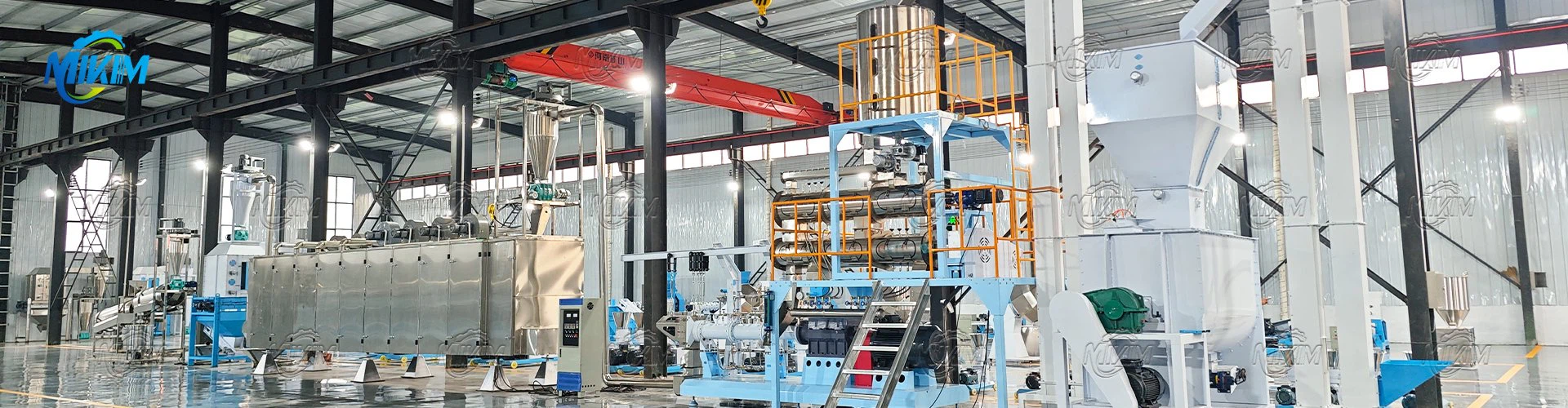
Many people are deterred by the price of floating fish feed extruder machines, believing that homemade production costs far exceed those of purchasing ready-made products. However, the reality is that the cost of an extruder can be amortized over long-term use and significantly improves raw material utilization, actually reducing unit costs. For example, a small single-screw extruder commonly used by pet owners or small business owners typically costs between 3,000 and 8,000 yuan. If you make 50 kilograms of dog food monthly, assuming a 5-year lifespan for the equipment, the monthly amortized cost is only 50-133 yuan, averaging only 1-2.66 yuan per kilogram of dog food.
content
Now let's look at the raw material costs. Ready-made dog food typically has raw material costs accounting for only 30%-40% due to brand premiums, distribution costs, and packaging fees. When making homemade dog food using an extruder, you can directly purchase bulk raw materials such as chicken breast meal (approximately 8 yuan/kg), brown rice (3 yuan/kg), and vegetable powder (5 yuan/kg). After scientifically mixing these ingredients, the raw material cost is approximately 6-8 yuan per kilogram. After processing by a pet food pellet machine, the raw material utilization rate can reach over 98%, with almost no waste; while traditional homemade methods such as steaming and boiling often result in a 10%-15% loss rate. Taking the production of 1 kg of dog food as an example, the raw material cost of homemade extruded food is approximately 6.12-8.16 yuan, while the selling price of finished dog food of the same quality is generally 15-25 yuan/kg. Even including the equipment cost, there is still a significant price advantage.
The efficient processing of pet food processing machines also reduces time costs, indirectly improving cost-effectiveness. Traditional homemade dog food requires multiple steps such as washing, cutting, steaming, and drying, often taking 2-3 hours to produce 1 kg of dog food, and the finished product is not easy to preserve and is prone to mold and spoilage. Extruders, on the other hand, can achieve one-button processing; after pouring in the mixed raw materials, extrusion, cooking, and shaping can be completed in 10-20 minutes, producing 50-100 kg of dog food per hour. Meanwhile, the extrusion process removes excess moisture from raw materials, resulting in a finished product with a moisture content below 12%, extending the shelf life to 6-12 months. This eliminates the need for frequent production and reduces waste due to spoilage. For pet owners, the time savings are immeasurable; for entrepreneurs, efficient production means taking on more orders and further reducing costs.
The hidden costs associated with quality premiums must also be considered. Low-priced commercially available dog food often suffers from insufficient protein content and added preservatives. Long-term feeding can lead to gastrointestinal problems, rough coats, and other issues, resulting in significant subsequent veterinary expenses. Making dog food using a pet food making machine allows for precise control of ingredient ratios, using fresh, additive-free ingredients. High-temperature extrusion kills harmful bacteria, ensuring both nutrition and safety. Data shows that dogs fed homemade extruded dog food have approximately 40% lower veterinary expenses than those fed low-priced commercial dog food. This saving in hidden costs further highlights the cost-effectiveness of homemade dog food made with the help of an extrusion machine.
Related equipment


about Us
Customer visit

Certificate of Honor

FAQ
1. What is the price of the dog food pellet maker?
The price ranges from approximately $1,500-$55,000
2. Do you provide maintenance services for your customers?
Yes, we offer comprehensive after-sales maintenance services to our customers.
If you would like to learn more about MIKIM machinery, please contact us. We offer one-stop service and welcome your inquiries!!!