
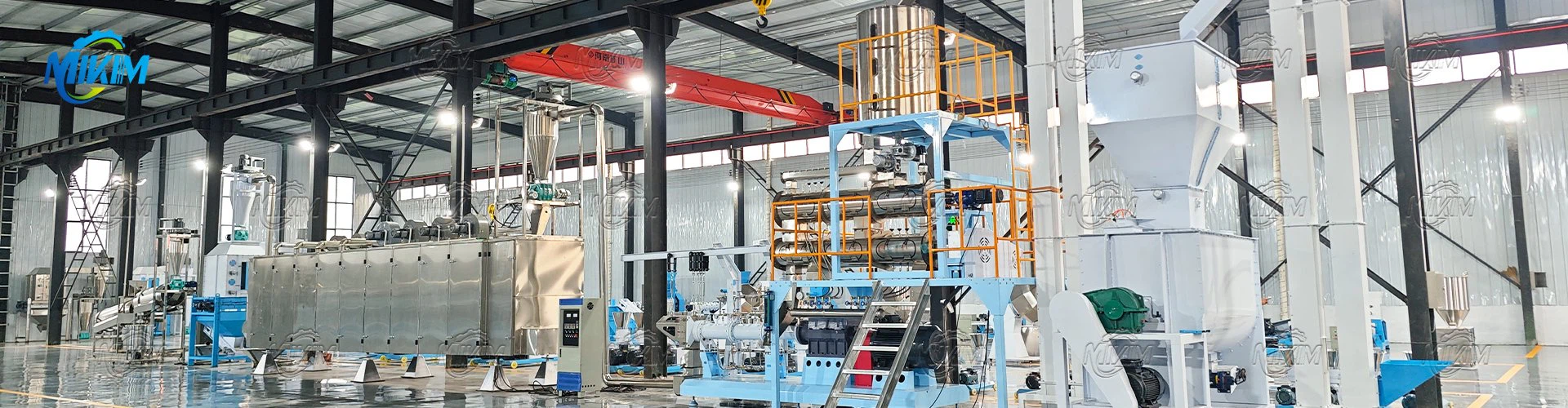
There are many advantages of the extruded feed production line, and everyone needs to know more about it.
Extruded feed is conducive to long-term storage and extended shelf life. Due to the high temperature and high pressure during the extrusion process, molds, bacteria and fungi in the feed are effectively killed, which improves the hygienic quality of the feed and reduces the risk of diseases such as diarrhea, gastroenteritis and dysentery in animals.

| Model | Power | Feeder | Cutter | Capacity | Dimension | Weight |
| DGP40 | 4KW | 0.4KW | 0.4KW | 0.04-0.05T/H | 1400*1030*1200MM | 240KG |
| DGP50 | 11KW | 0.4KW | 0.4KW | 0.06-0.08T/H | 1400*1030*1200MM | 320KG |
| DGP60 | 15KW | 0.4KW | 0.4KW | 0.12-0.15T/H | 1450*950*1430MM | 480KG |
| DGP70 | 18.5KW | 0.4KW | 0.4KW | 0.18-0.25T/H | 1600*1400*1450MM | 600KG |
| DGP80 | 22KW | 0.4KW | 0.75KW | 0.3-0.35T/H | 1850*1470*1500MM | 800KG |
| DGP90 | 30KW | 1.1KW | 1.5KW | 0.4-0.45T/H | 1900*1500*1600MM | 1200KG |
Through in vitro research methods, we determined the enzymatic hydrolysis kinetics of seven feed raw materials before and after extrusion in the intestines of grass carp and silver crucian carp. The results showed that extrusion treatment had an effect on the protein enzymatic hydrolysis rate of feed raw materials. Specifically, the enzymatic hydrolysis rate of rapeseed meal, corn and second meal after extrusion increased, while the enzymatic hydrolysis rate of soybean meal, meat and bone meal and fish meal decreased after extrusion, especially the change of corn. As for cottonseed meal, the change in its enzymatic hydrolysis rate before and after extrusion was not obvious.
In summary, extrusion treatment has a positive effect on feed raw materials with low protein content and high starch content, but it may have an adverse effect on raw materials with high protein content.