
content
I. Common Fault 1: Screw Blockage, Preventing Normal Feeding and Extrusion
Screw blockage is one of the most common faults in small fish feed maker machines. It manifests as raw material failing to enter the barrel normally, poor extrusion discharge, and a sharp increase in barrel pressure. In severe cases, it can lead to machine shutdown and even damage to the screw and barrel. The core causes of this fault are mainly threefold:
First, the raw material's moisture content is too high or too low. Excessive moisture (above 25%) causes the raw material to stick to the screw, while insufficient moisture (below 15%) results in poor material flowability and difficulty in smooth feed.
Second, the raw material contains impurities (such as stones, metal particles, etc.), which become stuck between the screw and barrel, preventing the material from advancing. Third, improper screw speed adjustment; an excessively low screw speed results in slow material feed, causing prolonged accumulation in the barrel and blockage.
Solution: First, immediately stop the machine and disconnect the power to prevent further damage to the small electric fish feed extruder. Then, disassemble the barrel and screw, and clean the accumulated raw materials and impurities inside the barrel. Use specialized tools during cleaning to avoid scratching the screw and the inner wall of the barrel. Finally, check the moisture content of the raw materials and adjust it to a suitable range of 15%-25%. Screen the raw materials to remove impurities, adjust the screw speed to a suitable range (usually 100-300 rpm depending on the equipment specifications and raw material characteristics), reinstall the equipment, and test run it. Preventive measures: Establish a raw material screening and testing system to ensure that the raw materials are free of impurities and meet moisture standards; regularly check the screw speed and adjust it reasonably according to production needs; regularly clean the screw and barrel to avoid long-term accumulation of raw materials.


II. Common Fault Two: Poor Pellet Formation, with Breakage, Deformation, and Uneven Size
Poor pellet formation is a significant fault affecting fish feed quality. It mainly manifests as a high breakage rate, irregular shape, uneven particle size, and poor stability in water, failing to meet the feeding needs of fish and causing feed waste. The main causes of the malfunctions are:
1. Clogged die heads or severely worn die holes in the small fish feed making machine. Clogged die holes lead to poor material discharge and pellet deformation, while worn die holes result in larger and uneven pellet size.
2. Improper adjustment of extrusion parameters. Excessively low barrel temperature (below 80℃) results in insufficient gelatinization of the raw material and insufficient pellet adhesion; excessively high temperature leads to over-gelatinization and easily broken pellets.
3. Inadequate cooling process. Excessively high pellet temperature after extrusion molding can cause pellet adhesion and deformation when packaged directly; incomplete cooling results in insufficient pellet hardness and easy breakage.
Solutions: First, stop the machine and inspect the die head, cleaning any blockages in the die holes. If the die holes are severely worn, replace the die head promptly. Then, adjust the parameters of the small fish feed pellet machine, setting the barrel temperature to a suitable range of 80-140℃. Optimize the pressure and screw speed according to the raw material characteristics to ensure sufficient gelatinization. Finally, check the cooling system, ensuring the cooling air temperature and speed are appropriate, and extend the pellet cooling time to allow the pellet temperature to drop to room temperature (≤30℃) before packaging. Preventive Measures: Regularly clean the die head to prevent die blockage; regularly check die head wear and replace it promptly; optimize the cooling process and regularly maintain the cooling system; strictly control extrusion parameters to ensure parameter stability.
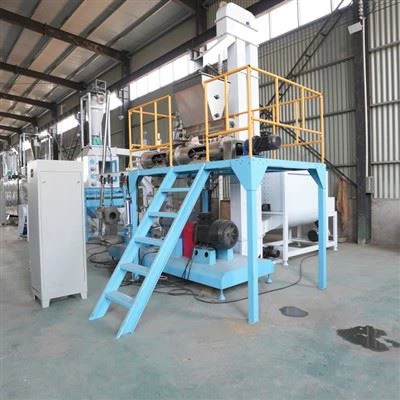
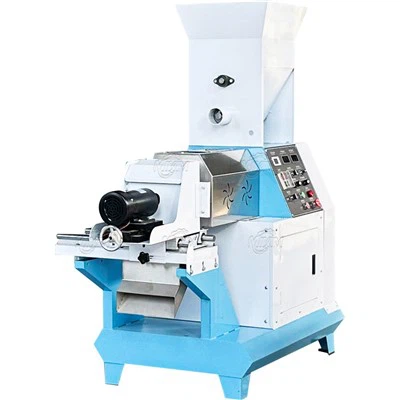
III. Common Fault Three: Increased Energy Consumption and Operating Costs of Fish Feed Floating Pellet Making Machines
During long-term operation, some companies may find that the energy consumption of floating fish feed making machines gradually increases, and the energy cost per ton of fish feed increases significantly. This not only increases the company's operating costs but may also reflect potential equipment malfunctions. The main reasons for increased energy consumption are:
1. Severe wear between the screw and barrel, increased clearance, and increased leakage during raw material feeding, leading to increased screw load and energy consumption;
2. Inadequate lubrication system, increasing frictional resistance between parts, and increasing energy consumption;
3. Changes in raw material characteristics, such as excessive moisture or uneven particle size, leading to increased processing load and energy consumption;
4. Excessive dust accumulation on the equipment, poor heat dissipation, increased motor load, and increased energy consumption.
Solutions: First, check the wear of the screw and barrel. If the wear is severe, replace the screw and barrel promptly and adjust the clearance to a suitable range. Then, check the lubrication system, add an appropriate amount of lubricating oil, and change the lubricating oil regularly to ensure good lubrication of parts. Second, optimize the raw material processing technology to ensure that the raw material moisture content meets standards and the particle size is uniform, reducing the processing load on the floating fish food maker machine. Finally, regularly clean the dust accumulated on the surface and inside the equipment, check the heat dissipation system, ensure good heat dissipation, and reduce the motor load. Preventive measures: Regularly maintain the screw and barrel and ensure proper lubrication; establish a raw material testing system to ensure stable raw material quality; regularly clean the equipment and maintain the heat dissipation system to extend the equipment's service life.


IV. Common Fault Four: Abnormal Noises in the Floating Fish Food Pellet Maker Machine, Easily Damaged Parts
If abnormal noises (such as impact sounds, friction sounds, or other unusual noises) occur during the extruder's operation, it usually indicates that the equipment parts are worn, loose, or faulty. If not addressed promptly, this can lead to damage to parts and even affect the overall service life of the floating feed extruder machine. The main causes of abnormal noise are:
1. Severe wear between the screw and barrel, resulting in excessive clearance and impact noise during operation;
2. Loose parts (such as loose bolts and nuts), causing vibration and abnormal noise during operation;
3. Worn or damaged bearings, producing friction noise during operation;
4. Hard impurities in the raw material, stuck between the screw and barrel, causing impact noise.
Solutions: Immediately stop the machine, disconnect the power supply, and investigate the location and cause of the abnormal noise; if parts are loose, tighten bolts and nuts promptly; if bearings are worn or damaged, replace them promptly; if the screw and barrel are severely worn, replace them promptly; if the raw material contains impurities, clean the impurities and optimize the raw material screening process. Preventive measures: Regularly check the tightness of the floating feed making machine parts and tighten loose parts promptly; regularly maintain bearings, add lubricating oil, and replace damaged bearings promptly; regularly check the screw and barrel and take wear protection measures; strictly screen raw materials to remove hard impurities.
about Us
Customer visit

Certificate of Honor

FAQ
1. What is the price of the small sinking fish feed extruder machine?
The price ranges from approximately $1,500-$55,000
2. Do you provide maintenance services for your customers?
Yes, we offer comprehensive after-sales maintenance services to our customers.
If you would like to learn more about MIKIM machinery, please contact us. We offer one-stop service and welcome your inquiries!!!