
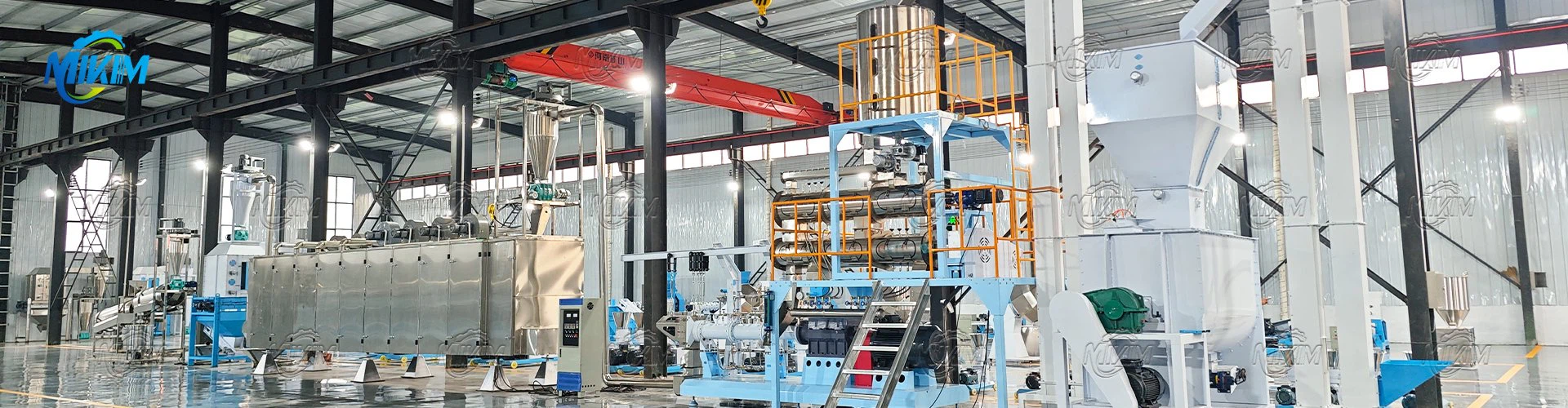
Feed extruder, also known as pellet feed machine, feed pelletizer or pellet feed forming machine, is the core equipment in the field of feed pelleting. It can use corn, soybean meal, straw, grass and rice husk as raw materials, and directly press them into pelletized feed after crushing.
Feed extruder is also called pellet feed machine, feed pelletizer, etc. It can use a variety of raw materials to make pelletized feed, suitable for different pets and scenes.

| Model | Power | Feeder | Cutter | Capacity | Dimension | Weight |
| DGP40 | 4KW | 0.4KW | 0.4KW | 0.04-0.05T/H | 1400*1030*1200MM | 240KG |
| DGP50 | 11KW | 0.4KW | 0.4KW | 0.06-0.08T/H | 1400*1030*1200MM | 320KG |
| DGP60 | 15KW | 0.4KW | 0.4KW | 0.12-0.15T/H | 1450*950*1430MM | 480KG |
| DGP70 | 18.5KW | 0.4KW | 0.4KW | 0.18-0.25T/H | 1600*1400*1450MM | 600KG |
| DGP80 | 22KW | 0.4KW | 0.75KW | 0.3-0.35T/H | 1850*1470*1500MM | 800KG |
| DGP90 | 30KW | 1.1KW | 1.5KW | 0.4-0.45T/H | 1900*1500*1600MM | 1200KG |
The extruded feed particles produced by this machine have regular shape and smooth surface. They can float on the water surface for more than 12 hours without sinking, effectively reducing water pollution and the occurrence of fish diseases. In addition, it can also produce feed particles of various shapes, and the mold can be customized according to customer needs. At the product discharge port, it is equipped with a variable frequency speed regulating rotary cutting device, which can flexibly adjust the blade rotation speed to control the cutting speed and length.
Aquatic feed is widely using extrusion technology to produce small pellet feed, which has won market recognition for its high feeding rate and environmental protection characteristics. With the continuous advancement of extrusion technology, more and more manufacturers have begun to use extruders to directly produce small pellet aquatic feed to replace traditional processing methods. The mold sizes of these small-particle aquatic feeds are usually 1.2mm, 1.0mm and 0.8mm, and some manufacturers have even requested the production of expanded particles with a hole diameter of only 0.6mm.