🧠 Key Takeaways
- A 150kg/h fish feed machine is ideal for small-scale production
- Real output depends on raw materials and operation
- Single screw machines offer the best cost-performance ratio
- Stable floating feed requires proper formula and moisture control
- Factory test data is more reliable than catalog specifications
🐟 Introduction: Is a 150kg/h Fish Feed Machine Enough for Your Production?
For many small fish farms and starter feed businesses, choosing the right capacity is like choosing the right engine for a boat: too small, and you crawl; too big, and you burn cash.
A 150kg/h Single-Screw floating fish food pellet making machine is often considered the "entry-level workhorse." But key questions remain:
Can it really reach 150kg/h output?
Is the feed stable enough to float?
Will it clog with high-protein formulas?
In this article, we break down a real factory test video, including raw material, output data, and performance analysis, so you can decide if this machine fits your production needs.
🎥 Real Factory Test Video: What Actually Happens?
This test was conducted in our factory before delivery to the customer.
Test conditions:
- Raw materials: fish meal + corn flour + soybean meal
- Moisture content: 20%–25%
- Operator: trained technician
- Power configuration: standard industrial motor
👉 What you'll see in the video:
- Smooth feeding without blockage
- Continuous extrusion process
- Uniform pellet cutting
- Finished pellets floating immediately in water
💡 Important:
The machine runs continuously without sudden stops, which confirms stable internal pressure and screw performance.
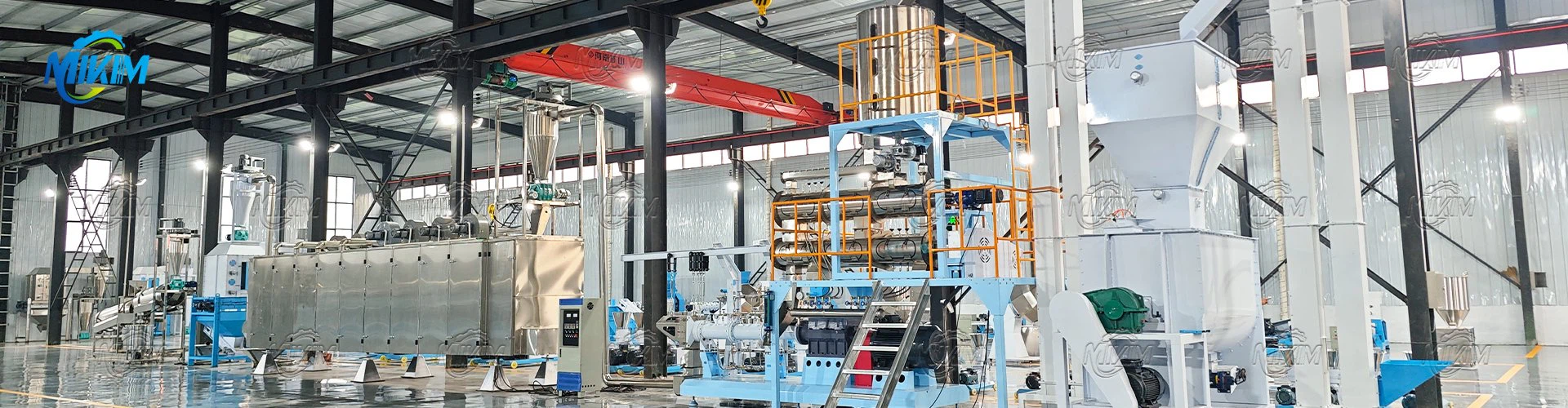
150kg/h floating fish feed pellet extruder machine testing before packing
⚙️Why Single-Screw floating fish feed pellet mill Still Dominates Entry-Level Markets?
The machine uses a single screw extrusion system, which balances cost and performance.
Core components:
- Feeding system
- Single screw extrusion chamber
- Heating & compression zone
- Die (mold) system
- Cutter device
Typical configuration:
- Power: 11–15 kW
- Pellet size: 2–6 mm
- Screw material: nitrided steel
- Structure: compact, easy to maintain
💡 Compared with more complex systems, this design reduces maintenance cost and operator skill requirements.
🧪 Real Test Data: Output, Floating Rate, and Stability
Here's the actual performance from the factory test:
| Item | Test Result |
|---|---|
| Output Capacity | 140–155 kg/h |
| Pellet Diameter | 2–6 mm |
| Floating Time | >12 hours |
| Moisture Content | 20–25% |
| Running Stability | Continuous, no blockage |
| Power Consumption | Stable under load |
👉 Key insight:
The machine can reach near-rated capacity, but output depends heavily on raw material and operator control.
🐠 Raw Materials & Feed Formula Used in the Test
Sample formula:
- Fish meal: 20–30%
- Corn flour: 30–40%
- Soybean meal: 20–25%
- Additives: vitamins, binders
💡 What matters most:
- Proper grinding (fine powder)
- Balanced moisture
- Controlled oil content
⚠️ Industry reality:
Single screw machines can handle medium protein formulas well, but extremely high meat content may increase blockage risk.
🔍 Performance Analysis: Who Should Choose This Single-Screw fish feed pellet maker machine?
This 150kg/h model is best suited for:
✅ Ideal Users
- Small-scale fish farms
- New feed production businesses
- Markets with limited investment budget
- Farmers producing feed for self-use
❌ Not Ideal For
- Large industrial feed factories
- Premium aquaculture feed brands
- Extremely high-protein formulations
💡 Think of it as a reliable pickup truck, not a high-speed train.
⚖️ Single Screw vs Twin Screw fish food extruder machine: Quick Comparison
| Feature | Single Screw | Twin Screw |
|---|---|---|
| Investment Cost | Low | High |
| Operation | Simple | Complex |
| Maintenance | Easy | More technical |
| Meat Content Handling | Medium | High |
| Production Stability | Moderate | Excellent |
👉 If your priority is cost-effectiveness, single screw is the better choice.
🧰 Practical Operation Tips from Real Testing
From real factory experience:
1. Preheating is essential
Run the machine empty for a few minutes before feeding.
2. Control moisture carefully
- Too dry → poor expansion
- Too wet → blockage risk
3. "Dry material cleaning method" before shutdown
Add dry bran or powder before stopping to prevent material sticking inside.
4. Avoid sudden formula changes
Gradual adjustment ensures stable extrusion pressure.
🌍 Customer Case: Real Application Scenario
This machine was prepared for a customer using it for:
- Small fish farm feed production
- Local market supply
- Cost-saving alternative to commercial feed
Result:
- Reduced feed cost significantly
- Stable daily production
- Easy operation after short training
❓ FAQ: What Buyers Really Want to Know?
1. Can this machine really reach 150kg/h?
Yes, under proper conditions. In real tests, output typically ranges from 140–155 kg/h depending on raw material and operator skill.
2. Will the pellets float 100%?
With correct formulation and moisture control, pellets can float for more than 12 hours.
3. Can it handle high-protein feed?
It can handle medium protein levels well, but very high meat content may require careful adjustment to avoid blockage.
4. Is it suitable for beginners?
Yes. The structure is simple, and operation can be learned quickly.
5. What is the delivery time?
Typically 7–15 working days depending on configuration and order quantity.
🔗 Related Topics (Recommended Reading)
Single screw vs twin screw fish feed extruder machines
How to increase meat content without blockage
Common problems in fish feed pellet production and solutions
🎯 Final Insight
If you are looking for a low-investment, stable, and easy-to-operate solution, this single screw floating fish feed machine is a strong starting point.
But if your goal is high-end feed production or large-scale industrial output, you may need to consider more advanced extrusion systems.
Company Profile